


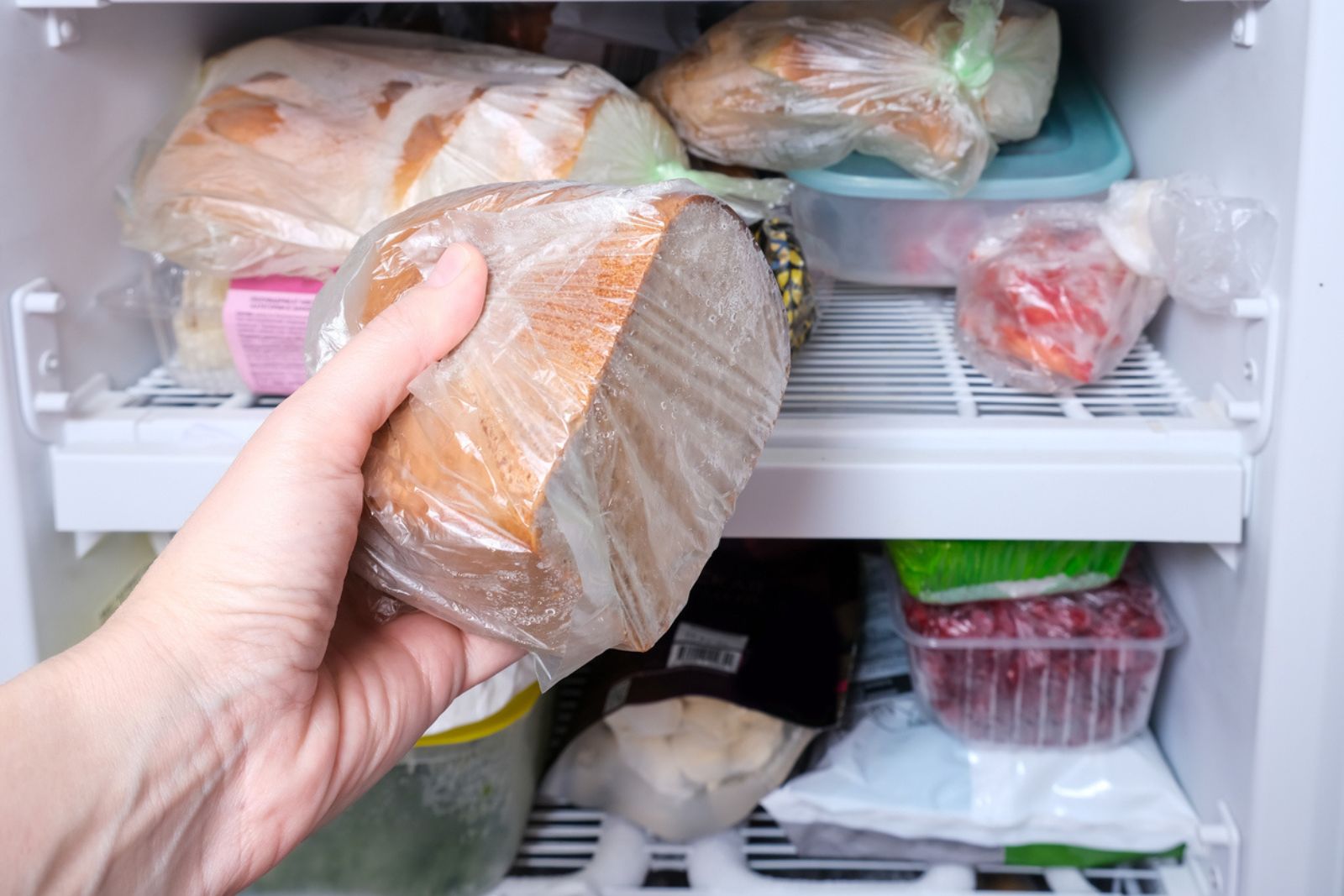
You read that freezing bread is good for your blood sugar, so the loaf goes straight into the freezer after every grocery run. Every morning you pry two frozen slices apart with a butter knife, wait for them to thaw on the counter, and eat them soft, the way you always have.
This is not your fault. The tip usually travels without its fine print, and the fine print matters here: in the study behind it, what helped most depended on whether the bread was homemade or store-bought, and the toaster did a big share of the work.
What the cold and the toaster do to starch
Baking makes the starch in flour swell and gelatinize, which makes it easy to digest. That's why fresh white bread releases its sugar quickly. When baked bread cools, some of that swollen starch shrinks back into a form called resistant starch, which digestive enzymes have a harder time breaking down.
Nutrition researcher Duane Mellor of Aston University explains that this shrinking happens nearly twice as fast in the freezer as in the fridge, so freezing leaves more resistant starch behind.
The study most posts point to was run at Oxford Brookes University and published in the European Journal of Clinical Nutrition. Ten healthy adults, aged 22 to 59, ate white bread prepared four ways: fresh, frozen and defrosted, toasted, and frozen, defrosted, then toasted. The researchers tracked how much their blood sugar rose over 2 hours.
Compared with fresh bread, the rise was smaller every time:
- Homemade white bread, frozen and defrosted: about 31% lower.
- Homemade white bread, toasted from fresh: about 25% lower.
- Homemade white bread, frozen, defrosted, then toasted: about 39% lower, the biggest drop in the study.
- Store-bought white bread, toasted: about 28% lower.
- Store-bought white bread, frozen, defrosted, then toasted: about 26% lower, no better than toasting alone.
How to use the trick at home
If you buy sliced sandwich bread, the toaster is the step that counts. Freezing the loaf still keeps it from going stale, which cuts waste, but in this study it didn't add anything to the blood sugar effect once the bread was toasted.
If you bake your own loaf, let it cool, slice it, and freeze the slices. Defrost what you need, then toast it. That combination gave the largest drop.
Plan B if you don't own a toaster: for homemade bread, freezing and defrosting alone lowered the rise by about 31%. For store-bought bread, the study only reported a clear drop once the slices were toasted.
What the study can't tell you
This was a small study: 10 healthy adults, white bread only, published in 2008. It measured blood sugar for 2 hours after eating, not long-term health. Mellor points out that the effect lasts a couple of hours, and that its long-term impact on appetite, weight or type 2 diabetes risk is unknown and likely very small.
Frozen and toasted white bread is still white bread. The trick changes how quickly its sugar reaches your blood at one meal, not what the bread contains. The percentages above are calculated from the study's averages, so your own response may differ.
If you have diabetes or prediabetes, or you take medication that lowers blood sugar, your doctor or a registered dietitian can help you decide how bread fits your meals.
Toast the store-bought loaf, freeze then toast the homemade one. That's the trick.

Leave a Reply