


The bag of walnuts has been clipped shut on the pantry shelf since the last batch of banana bread. You fold a handful into tonight's loaf, and when it comes out of the oven, something tastes off: a little bitter, a little flat, nothing like the bread you made last month.
This is not your fault. Nuts look like a dry, shelf-stable food, and the bag rarely says otherwise. But a Kansas State University storage guide, adapted from the USDA FoodKeeper, gives an opened package of nuts only about 2 weeks at 70°F. Its instruction is short: refrigerate after opening, and freeze for longer storage.
Why nuts turn in a warm cupboard
Nuts are rich in oil, and that oil is the weak spot. In pecans, a storage guide from New Mexico State University names linoleic acid as the main compound behind oxidation and rancidity, and notes that the high oil content lets rancidity develop at warm temperatures.
Temperature changes everything in that guide's table. Shelled pecans keep about 3 months at 70°F, about 6 months at 47 to 50°F, about 12 months at 32 to 36°F, and 2 to 5 years at 0°F. A home fridge kept at 40°F or below, as the USDA recommends, lands between the two cold bands.
That's why the pantry next to the oven and the sunny counter are the worst spots. The Kansas State guide asks for cupboard foods to be kept cool, dry and dark, away from appliances and the sun.
Where each one goes
Nuts aren't the only pantry staple that does better in the cold. Here's where the guides send them:
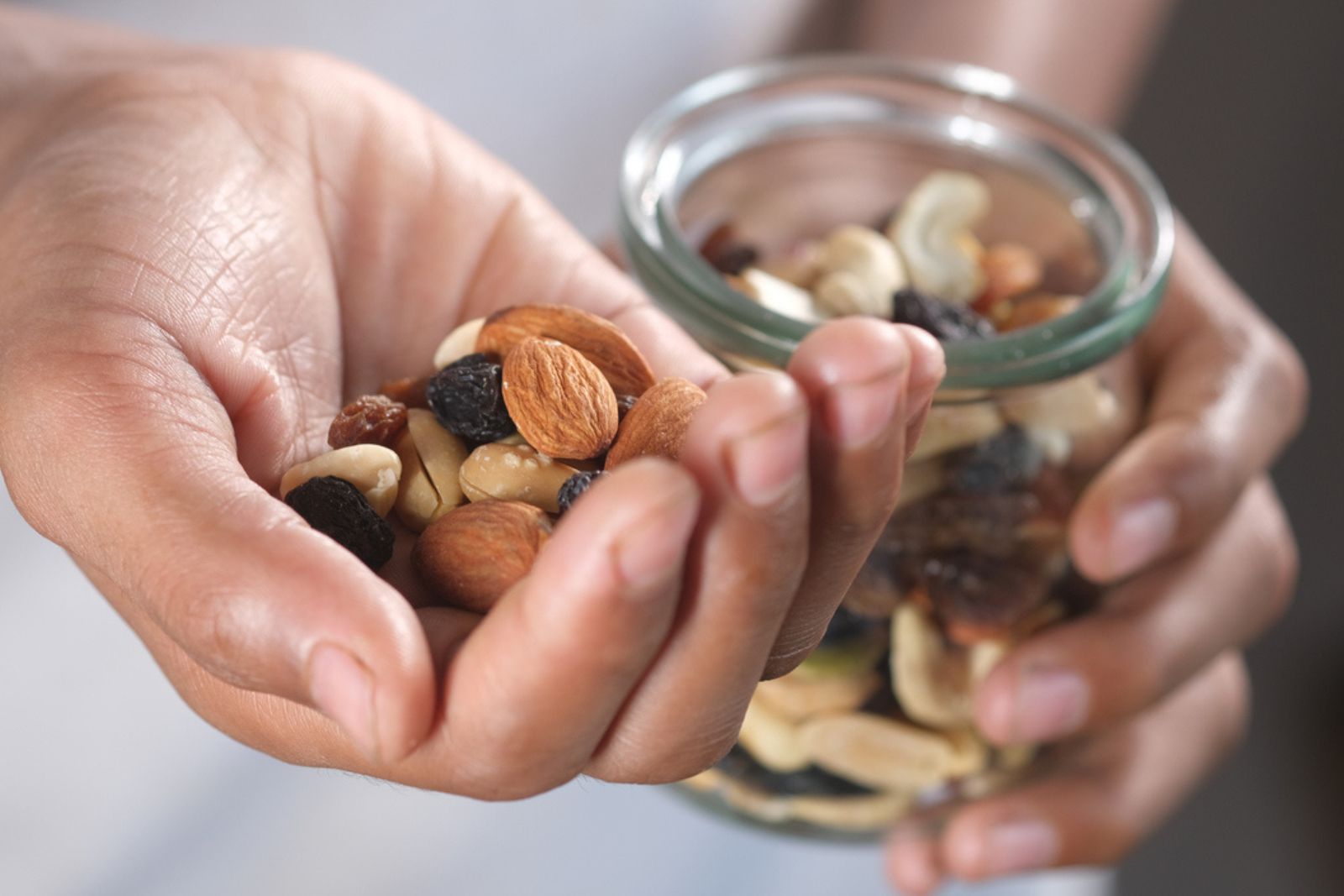
- Opened nuts: into the fridge, in a covered glass jar or a sealed plastic bag. Keep them away from strong smells, since nut meats pick up odors and flavors easily.
- A big bag you won't finish soon: into the freezer. The New Mexico guide recommends the freezer for pecans you plan to keep longer than a year, in the shell or out.
- Whole-wheat flour: in an airtight container in the fridge or freezer, according to the Kansas State guide. Its higher fat content means it spoils faster than white flour, and an off smell or a change in color is the sign to replace the bag.
- Opened peanut butter: 2 to 3 months at 70°F, and it keeps longer in the fridge. Let it sit out a few minutes if you want it spreadable.
- Opened cooking oil: the exception. The guide gives it 3 to 5 months and says it doesn't need the fridge, as long as it's tightly closed in a cool, dark place.
Plan B for frozen nuts: don't take them straight from the freezer to a hot kitchen. The New Mexico guide warns that moisture condenses on the kernels if they meet heat right away, and suggests warming them gradually. Moving tomorrow's portion to the fridge tonight does the job.
What the storage times can't tell you
These figures are guide times measured at set temperatures, not a countdown printed on your bag. They also vary by nut: pecans, with their high oil content, spoil faster at warm temperatures than most nuts. The Kansas State guide adds that unsalted and blanched nuts keep longer than salted ones.
Your senses still have the final word. If a nut smells or tastes off, the Kansas State guide's rule applies: when in doubt, throw it out.
If anyone in your home has a peanut or tree nut allergy, label the jars clearly and keep them sealed, so a cold jar of walnuts never gets mistaken for something else.
Open the bag, fill a jar, and give it a spot in the fridge. That's the trick.

Leave a Reply