


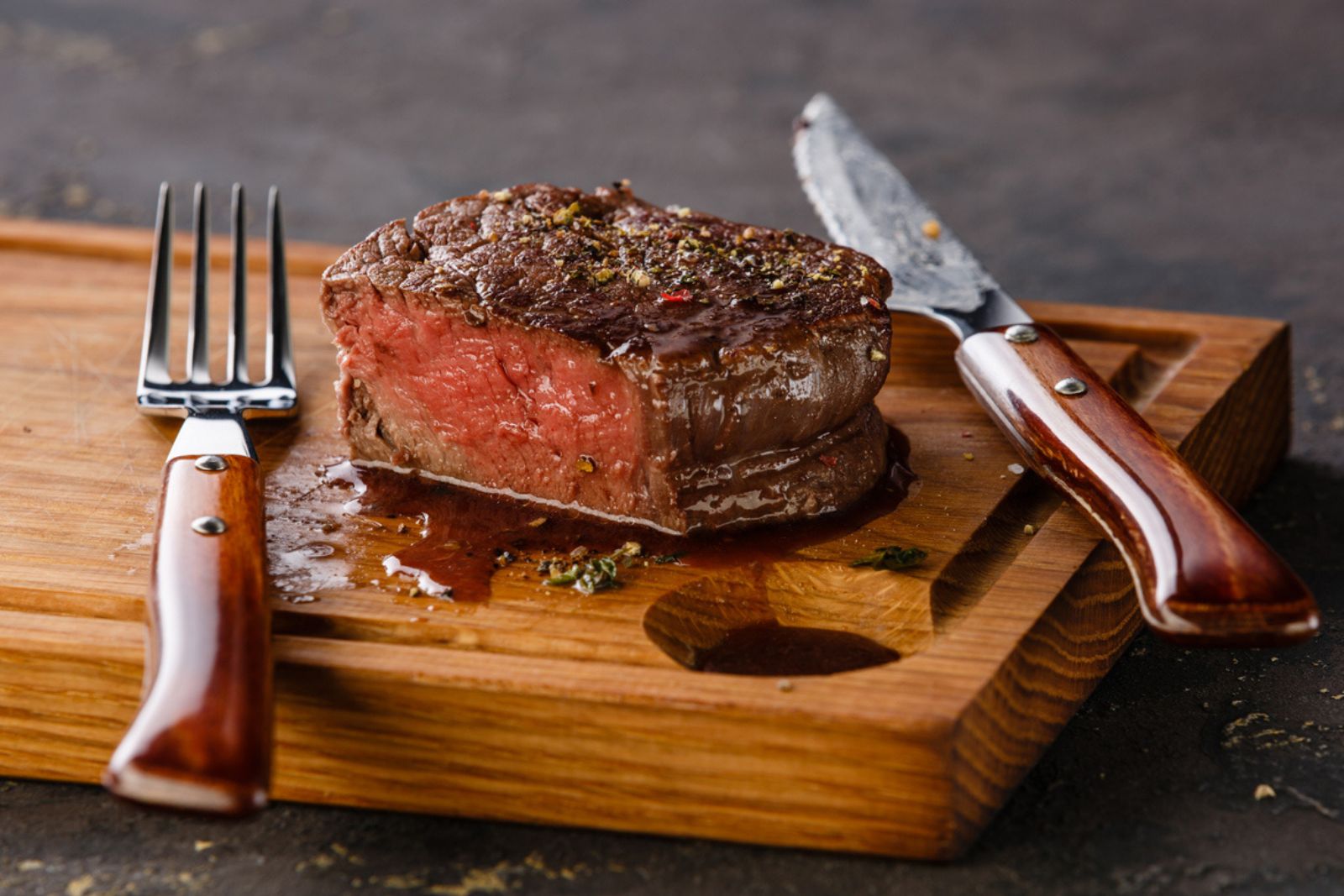
You spent good money on two filets for a special dinner. You seared them hard in a hot pan, then slid them into the oven to finish. When you cut in, there's a thick band of gray, overcooked meat around the edge and only a small pink center in the middle.
This is not your fault. Searing first is how many people learned to cook a steak. Alton Brown flips the order: he cooks the filet gently in a low oven first, then sears it at the very end.
Why searing first leaves a gray ring
A cold steak straight into a hot skillet has two problems. The surface is wet, so the pan spends its energy evaporating moisture before real browning starts. By the time a crust forms, the heat has already pushed deep into the meat, overcooking the outer layer and leaving a gray band.
The reverse sear solves both. A low oven warms the steak slowly and evenly, so it reaches almost its target temperature from edge to center, and it dries the surface along the way. When the steak finally hits the skillet, the dry surface browns in about a minute per side, too quickly for the heat to overcook the inside.
Alton Brown's reverse-sear method
This follows Alton Brown's reverse-sear filet mignon for one 8-ounce steak.
- Season. Sprinkle 2 teaspoons of kosher salt over both sides of the filet and let it sit about 10 minutes at room temperature while the oven heats to 200°F.
- Roast low. Roast until a probe thermometer, inserted horizontally into the center, reads 120°F, about 30 minutes.
- Rest. Let the steak rest uncovered for 10 minutes.
- Heat the skillet. Heat a 12-inch cast iron skillet over high heat for about 10 minutes, until it reaches at least 600°F. A half teaspoon of water should evaporate in about 5 seconds.
- Sear and rest again. Brush the steak with a very light coat of peanut or other neutral oil, sear 1 minute per side, then rest 5 minutes on a rack before slicing against the grain.
Rubbing the oil on the steak, instead of pouring it into the pan, keeps less fat in a skillet that's hot enough to smoke.
Plan B if filet mignon isn't in the budget: Brown calls filet a lean, pricey cut, and the same low-then-hot idea is worth trying on other steaks. Lively Table's guide to flank steak substitutes covers cuts like skirt, hanger, tri-tip and flat iron.
Where the 120°F number needs a second look
Brown pulls his filet from the oven at 120°F before searing, well below the USDA's recommendation. FoodSafety.gov lists 145°F with a 3-minute rest for beef steaks and roasts. If you're cooking for someone who is pregnant, older, very young or has a weakened immune system, roast to a higher temperature before the sear and check with a thermometer.
A skillet at 600°F is serious heat. Turn on the vent fan, keep a lid nearby, and use a thick, dry potholder or oven mitt, since a cast iron handle gets extremely hot.
The salt adds up too: 2 teaspoons of kosher salt is a generous amount for one steak. If you're watching sodium, use less and season again at the table if needed.
Roast it low, sear it hot and fast, and let a thermometer make the call. That's the trick.

Leave a Reply