


Holding vegetables under the tap can feel like one task, whether you are making a salad or preparing potatoes for roasting. Their surfaces tell a different story, with lettuce folding around trapped grit and potato skins carrying soil in shallow grooves.
If water runs over the outside, what happens to the dirt tucked between leaves or around a potato’s eyes?
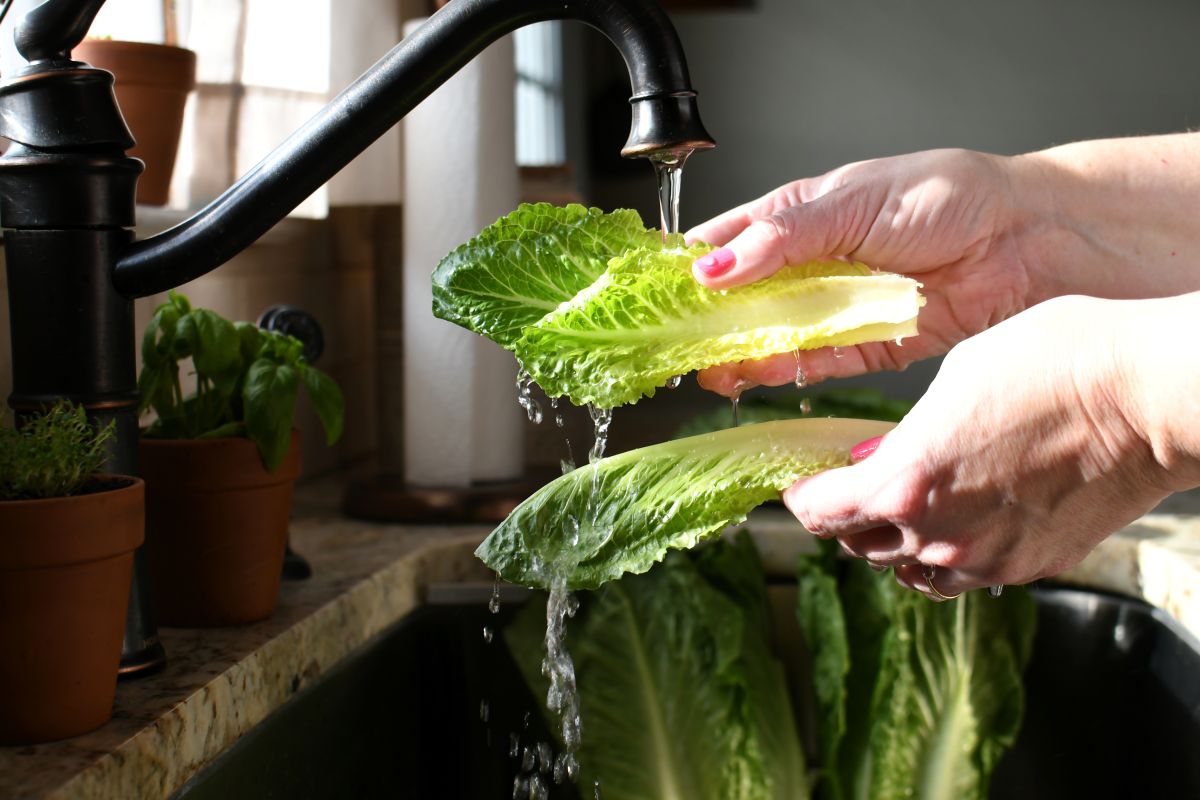
Both need clean water, but lettuce needs access between its leaves while potatoes can withstand scrubbing. Food-safety guidance makes that distinction between leafy vegetables and firm produce.
Separate Lettuce Leaves Before Rinsing
Washing an intact head leaves the inner surfaces harder to reach. Remove damaged outer leaves, separate the rest, and rinse them under cool running water, paying attention to folds and the areas near the base.
Handle the leaves with care rather than rubbing them as you would a potato. Opening those folded surfaces gives the water access without crushing the lettuce.
For vegetables with crevices, the University of Maine also suggests a one- to two-minute soak in cool, drinkable water. Use a clean bowl, then rinse the leaves with fresh water before draining. A soak helps with washing; it does not sterilize the greens.
Potato Skins Can Take a Brush
Potatoes have a firm surface that allows more direct cleaning. Rub them under running water, using a clean vegetable brush to work over soil that remains around the eyes and grooves.
Turn each potato as you scrub so the brush reaches more than the side facing the tap. The USDA identifies potatoes among the firm fruits and vegetables that can be washed with a brush.
The brush should be reserved for food preparation and kept clean between uses, rather than borrowed from another household cleaning job.
Wash Before the Peeler Comes Out
Removing potato skin does not make washing unnecessary. Dirt or germs on the outside can transfer during peeling or cutting, so rinse and scrub before either step.
The FDA recommends washing produce before peeling it, along with cutting away bruised or damaged areas before preparation.
Keeping that order also means the peeler handles a cleaned surface instead of dragging through soil as you work.
Dry Lettuce Without Crushing It
After washing, drain lettuce in a clean colander and remove the remaining water with a salad spinner or clean towel. A spinner lets you dry a batch without pressing the leaves together.
Wash the spinner with warm soapy water after use and let it air-dry before putting it away. The University of Maine includes drying the greens and cleaning the equipment in its produce-washing guidance.
Soap Belongs on the Equipment
Use soap to clean your hands, bowl, brush, and utensils, then rinse the equipment before it touches food. Lettuce and potatoes themselves should be washed with water.
The FDA advises against using soap, detergent, or commercial produce washes on fruits and vegetables. Washing can reduce bacteria on the surface, but it cannot eliminate every germ.
Check the Label on Bagged Lettuce
A whole head of lettuce and a bag marked “pre-washed” or “ready-to-eat” do not need the same preparation. The FDA says produce carrying those labels can be used without another wash.
If you choose to rinse it, keep it away from unclean surfaces and utensils that could introduce contamination.
Sources: University of Maine — Best Ways to Wash Fruits and Vegetables, USDA — Washing Food: Does It Promote Food Safety?, FDA — 7 Tips for Cleaning Fruits and Vegetables, FDA — Selecting and Serving Produce Safely.
Leave a Reply