


Rinsing an apple removes visible dirt, but its clean appearance cannot tell you which pesticide residues remain. That question has put a familiar kitchen ingredient into fruit-washing advice, with baking soda added to water before the apples go in.
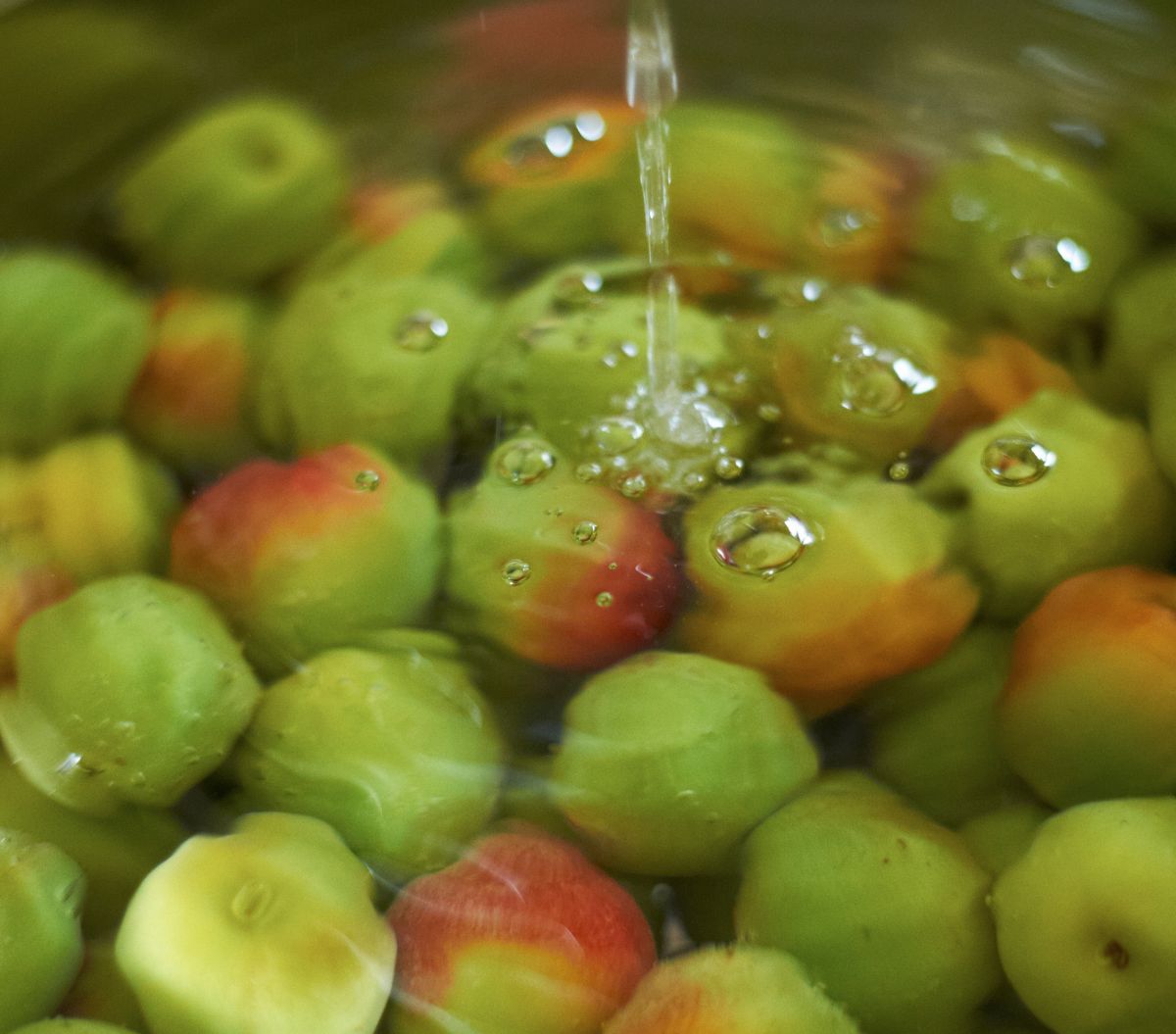
Does that soak reach everything on and inside the peel, or does its effect stop at the surface?
A 2017 study found that baking soda helped remove surface residues of two tested pesticides, while some residues beneath the surface remained. That distinction explains both the appeal of the method and its limits.
What Researchers Put to the Test
The experiment compared tap water, a baking soda solution, and a commercial bleach treatment used in produce processing. Researchers applied the fungicide thiabendazole and the insecticide phosmet to organic Gala apples before testing the washes. Baking soda performed best among the treatments evaluated.
Those details matter because the result came from a controlled experiment with selected chemicals. It does not establish how every pesticide on every apple will respond.
The Concentration and Soaking Time Made a Difference
Researchers used a solution containing 10 grams of baking soda per liter of water, equivalent to a 1% solution. Following a 24-hour pesticide exposure, removing the surface residues took 12 minutes for thiabendazole and 15 minutes for phosmet.
These were results for the tested conditions, rather than a guarantee that a 15-minute soak leaves any apple free of pesticides.
The Residues Washing Could Not Reach
Thiabendazole penetrated farther into the peel than phosmet, leaving more residue beyond the reach of the wash. Baking soda removed what remained on the surface but could not wash away the portion that had entered the apple.
Removing surface residues and removing all residues are different outcomes, even when the fruit has spent the full tested time in the solution.
A Clean-Looking Peel Cannot Confirm the Result
The researchers used laboratory measurements to assess pesticide removal, so appearance alone cannot show whether a household soak achieved the same effect. Neither a shiny peel nor clear soaking water provides that measurement.
The study also did not establish that all apples need a baking soda bath. Its findings describe a method for reducing particular residues under specified conditions, rather than a required step before eating fruit.
Running Water Remains the Routine Washing Step
For everyday preparation, the FDA recommends washing produce under running water and rubbing the surface as you rinse. Wash apples before cutting or peeling them, so dirt is removed before a knife passes through the skin.
Start with clean hands and dry the washed fruit with a clean cloth or paper towel. Soap, detergent, and commercial produce washes are not recommended, and the bleach treatment in the experiment should not be copied as a household fruit wash.
Sources: Journal of Agricultural and Food Chemistry — Apple-Washing Study, American Chemical Society — Baking Soda Washes Pesticides From Apples, FDA — Selecting and Serving Produce Safely, FDA — 7 Tips for Cleaning Fruits and Vegetables.
Leave a Reply