


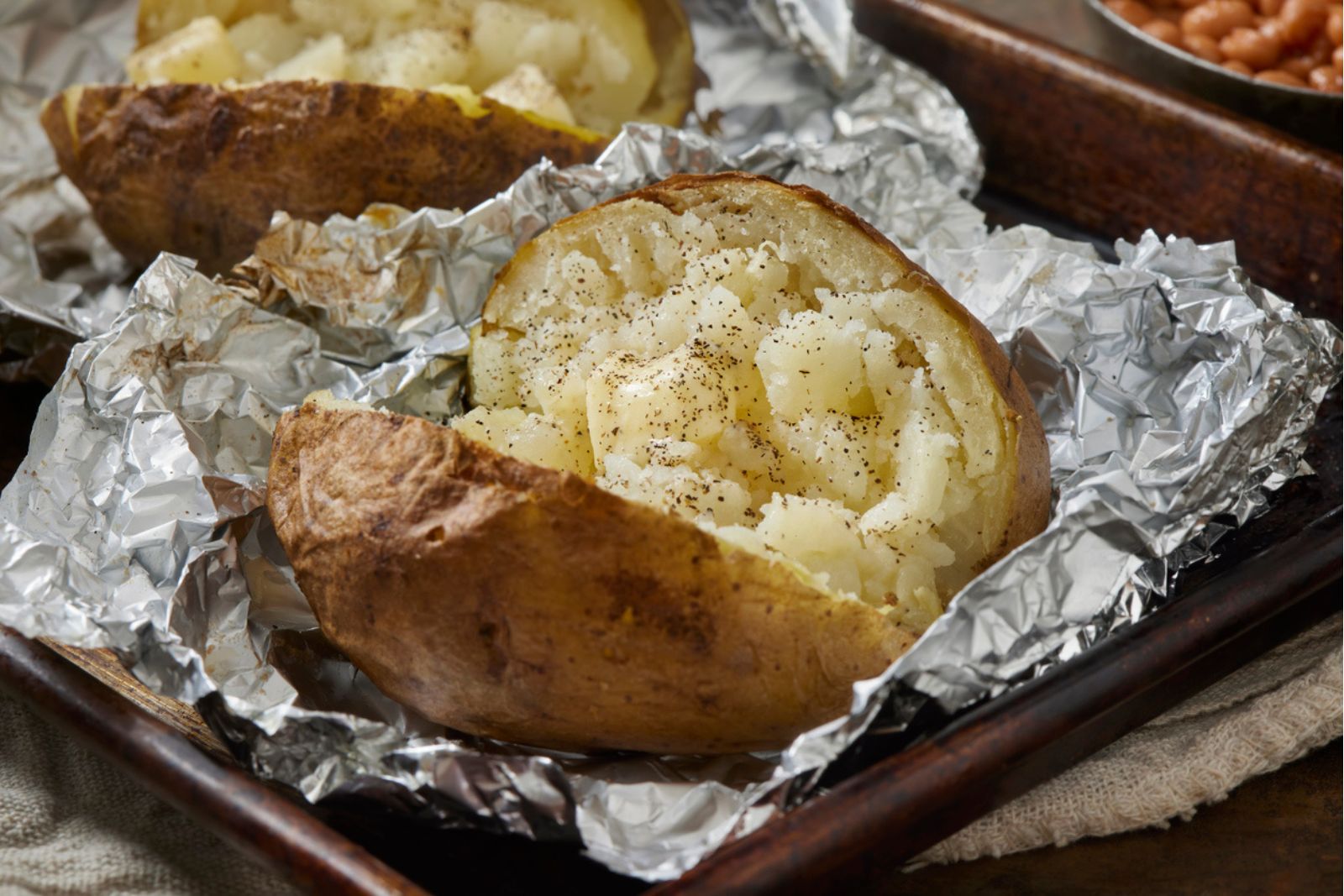
You wrapped each potato in foil the way you always have and slid them into the oven. An hour later, the insides are fluffy, but the skins are pale, damp and limp. After dinner, two leftover potatoes stay on the stovetop, still wrapped, until someone remembers them the next morning.
This is not your fault. Wrapping potatoes in foil is a habit many of us grew up with. But chefs skip it for the sake of crispy skin, and food safety experts warn against one part of the habit in particular: leaving cooked potatoes sealed in foil at room temperature.
What foil does to a baking potato
A potato releases moisture as it bakes. Unwrapped, that steam escapes into the oven and the skin dries and crisps. Wrapped tightly, the steam stays trapped against the skin, so the potato steams in its own moisture and comes out soft on the outside.
Foil also holds heat in after baking. The Idaho Potato Commission, which doesn't recommend foil-wrapped potatoes, notes that the foil acts as a barrier that keeps heat from escaping. That matters most once dinner is over.
Baking a potato right on the rack
- Heat the oven. Preheat to 400°F.
- Scrub and dry. Wash each russet potato under running water and dry it well, since a wet skin won't crisp.
- Prick and season. Pierce each potato twice with a fork, rub with about ½ teaspoon of oil and sprinkle with a pinch of salt.
- Bake bare. Set the potatoes directly on the oven rack, spaced apart, and bake 50 to 60 minutes, until a fork slides easily into the center. Larger potatoes may need longer.
- Serve or cool. Split and serve right away, or let leftovers cool briefly, unwrapped, before refrigerating them.
Plan B if you love a soft skin: wrap the potatoes for baking if you like, but unwrap them as soon as they come out of the oven. For leftovers, skip the foil entirely. Lively Table explains why foil can develop holes in the fridge and why an airtight container is often the better choice.
The foil warning from a 1994 outbreak
The safety concern is botulism. According to the UC Master Food Preservers, the bacterium of primary concern is Clostridium botulinum, which can cause the potentially fatal disease botulism. Foil can keep a potato warm and moist for hours, in the temperature range where bacteria grow.
Cases are rare, but one is well documented. In April 1994, 30 people in El Paso, Texas, got botulism after eating dips from a restaurant. A report in the Journal of Infectious Diseases traced a potato-based dip to foil-wrapped baked potatoes held at room temperature, apparently for several days, before they were used. Four of the patients needed mechanical ventilation.
The fix is simple. The UC Master Food Preservers advise removing foil as soon as potatoes come out of the oven or off the grill, refrigerating them without the foil if you won't eat them right away, and not leaving them at room temperature for more than 2 hours, or 1 hour above 90°F.
If you're cooking for someone who is pregnant, older or has a weakened immune system, be especially strict about getting leftovers into the fridge quickly.
Bake the potato bare, unwrap anything that went in foil, and refrigerate leftovers within 2 hours. That's the trick.

Leave a Reply