


Aluminum foil seems like a convenient way to cover leftover lasagna, tomato sauce, or marinated chicken before putting it in the refrigerator. But after a night or two, the foil can develop dark spots or tiny holes where it touches the food. The damage isn't necessarily caused by a tear or a thin sheet of metal. Certain ingredients can react with the foil during storage.
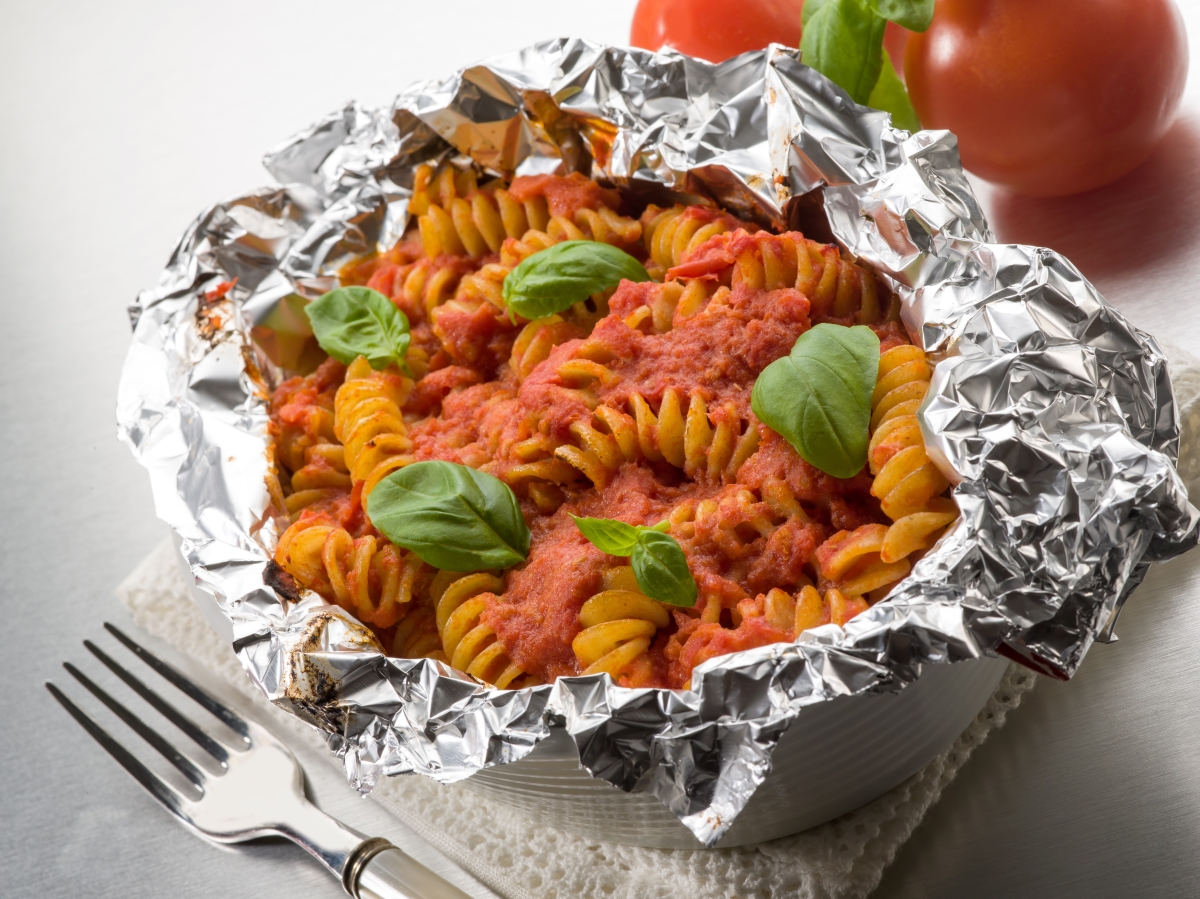
Acidic foods and salty liquids can disrupt the protective layer on aluminum, exposing the metal beneath. Over time, the reaction may leave gray residue, a metallic taste, or small pits in the foil.
The problem depends on what the foil touches and how long the contact lasts. Covering a baking dish without touching the food is different from pressing foil against a wet, acidic sauce for several days.
Acid and salt can damage the foil's protective layer
Aluminum foil has a thin coating of aluminum oxide that forms on its surface and protects the metal beneath.
Acids can weaken this barrier, while chloride from salt can disrupt it in small areas.
When the protective layer breaks down, exposed aluminum can react with moisture and ingredients in the food.
The result may appear as dark spots, gray residue, or tiny holes in the foil.
Food scientists identify four types of leftovers that deserve extra attention:
- Tomato-based dishes: Marinara sauce, chili, and lasagna contain acids that can react with foil during prolonged contact.
- Citrus-heavy foods: Lemon-marinated chicken, lime-dressed fish, and cut citrus fruit bring citric acid and moisture against the metal.
- Vinegar-based dishes: Pickled vegetables, vinaigrette-dressed salads, and vinegar marinades contain acids that can contribute to corrosion.
- Wet, heavily salted foods: Brined poultry and cured meats stored in salty juices can damage foil where the liquid touches it.
Acid and salt together can make the reaction more pronounced, particularly when the food remains against the metal for extended periods.
The food isn't necessarily unsafe, but the foil can change it
The reaction doesn't mean every dish that touches aluminum foil becomes unsafe to eat.
According to the German Federal Institute for Risk Assessment, aluminum consumed through food has low acute toxicity. Reynolds also states that food affected by spots from foil reactions can remain suitable for consumption.
The concerns include unwanted metallic flavors, damage to the foil, and avoidable aluminum transfer into food.
There is no fixed time before corrosion begins. Acidity, salt concentration, moisture, temperature, and contact duration all influence the reaction.
For overnight storage, transfer acidic or salty leftovers into airtight glass or food-safe plastic containers.
If foil is needed to cover a baking dish, keep it above the food rather than pressing it against the surface. Parchment paper can provide a barrier when direct contact cannot be avoided.
Aluminum foil remains useful for covering dishes and protecting food during cooking. The difference comes from prolonged contact with acidic or salty ingredients, which can damage the metal even at refrigerator temperatures.
Leave a Reply