


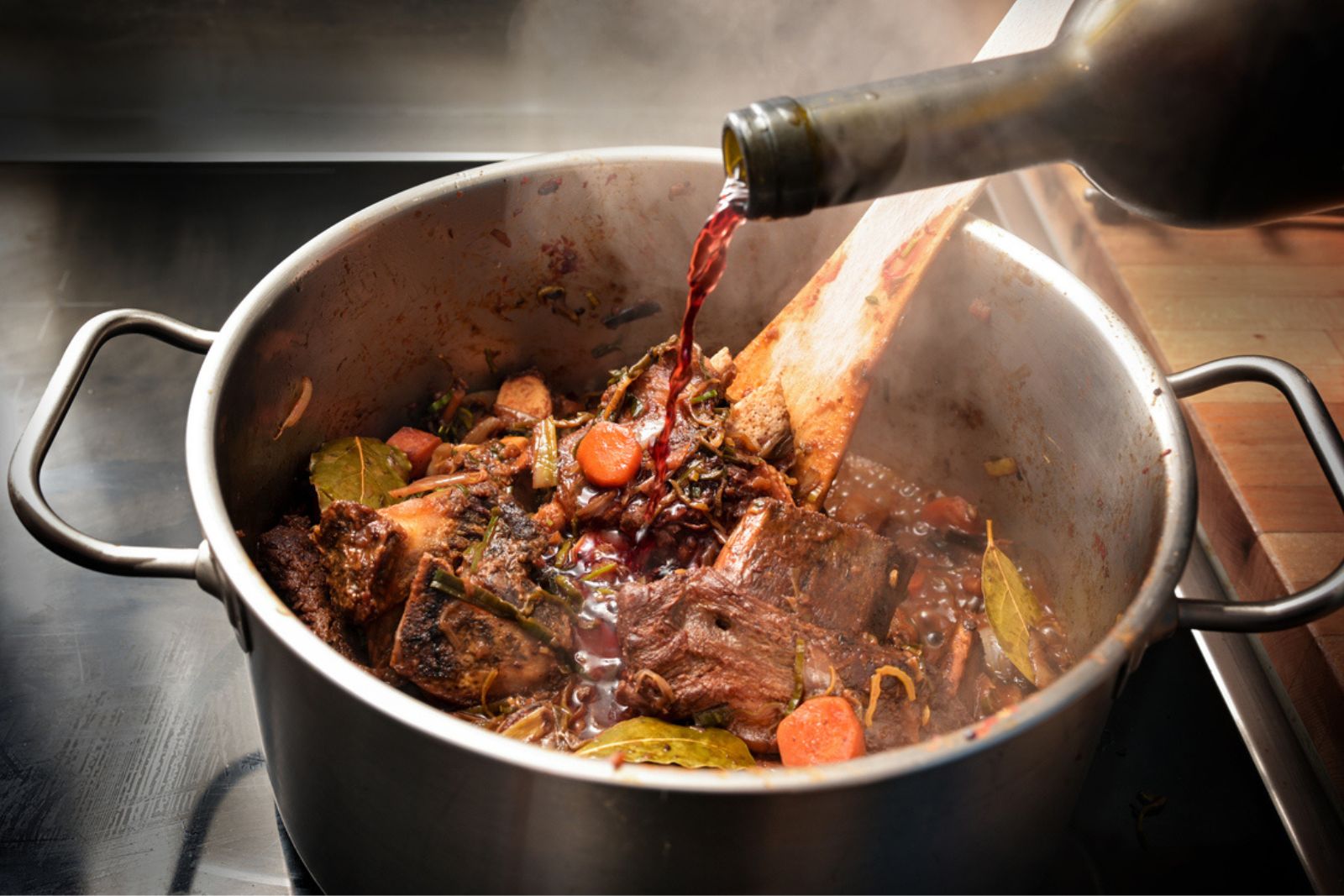
The beef stew has been bubbling away for hours, and the kitchen smells wonderful. Then you taste the sauce. It's sharp and a little sour, the wine is all you can taste, and the beef seems to be swimming in it.
This is not your fault. Many classic recipes call for a generous pour of red wine, sometimes most of a bottle. Chefs who want a rounder sauce keep the wine but use much less of it, and make up the difference with stock. Veal stock is the traditional choice, and beef stock works too.
Why a wine-heavy braise turns sharp
Red wine is acidic, and a long, slow braise concentrates whatever is in the pot. When wine makes up most of the liquid, its sharpness can take over the beef, carrots and onions instead of supporting them.
Stock changes the balance. It adds savory, meaty depth while softening the wine's acidity, and cooks who use this swap say the sauce turns slightly thicker and coats the beef better as it simmers. A single glass of wine is still enough to give the stew its classic color and flavor.
There's a second benefit: less alcohol in the bowl. Alcohol doesn't all cook off. Idaho State University dietitian Barbara Gordon points to USDA cooking estimates showing that about 10% of the alcohol remains after 2 hours of cooking, and about 5% after 2½ hours. Starting with less wine means less is left at the end.
A lighter beef stew for four
- Brown the beef. Trim the fat from 1⅓ pounds of beef chuck and cut it into even pieces. Heat 1 tablespoon of oil in a heavy Dutch oven and brown the beef for about 10 minutes, turning it so every side colors.
- Add the vegetables. Stir in 2 sliced onions and about 7 ounces of sliced carrots. Sprinkle ¼ cup of flour over everything and cook 5 minutes, stirring often.
- Pour in the liquid. Add about ⅔ cup of red wine and 2 cups of veal or beef stock. Add 3 minced garlic cloves and a few sprigs of thyme with a bay leaf, then season with pepper.
- Braise low. Cover and simmer over low heat for 2 hours, until the beef is very tender.
- Finish with mushrooms. Brown sliced mushrooms in a separate skillet until they release their water, stir them into the stew and cook 15 minutes more. Remove the herbs, taste and add salt if needed.
Plan B if you'd rather skip alcohol completely: replace the wine with more stock. The sauce loses some of its tang, but it stays rich. For a hands-off version, Lively Table's rosemary red wine beef and mushroom stew uses the same balance in a slow cooker, with 1 cup of wine to 4 cups of low-sodium beef broth.
What the stock pot adds besides flavor
Store-bought stock, bouillon and concentrated bases can be high in sodium. Choose low-sodium or unsalted stock, and wait until the end of cooking to add salt, since the sauce reduces as it simmers.
Less wine isn't the same as no alcohol. If you're cooking for children, someone who is pregnant, anyone avoiding alcohol or taking medication that doesn't mix with it, use the all-stock version.
The flour thickens the sauce but contains wheat, so swap in a gluten-free flour blend for anyone who avoids gluten. Cool leftovers and refrigerate them within 2 hours, and reheat them to 165°F before serving.
Keep one glass of wine, let the stock do the rest, and give it 2 slow hours. That's the trick.

Leave a Reply