


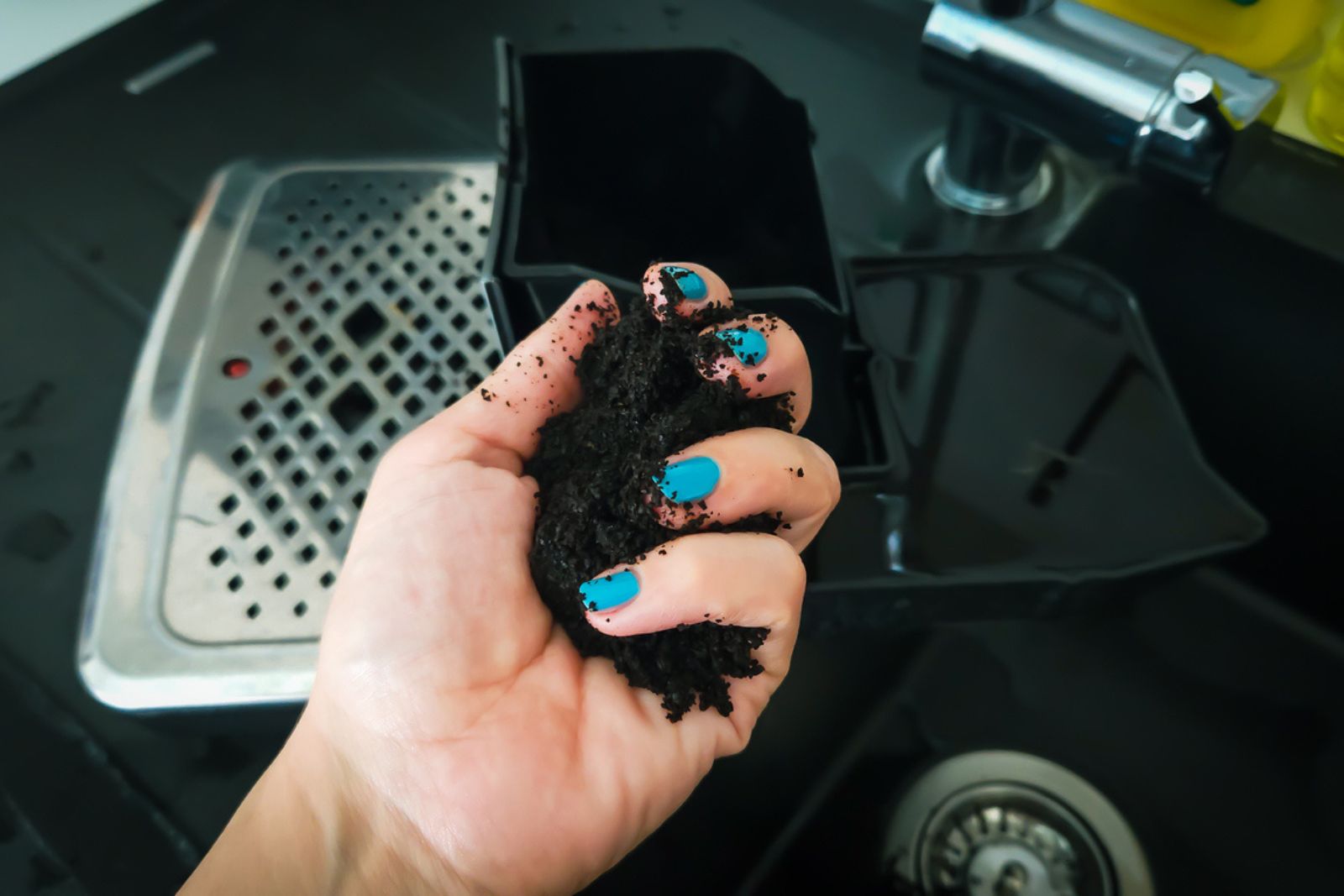
Dinner is over, and the stainless steel sink has that dull, cloudy film again. The pot on the stove still has bits of rice stuck to the bottom. You reach for steel wool, scrub hard, and the sink comes out clean but covered in fine scratches.
This is not your fault. Stuck-on grime makes it tempting to grab the harshest thing under the sink. But two things you already have in the kitchen make a gentler scrub: a splash of white vinegar and this morning's used coffee grounds.
What each half of the paste does
Vinegar does the dissolving. Tioga County Public Health in New York notes that vinegar dissolves dirt, grease and mineral deposits, and that it helps neutralize many household odors. That's why it works on the hazy water spots that build up in a sink.
The grounds do the scrubbing. Their gritty texture gives a soft sponge something to push against, so you can loosen residue without reaching for steel wool or an abrasive pad. Lively Table's guide to cleaning a stainless sink warns that those harsher tools can scratch the finish.
One thing the paste doesn't do: fully disinfect. The same health department says vinegar kills some bacteria but isn't a hospital-grade disinfectant, so use a registered disinfectant where that matters.
Making the coffee ground scrub
- Save the grounds. Let used coffee grounds cool, then scoop about 2 tablespoons into a small bowl.
- Add the vinegar. Pour in white vinegar a little at a time, stirring, until the mixture turns into a thick paste.
- Spread it on. Smooth the paste over the dull spot in a stainless steel sink, the stuck-on residue in a sturdy pot, greasy patches on the stovetop or heavy grates.
- Let it sit. Give it a few minutes to work on the grime.
- Scrub, wipe and rinse. Scrub gently with a soft sponge, following the grain on stainless steel. Wipe the paste into the trash with a paper towel, then rinse well with warm water and dry.
That wipe-first step matters. The City of Madison, Wisconsin, lists coffee grounds among the things that shouldn't go down the drain, so send them to the trash or compost instead.
Plan B if you don't drink coffee or the grit feels too rough: use baking soda. Lively Table's guide to cleaning a stainless steel sink uses baking soda and a little dish soap, with a spray of vinegar on top for hard water deposits.
Where the paste does more harm than good
Keep it away from stone. According to the Natural Stone Institute, products containing lemon, vinegar or other acids may dull or etch calcareous stones, those made mostly of calcium carbonate, such as marble. Tioga County Public Health adds aluminum and waxed wood to the list of surfaces vinegar can damage. Skip unsealed wood, glossy finishes and nonstick pans too, where any grit can leave marks.
Never combine it with bleach. The Washington State Department of Health warns that mixing chlorine bleach with an acid like vinegar gives off chlorine gas. Even brief, low-level exposure can sting the eyes and cause coughing and trouble breathing. If you used a bleach cleaner on the same spot, rinse thoroughly before reaching for the paste.
Clear food off the counter before you start, and rinse pots and grates well so no vinegar or grounds end up in the next meal.
Mix the grounds into a paste, scrub gently, and wipe it into the trash before you rinse. That's the trick.

Leave a Reply