


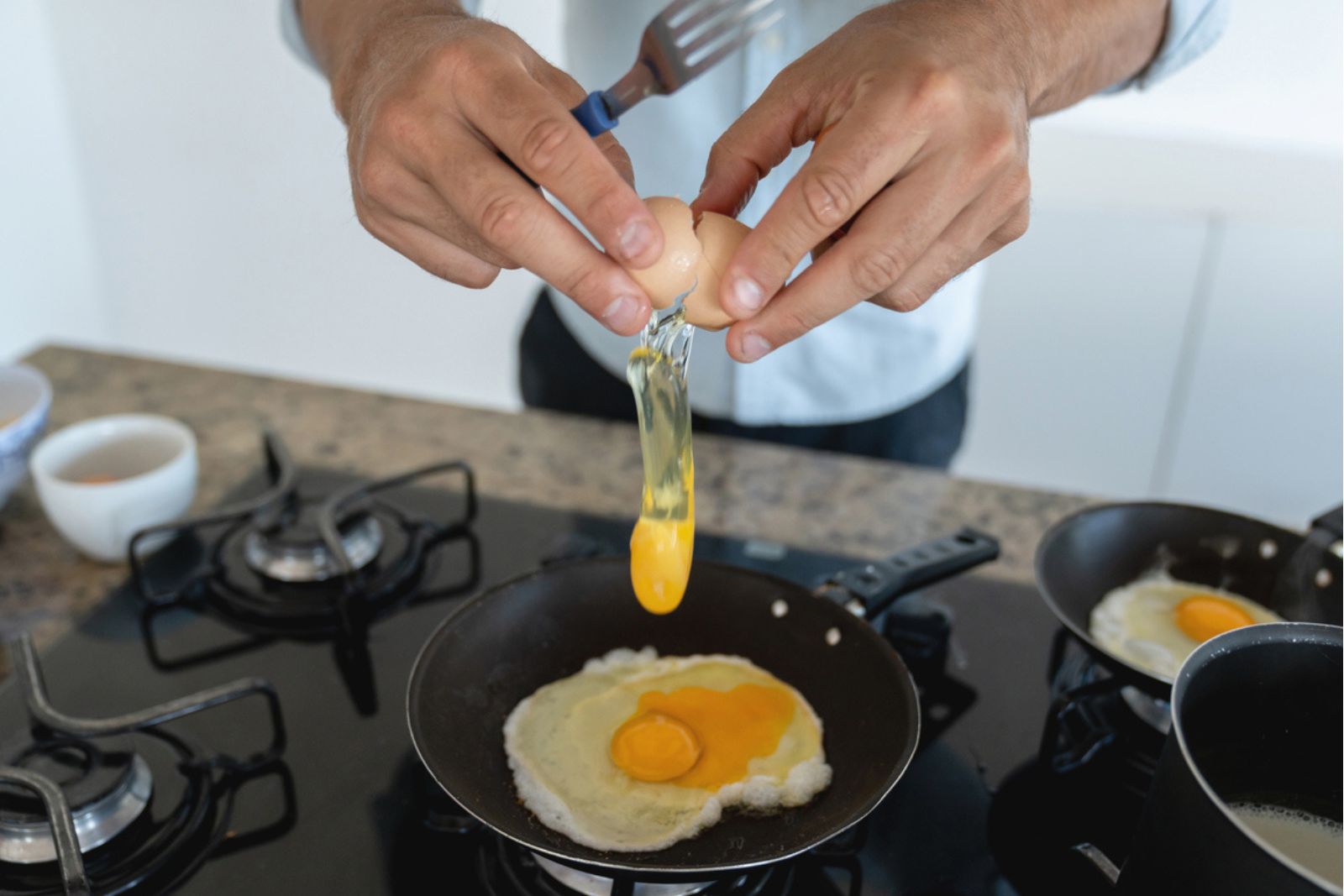
You drop a pat of butter into the skillet, crack in an egg and wait. The edges turn brown and crisp while the white around the yolk stays clear and wobbly. You try to flip it, the yolk breaks, and breakfast ends up as a messy scramble.
This is not your fault. A skillet only heats the egg from below, so the bottom always races ahead of the top. Chefs fix that with an ingredient that costs nothing and adds no calories: a spoonful of water.
Why the top of a fried egg lags behind
The thick white closest to the yolk is the last part to set. By the time it firms up from the heat underneath, the bottom of the egg is often browned and rubbery. Flipping solves the problem but risks the yolk.
Water changes how the heat reaches the egg. A small splash hits the hot pan and turns into steam, and a lid traps that steam over the egg. The top of the white cooks gently without flipping, and the yolk can stay soft, a lot like a poached egg.
The fat savings add up, too. A tablespoon of butter has about 100 calories, based on USDA data, which is more than the 72 calories in one large egg. With this method, you need only a touch of fat, or none at all in a good nonstick pan.
The steam-fried egg, step by step
- Heat the pan. Set a nonstick skillet over medium heat with just a touch of butter or oil, about ½ teaspoon, or skip it.
- Crack in the egg. Let it cook undisturbed.
- Watch the edges. Wait until the edges of the white turn opaque and set.
- Add the water. Pour 1 to 2 teaspoons of water into the pan next to the yolk, not on it.
- Cover right away. Put the lid on for 20 to 60 seconds. The shorter end leaves the yolk soft, and the longer end firms it up.
For more flavor, use a splash of broth instead of water. A completely fat-free egg tastes a little flatter and won't develop crisp edges, so a small dab of butter is worth keeping if that's what you love.
Plan B if crispy edges are the whole point: go the other direction. Lively Table explains why lacy fried eggs with browned edges are made in very hot oil instead.
When a soft yolk isn't the safe choice
A runny yolk is a matter of taste for most people, but not for everyone. The FDA advises, "Cook eggs until both the yolk and the white are firm." The agency notes that children, older adults, pregnant women and people with weakened immune systems are at greater risk of severe illness. For them, leave the lid on longer, until the yolk is firm, or use pasteurized eggs.
Water hitting hot fat can spatter, so pour it in gently and keep your face back. Tilt the lid away from you when you lift it, since trapped steam burns quickly.
If you swap in broth, check the label. Regular broth can add sodium, so pick low-sodium if you're watching salt.
Let the edges set, add a spoonful of water beside the yolk, and cover. That's the trick.

Leave a Reply