


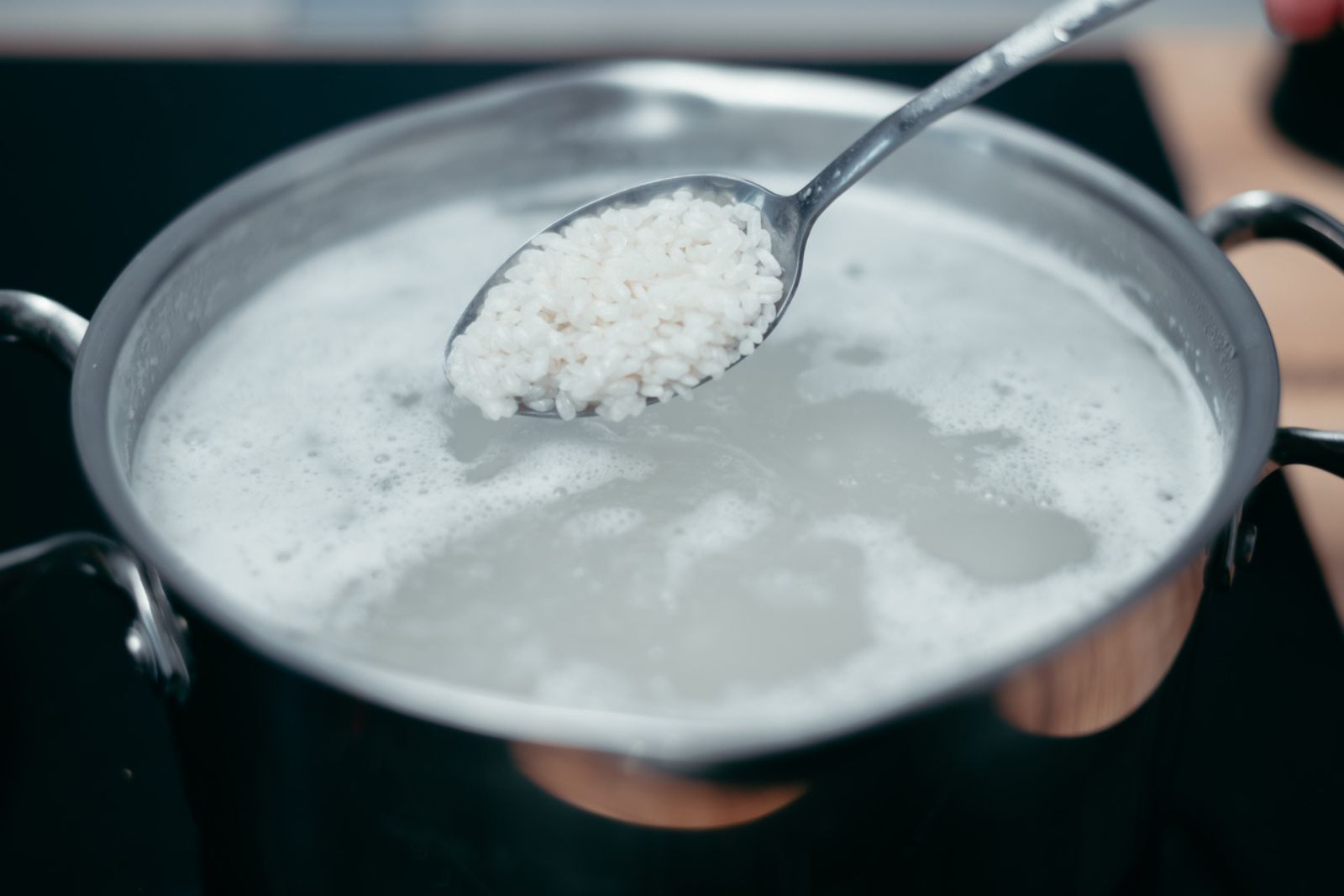
Dinner is almost ready: roasted chicken, green beans and a pot of white rice. Everyone takes a bite of the rice, then reaches for the salt shaker or the soy sauce. It's cooked perfectly and tastes like almost nothing.
This is not your fault. Plain water gives rice nothing to absorb but water. Chefs who want rice that tastes good on its own reach for three staples instead: broth, garlic and bay leaves.
Why rice tastes like whatever it cooks in
On the stovetop, white rice soaks up its cooking liquid completely. The USA Rice Federation gives a general rule of 2 parts liquid to 1 part rice, and University of Maryland Extension suggests using broth or water. Every drop ends up inside the grains, so the liquid is the seasoning.
Broth brings savory flavor and a little body. Garlic, browned gently in olive oil before the rice goes in, flavors the oil that coats each grain. Bay leaves add a quiet, herbal background as the pot simmers.
The way you cook it matters too. USA Rice advises against stirring while the rice cooks, because stirring releases starch and makes the rice sticky.
Garlic and bay leaf broth rice for four
- Heat the broth. Warm about 2½ cups of chicken, vegetable or fish broth in a small saucepan.
- Brown the garlic. In a medium saucepan, heat 2 tablespoons of olive oil over medium heat. Add 3 peeled whole garlic cloves and cook until lightly golden.
- Toast the rice. Add 2 bay leaves and about 1½ cups of long-grain white rice. Stir for 1 minute, until the grains are coated in oil.
- Simmer. Pour in the hot broth, taste it and add salt only if needed. Cook over medium heat for about 18 minutes, without stirring, until the liquid is absorbed.
- Rest and fluff. Take the pot off the heat and let it rest 5 minutes. Remove the garlic and bay leaves, then fluff with a fork.
This recipe uses a little less liquid than the 2-to-1 rule. Plan B if the rice is still firm once the broth is gone: add 2 or 3 tablespoons of hot broth, cover and leave it on low heat for a few more minutes.
If you'd rather start from scratch, Lively Table's bone broth from kitchen scraps makes about 3 quarts, enough for several pots of rice.
Where the broth adds more than flavor
Broth can add a lot of sodium. Store-bought brands vary widely, so compare labels and choose low-sodium or unsalted broth if you're watching salt. The Lively Table bone broth recipe is unsalted, which lets you season the rice yourself. Either way, taste the broth before adding any salt to the pot.
Fish broth is an easy swap to overlook for anyone with a fish allergy, so stick with chicken or vegetable broth when serving guests.
Leftover rice needs care. USA Rice warns that the bacterium Bacillus cereus occurs naturally in rice and recommends refrigerating cooked rice at 40°F or below within 2 hours of cooking. Eat it within 4 days, and reheat it to 165°F.
If you're managing blood sugar, broth doesn't change the carbohydrates in white rice, so keep portions in line with your plan and ask your doctor or a registered dietitian if you're unsure.
Swap the water for broth, add garlic and bay leaves, and leave the lid alone while it cooks. That's the trick.

Leave a Reply