


Scalloped potatoes are one of those side dishes where I expect plenty of cream to do most of the work. I wanted the same soft potato layers and thick cheese sauce without pouring heavy cream into the baking dish, so I tried a different base.
I used milk and broth instead, then thickened the mixture with a small amount of flour before adding Gruyère and Parmesan. The sauce looked thinner than a cream-based version at first, but that changed as it cooked around the potato slices.
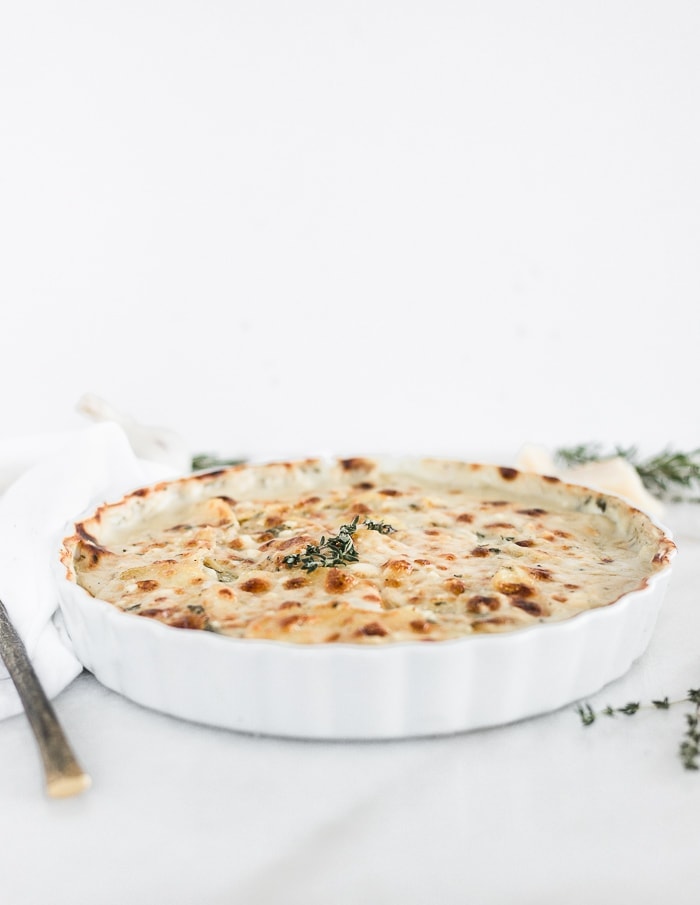
After baking, the potatoes were tender, the sauce stayed creamy between the layers, and the cheese formed a browned top. Heavy cream wasn't necessary to get the texture I wanted.
I Used Milk and Broth for the Cream Sauce
My sauce started with shallot and garlic cooked in a little olive oil. Once they softened, I stirred in flour before adding milk and broth.
The flour matters here because milk and broth don't have the body of heavy cream. Cooking the flour with the shallot and garlic first, then adding the liquids, creates a sauce that can thicken before it reaches the baking dish.
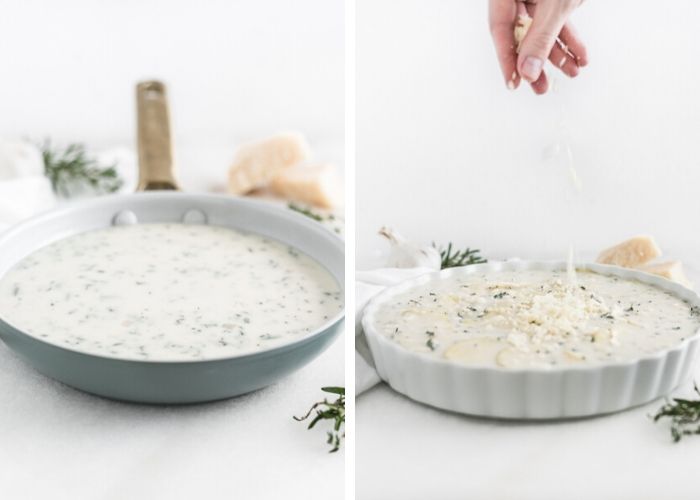
I added fresh thyme and rosemary, followed by grated Gruyère and Parmesan. The cheese melted into the sauce and brought much of the richness I would have expected from cream.
Thin Potato Slices Made a Bigger Difference Than I Expected
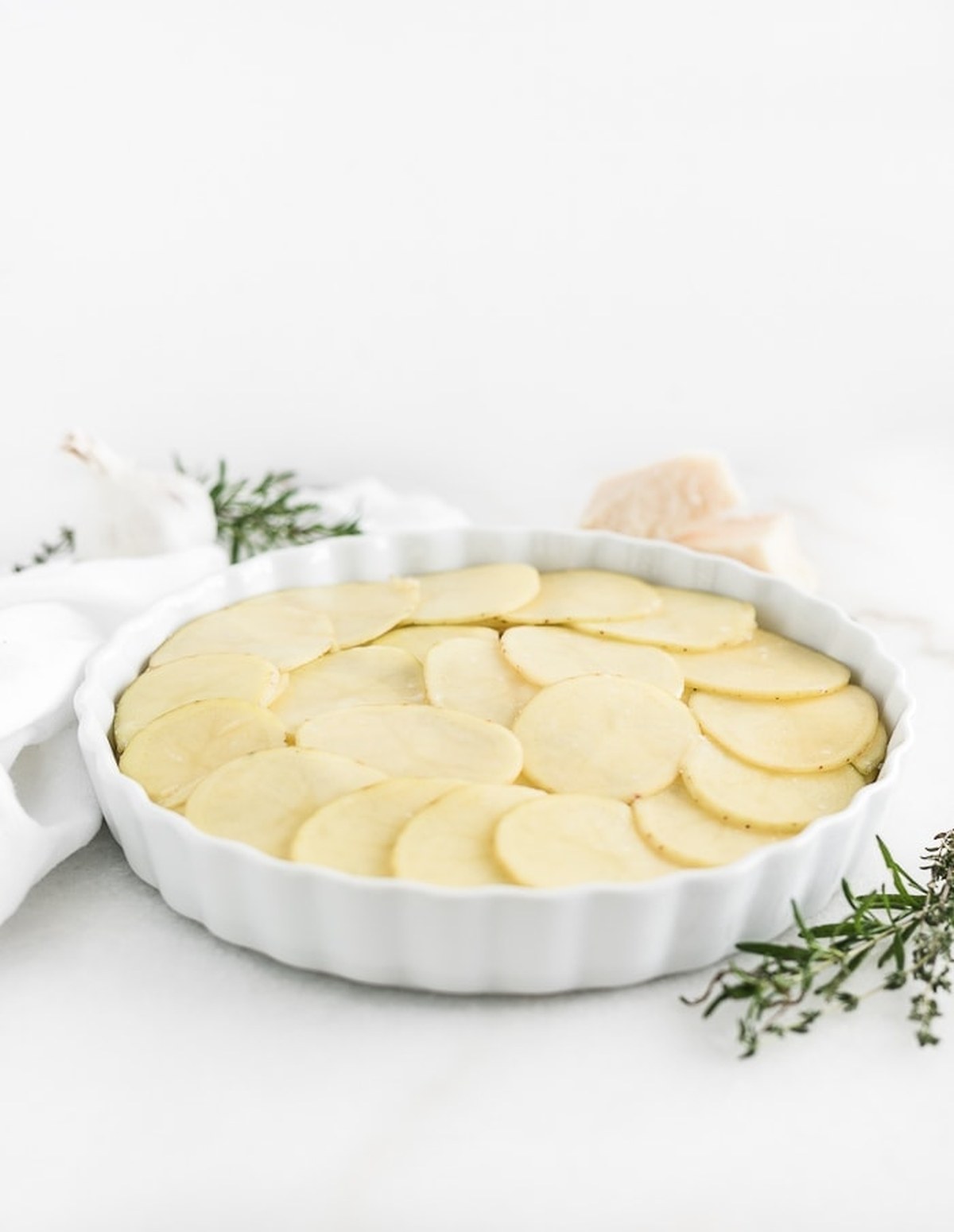
I used Yukon Gold potatoes and cut them into slices about ⅛ inch thick. Keeping the slices close to the same thickness helped them cook at the same rate and gave the finished dish distinct layers without leaving firm pieces in the center.
A mandoline makes this part easier, but a sharp knife works if the slices stay thin. Thick pieces need more time in the oven and can leave the top browned before the potatoes underneath have softened.
I arranged half of the potatoes in the baking dish, added some of the herbs, then finished with the remaining slices.
I Poured the Sauce Over the Potatoes Before Adding More Cheese
Once the sauce had thickened, I poured it across the layered potatoes and let it settle into the spaces between the slices. I finished the top with more grated cheese rather than adding butter or cream.
This turned out to be enough. The sauce surrounded the potatoes as they baked, while the cheese on top melted and browned into the crust I wanted from scalloped potatoes.
I also placed the baking dish on a sheet pan. The sauce can bubble near the edges as it cooks, and the extra pan keeps any overflow off the bottom of the oven.
Covering the Dish First Helped the Potatoes Cook Through
I baked the potatoes at 400°F (about 205°C) under foil for the first 30 minutes. Keeping the dish covered traps steam around the potato slices instead of exposing the cheese to direct heat for the entire baking time.
I then removed the foil and baked the dish for another 20 to 30 minutes. That second stage gave the cheese time to brown while the potatoes finished cooking underneath.
The easiest doneness check was inserting a knife into the center. It should pass through the layers without meeting resistance.
I Would Make Scalloped Potatoes This Way Again
The part that surprised me was how little I missed the heavy cream. Milk and broth gave me enough liquid to cook the potatoes, flour kept the sauce from becoming watery, and Gruyère and Parmesan supplied the richness and cheese flavor.
I would still use Yukon Gold potatoes, keep the slices thin, and grate the cheese from a block rather than using pre-shredded cheese. Those details had more impact on the finished texture than adding another pour of cream.
For a dish built around potatoes and cheese, skipping heavy cream didn't make it feel like a compromise. It still came out creamy where it mattered: between every layer of potato.
Leave a Reply