


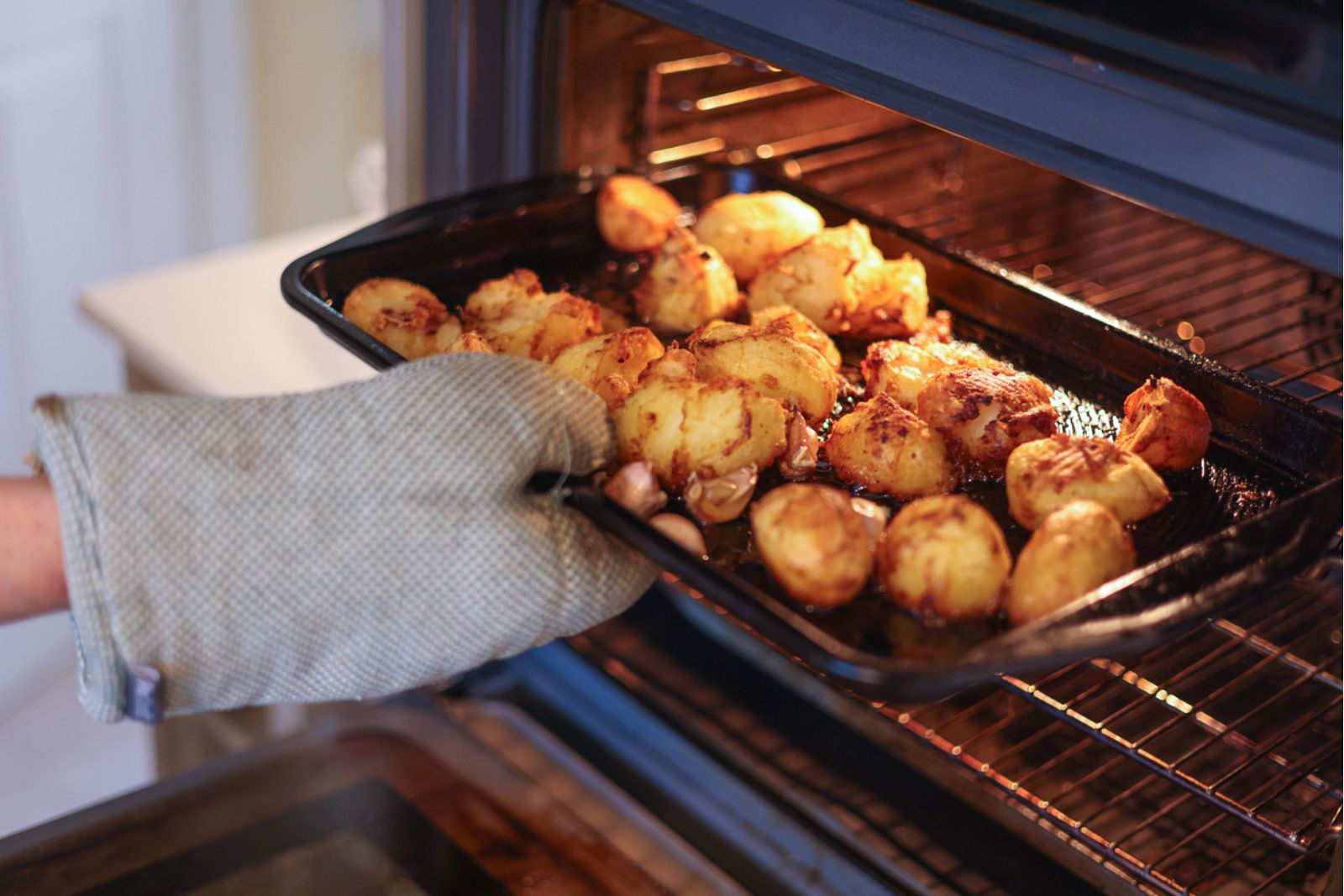
The sheet pan comes out of the oven and the potatoes look right: golden edges, crisp corners, a little blistered skin. Then everyone takes a bite, and the bowl of ketchup starts making the rounds. The potatoes are crunchy, but under the salt they don't taste like much.
This is not your fault. Most roast potato advice is about texture, so seasoning gets a quick pinch of salt and pepper at the end. A jar many kitchens already have in the spice cabinet, steak seasoning, can do more of the work.
What a steak blend adds that the shaker can't
Salt and pepper give a potato two notes. A steak blend layers several. The ingredient list for McCormick's Montreal steak seasoning includes coarse salt, black and red pepper, garlic, onion and paprika, and the brand itself suggests it for mashed potatoes and hash browns.
One detail changes how you use it: salt is the first ingredient on that list. A steak blend isn't a salt-free swap. It replaces the salt and pepper in one shake, so adding both on top doubles up.
Getting it to stick matters too. Seasoning doesn't cling well to a dry potato. A thin coat of oil or melted butter gives the blend something to hold on to, and a shake in a bowl pushes it into the cut sides and crevices.
A tray of steak-seasoned potatoes
- Heat the oven to 425°F. Have a large sheet pan ready so the potatoes can sit in a single layer.
- Cut evenly. Halve about 3 cups of baby gold potatoes into pieces of the same size so they finish together.
- Coat lightly. Toss the potatoes in a bowl with about 1 tablespoon of oil. Melted butter works too.
- Season in place of salt. Sprinkle on ½ teaspoon of steak seasoning instead of the usual salt and pepper, then shake the bowl until every piece is speckled.
- Roast about 20 minutes. Stir halfway through and keep going until the potatoes are tender inside and browned at the edges. Taste one before adding anything else.
The timing follows Lively Table's simple oven-roasted rosemary potatoes, which use the same 3 cups of baby golds at 425°F with ½ teaspoon of sea salt. Using the same amount of a blend in its place means part of that spoonful is garlic, onion and paprika instead of salt.
Plan B if you're cutting back on salt: mix your own. Stir together equal parts garlic powder, onion powder and paprika with a little ground coriander and cracked black pepper, and use it the same way. Add salt at the table only if it needs it.
How much salt rides along in the jar
The FDA advises adults to keep sodium under 2,300 milligrams a day, about 1 teaspoon of table salt. According to the FDA's sodium guidance, Americans eat about 3,400 milligrams a day on average, and more than 70% comes from packaged and prepared foods.
Seasoning blends vary by brand, so check the sodium per serving on the Nutrition Facts label of the jar you buy. Reduced-sodium versions of Montreal-style seasoning are sold in many grocery stores, and the FDA suggests no-salt blends, herbs and spices as a way to add flavor.
The red pepper in some blends adds heat that young kids may not like, so go lighter on their portion or use the homemade mix. If you've been told to limit sodium for blood pressure, heart or kidney health, your doctor or a registered dietitian can help you decide how much seasoning fits your day.
Coat the potatoes, season once with the blend, and taste before you salt. That's the trick.

Leave a Reply