


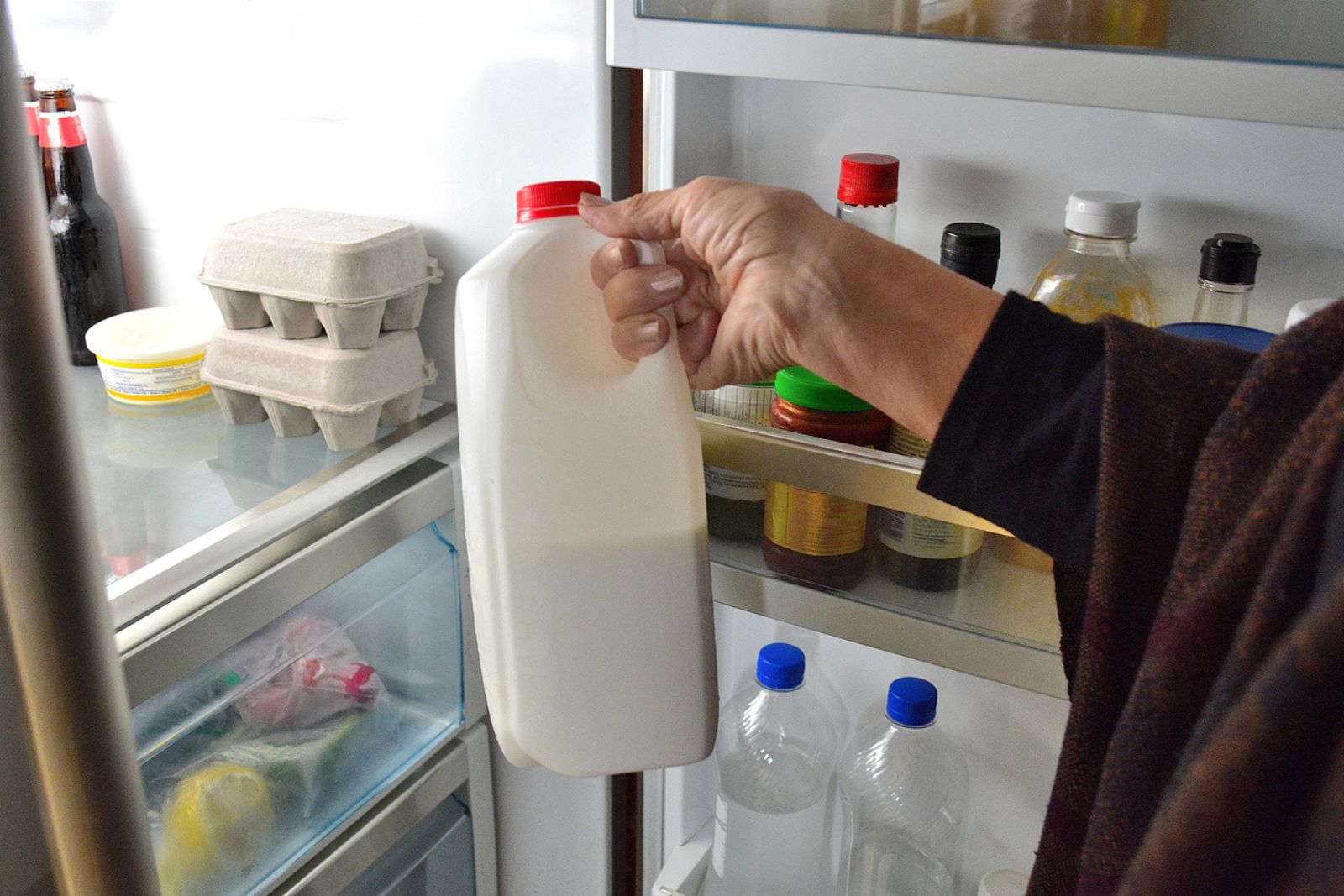
You pour milk into your morning coffee and it hits the cup in little clumps. The carton says it's good for another four days. You sniff it, wince, and pour the rest down the sink, wondering what went wrong with a gallon you bought last weekend.
This is not your fault. Many fridges come with a deep bin in the door that looks made for a jug of milk. But extension food safety experts say the door is the wrong place for it.
Why the door bin runs warm
"The door of the refrigerator is the warmest part!" That's the warning from University of Florida IFAS Extension. The door gets opened over and over, sometimes for minutes at a time, and the extension advises against keeping dairy in its compartments.
Temperature is what decides how long milk keeps its fresh taste. Clemson University's Home and Garden Information Center notes that fresh milk should be stored below 40°F. Kept at the proper temperature, it says milk should retain its fresh taste for one to five days beyond the sell-by date. If it spoils before that date, it wasn't handled properly.
That means the problem often starts long before the date runs out, a few degrees and a few door openings at a time.
Where the jug belongs, and how to keep it there
- Check the temperature. Put an appliance thermometer on a middle shelf. Michigan State University Extension recommends a fridge set between 35°F and 40°F.
- Move milk to a shelf. MSU Extension says plainly not to store milk in the door. Give the jug a spot on a shelf inside the fridge instead.
- Keep it in the original container. Close the cap tightly so it doesn't pick up flavors from other foods.
- Pour, then put it back. Don't leave the jug on the table through breakfast. Return it to the fridge right after you pour.
- Never pour milk back in. Milk that has been sitting in a glass or a pitcher shouldn't go back into the jug, where it can spoil the rest.
- Use it soon after opening. Organic Valley says its pasteurized milk is freshest within 5 days of opening. Check the carton of the brand you buy.
Plan B for a fridge with no shelf space: swap places. Move bottles of condiments into the door and slide the milk onto the shelf they came from. If a gallon still won't fit, buy half-gallons so each one is finished faster.
A cup of milk carries about 8 grams of protein, one of the nutrients milk brings to the table, so it's worth keeping every cup at its best.
When the carton date and your nose disagree
Dates on milk aren't all the same. Organic Valley notes that its standard pasteurized milk usually carries a date 16 to 21 days after it's made, and ultra-pasteurized milk lasts longer on the shelf. Your milk may not follow the same timeline as last week's carton.
A University of Nevada, Reno nutrition scientist advises throwing out milk that's more than a week past the sell-by date. Sour smell, lumps or an off taste mean it goes, whatever the date says.
These tips apply to pasteurized milk. For plant-based milks and shelf-stable cartons, follow the storage directions on the package.
Keep the fridge at 40°F or below, give milk a shelf, and put it back fast. That's the trick.

Leave a Reply