


Fresh eggs might seem like the first choice for baking, but egg whites change as they spend time in the refrigerator. Older whites become thinner and can take in air faster, which can help them reach a foam with less whipping than whites from fresh eggs.
That advantage comes with a tradeoff. Older egg whites can produce larger bubbles that lose structure sooner, while fresh whites take more work to whip but tend to form a foam that holds up better. The right choice depends on what happens to the egg whites after they leave the mixer.
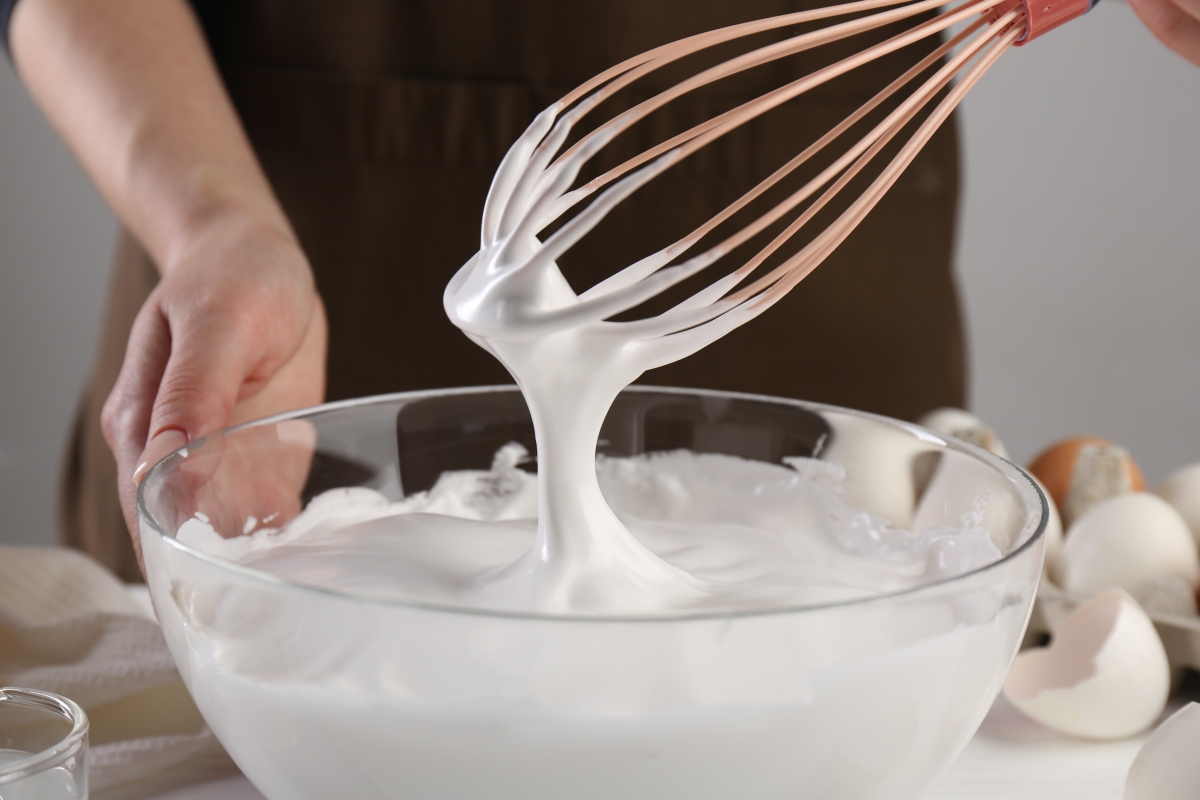
Older Egg Whites Become Thinner
Egg whites contain proteins suspended in water, and those proteins help create foam when the whites are beaten. Whipping unfolds the proteins around air bubbles, forming the structure that turns a clear liquid into a white foam.
As an egg ages, the white becomes thinner and its proteins change. That makes it easier for the whites to incorporate air during whipping, so an older egg can appear to respond faster in the bowl.
Faster Whipping Comes With a Tradeoff
Reaching a foam faster does not mean older egg whites are the better choice for every dessert. The air bubbles formed in thinner whites can be larger and less stable, making the finished foam more prone to losing volume.
Fresh egg whites tend to require more whipping before they reach the same stage. In return, they can produce smaller bubbles and a structure that holds its shape for more time.
That difference matters when whipped whites need to survive more mixing after stiff peaks form.
Meringue Can Benefit From Fresh Whites
Meringue depends on egg whites holding air through whipping, shaping, and baking. For that job, the stronger structure of fresh whites can matter more than reaching stiff peaks fast.
Older whites can still be used, but they need more care once whipped. Leaving the foam sitting in the bowl or working it too much when combining it with other ingredients can cost some of the volume gained during whipping.
Recipes such as macarons also require whipped whites to be folded into dry ingredients, making foam stability part of the finished result.
Temperature Changes How Egg Whites Behave
Egg age is not the only factor that affects whipping. Cold eggs can be easier to separate because the yolks are firmer, reducing the chance that yolk will break into the whites.
The whites can then come toward room temperature before whipping. Warmer egg whites can take in air with less resistance, combining easier separation with better conditions for building foam.
Keeping the bowl and beaters free from grease also matters, since fat can interfere with the structure the egg-white proteins are trying to form.
Cream of Tartar Can Help the Foam Hold
A small amount of cream of tartar can support egg whites when stability matters. The acidic ingredient lowers the pH of the whites and helps the protein network hold the air introduced during whipping.
That can be useful whether the eggs are fresh or have spent more time in the refrigerator. Egg age changes how fast the whites foam and how the bubbles behave, but technique still determines what happens once the mixer starts.
Fresh egg whites may take longer to whip, while older ones can build foam faster. The better option comes down to whether speed or a foam that can hold its structure matters more for what you are baking.
Leave a Reply