


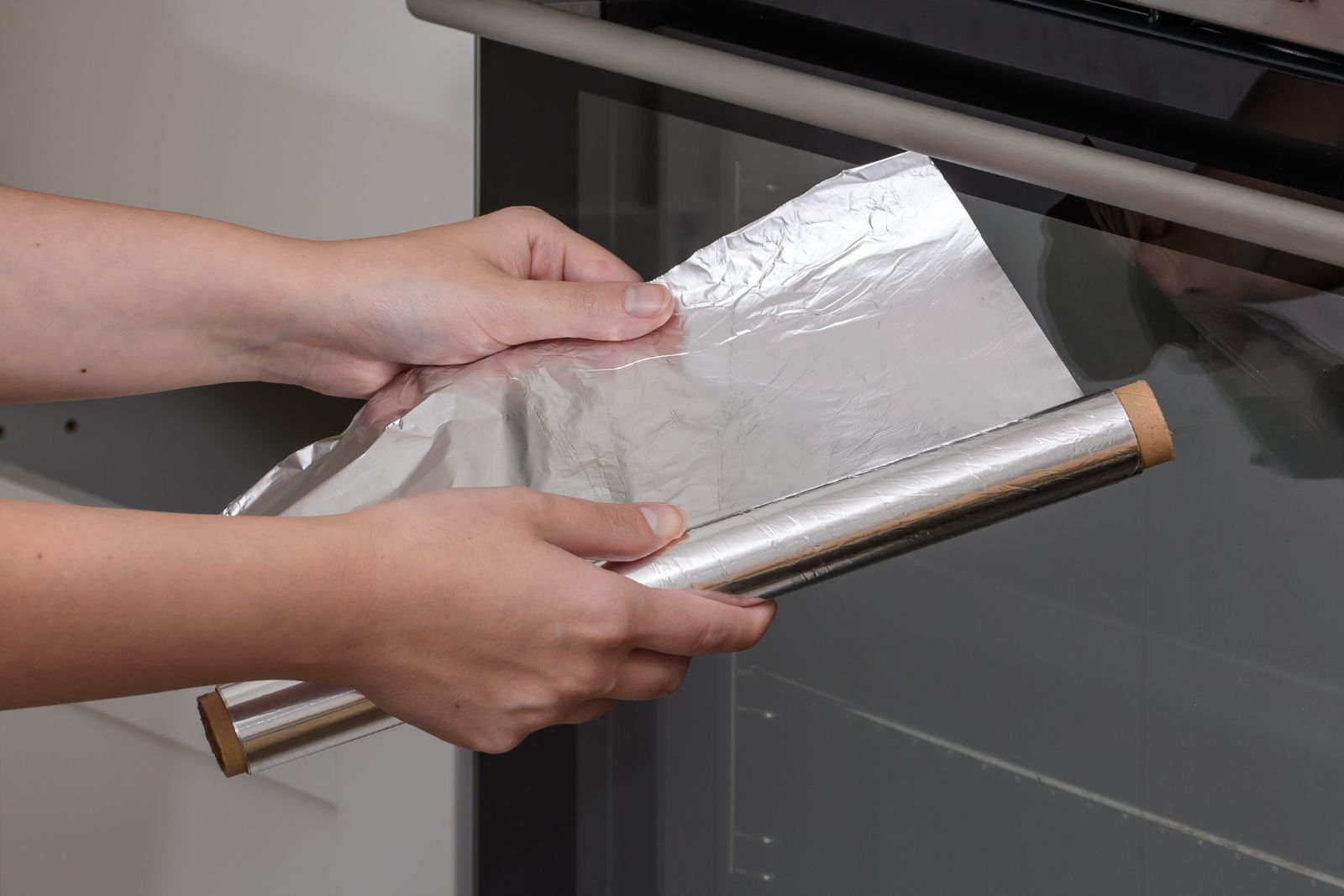
The potatoes are scrubbed and the oven is hot. You tear off a sheet of foil, then pause with a potato in your hand, trying to remember whether the shiny side goes in or out. Someone once told you it matters, and now you wrap every potato the same careful way without knowing why.
This is not your fault. The two finishes look so different that it seems obvious one must be meant for food. But for regular foil, the difference comes from the factory, not the recipe.
Where the shiny and dull finishes come from
Foil is rolled thinner and thinner between heavy rollers. In the final pass, two sheets go through the mill together. When they're separated, the outer faces, which ran against the rollers, come out shiny, and the inner faces that pressed against each other come out dull.
Reynolds, the foil maker, calls the difference "simply a byproduct of the manufacturing process." It also says both sides reflect heat and heat foods at virtually identical rates. So for standard and heavy-duty foil, use whichever side faces up when you tear it off.
The foil choices that do change your results
- Nonstick foil: Here the dull side is the coated side. Reynolds says to place the nonstick side facing your food, and its Non-Stick Foil is marked so you can tell which side is which. The same goes for its Grill Foil.
- Grilling: When you line grill grates with foil, Reynolds recommends poking holes throughout it for proper airflow.
- Heat range: Reynolds rates its Non-Stick Foil for temperatures from -40°F to 650°F when used as intended.
- The oven floor: GE Appliances warns against lining oven bottoms with foil, because it traps heat, disrupts the oven's performance and can melt onto the oven bottom. To catch drips, it suggests a sheet on a lower rack several inches below the food, kept at least 1½ inches from the oven walls.
- Acidic and salty leftovers: Tomato sauce, citrus marinades and brined meats can eat tiny holes in foil during long contact. A layer of parchment between the food and the foil helps.
Plan B for anything saucy that's headed to the fridge: skip the foil altogether. Acid and salt are why aluminum foil can develop holes in the fridge, so transfer those leftovers to an airtight glass or food-safe plastic container instead.
What the shine won't change
Physics says a shinier surface reflects slightly more radiant heat than a dull one. In a home kitchen, that difference is too small to notice without lab instruments, so it won't decide whether a baked potato is done. Oven temperature and cooking time do that.
The bigger risks with foil come from where it goes, not which way it faces. Check your oven's manual before you put foil anywhere near the heating element, since GE says damage from improper foil use isn't covered by its warranty, and other manufacturers have their own rules.
Reusable options can replace foil for some jobs. A baking sheet lined with parchment or a covered glass dish works for many recipes that call for a foil tent.
Tear off the foil, use either side, and save the side check for nonstick foil. That's the trick.

Leave a Reply