


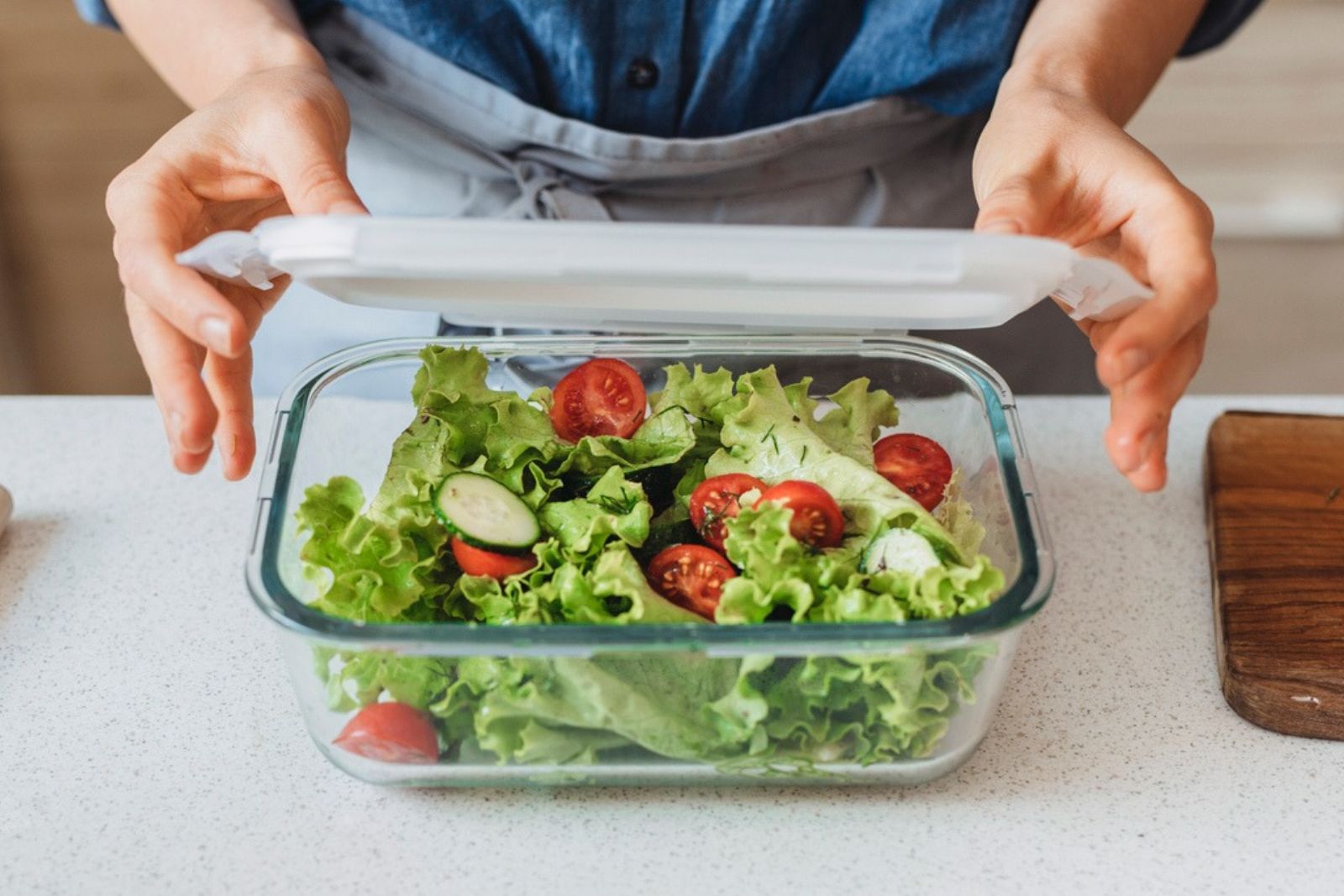
You pack last night's chili into a glass Pyrex dish, press the lid down and slide it into your lunch bag. By noon there's a red ring on the bottom of the bag. The glass is fine. The lid has a hairline crack along one corner, and it no longer snaps into place the way it used to.
This is not your fault. The glass in these containers is made to last for years, but many of them come with plastic lids, and owners often find the plastic gives out long before the dish does. Once you know how the lid fails, it's easy to make the next one last longer, or to replace it with something sturdier.
Why the plastic lid gives out first
Heat is the main stress. In its safety and usage instructions, Pyrex says plastic lids can go in the microwave, but to avoid warping they should be removed or vented at least ¼ inch first. They belong on the top rack of the dishwasher only, and never in a conventional oven, on a stovetop or under a broiler.
That warning hints at the problem: heat can warp a plastic lid, and a warped rim stops sealing. On Reddit's meal prep forum, one owner wrote that every lid on a few big Pyrex sets used for meal prep had cracked after about a year.
Replacing a lid is trickier than it sounds, because the lids aren't universal. Pyrex sells replacements by model number, so the lid for its 4-cup round storage dish is sold as model 7201.
Matching a new lid to an old dish
- Measure the dish. Note its capacity in cups and its shape: round, square or rectangular. A 4-cup round and a 3-cup rectangle need different lids.
- Look up the model number. Search the brand's replacement lids by capacity and shape, and check that the listing names your model, such as 7201 for the 4-cup round.
- Consider silicone or glass. Third-party brands sell flexible silicone covers sized for common Pyrex model numbers. Pyrex also sells storage sets with glass lids edged in silicone, which the brand describes as airtight, leak-proof and safe in a preheated oven.
- Vent before reheating. Whatever lid you keep, lift a plastic one at least ¼ inch, or take it off, before the dish goes in the microwave.
- Wash it on top. Plastic lids go on the top rack of the dishwasher only, as Pyrex instructs.
Plan B for a dish that's lost its lid for good: keep it for baking. A glass dish without a cover still roasts vegetables and bakes casseroles, as long as it gets the care that keeps glass bakeware from cracking when it comes out of the oven.
When the glass needs care too
The glass is sturdier than the lid, but it isn't invincible. Pyrex warns against sudden temperature changes, adding liquid to hot glassware, and setting a hot dish on a wet or cool surface, a countertop or in the sink. Glass storage dishes also stay off the stovetop and away from the broiler.
Silicone has its own quirks. One Pyrex customer reported that a silicone-rimmed lid turned pink after holding marinara sauce, although it kept sealing. Tomato-based leftovers may leave a tint behind.
If a plastic lid cracks soon after you bought it, check the warranty before you toss it. Pyrex covers non-glass accessories with manufacturing defects for two years from purchase, but damage from misuse or accidental breakage isn't covered.
A lid that no longer snaps shut won't keep leftovers airtight. Swap it out before you trust it with soup or chili in your bag.
Vent the lid, wash it on top, and replace it before the glass ever needs to be. That's the trick.

Leave a Reply