


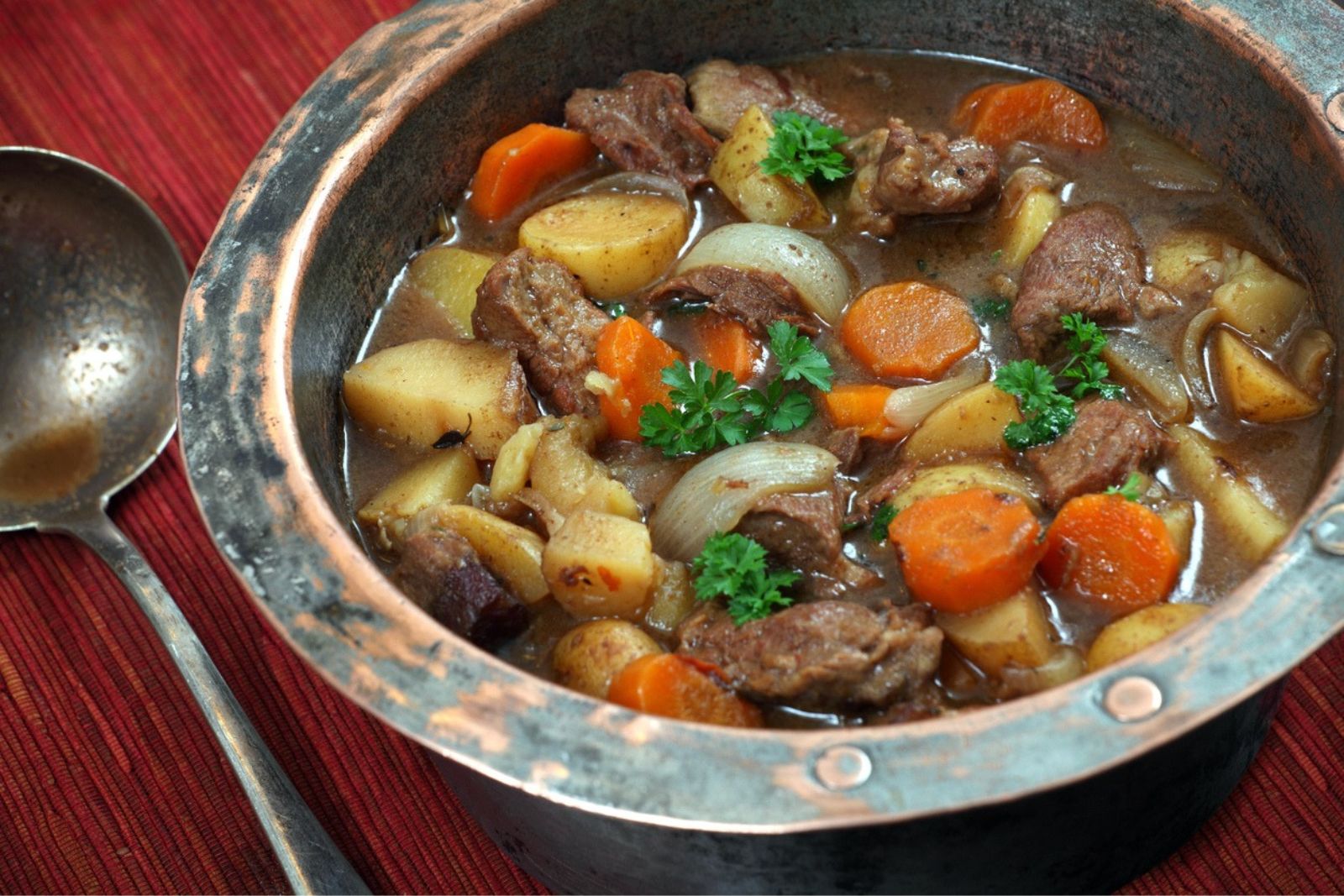
You brown a few pounds of beef chuck, stir in a spoonful of flour and a bottle of stout, and let the pot bubble all afternoon. It's dark, rich and hearty, and you serve it as Irish stew. Then someone who grew up in Ireland takes a bite and says, kindly, that it's very good, but it isn't Irish stew.
This is not your fault. Plenty of recipes sold in the U.S. as "Irish stew" are built on beef. But three experts on Irish food, a food consultant, a farmer and food historian, and a cookbook author living in Ireland, build the traditional pot around sheep meat, and one of them is blunt that beef has no place in it.
Why the beef version is a different dish
Irish food consultant Santina Kennedy, who holds a master's in gastronomy and food studies, says beef is never used in an Irish stew. Beef and stout stew is its own dish, darker and built on beer.
The traditional version comes from thrifty one-pot cooking: mutton, potatoes, onions and water, simmered together for hours. Mutton comes from older sheep and lamb from animals typically less than a year old, according to the USDA. Lamb was once too valuable to stew, but it has replaced mutton in most pots as mutton grew harder to find.
The other surprise is the thickener. There's no flour. Floury potatoes do that job. The University of Arkansas Cooperative Extension notes that starchy russets soften and fall apart, while red-skinned potatoes hold their shape. In a stew, the russets break down into the broth. Cookbook author Imen McDonnell suggests mixing Yukon Golds and russets for a naturally thickened broth.
Building the pot the Irish way
The recipe from Bord Bia, Ireland's food board, follows the same water-based method and serves 4 to 6.
- Pick the cut. Use about 2¼ to 3¼ pounds of lamb neck or shoulder (Bord Bia calls for 1 to 1½ kilograms). Trim the fat, cut the meat into cubes and keep the bones.
- Blanch the lamb. Cover the cubes with cold salted water, bring to a boil, then drain and rinse.
- Simmer with onions and water. In a clean pot, add the lamb, the bones, 3 large chopped onions, a bundle of parsley, thyme and bay leaf, and salt and pepper. Cover with water and simmer gently for 1 hour, skimming the foam as it rises.
- Add the potatoes. Add peeled, chopped potatoes, including a few russets that will break down and thicken the broth, and cook for 25 minutes more.
- Finish simply. Remove the bones and herb bundle, then stir in chopped parsley.
Additions vary from kitchen to kitchen. Bord Bia includes carrots, leek, turnip and a little cabbage, and farmer and food historian Lorraine Aspill recalls her grandmother adding pearl barley to stretch the stew when meat was scarce. Carrots and thyme are common in pubs.
Plan B for a big batch: if you plan to freeze part of it, it helps to know which ingredient to leave out of lamb stew before freezing.
Where tradition meets the fridge
"Traditional" covers a lot of ground. Even the experts disagree on browning the meat first: the old method skips it, while some cooks today brown the lamb for extra flavor. Neither choice changes the safety basics.
The USDA advises using raw stew meat within 1 to 2 days of buying it. Once the stew is cooked, cool it quickly, refrigerate it within 2 hours and eat it within 3 to 4 days. Divide a big pot into shallow containers so it chills faster in the fridge.
Lamb shoulder and neck are fatty cuts. Trimming the meat before cooking and skimming the surface as it simmers, as Bord Bia does, keeps the broth from turning greasy.
Lamb, potatoes, onions and water, and no beef in the pot. That's the trick.

Leave a Reply