


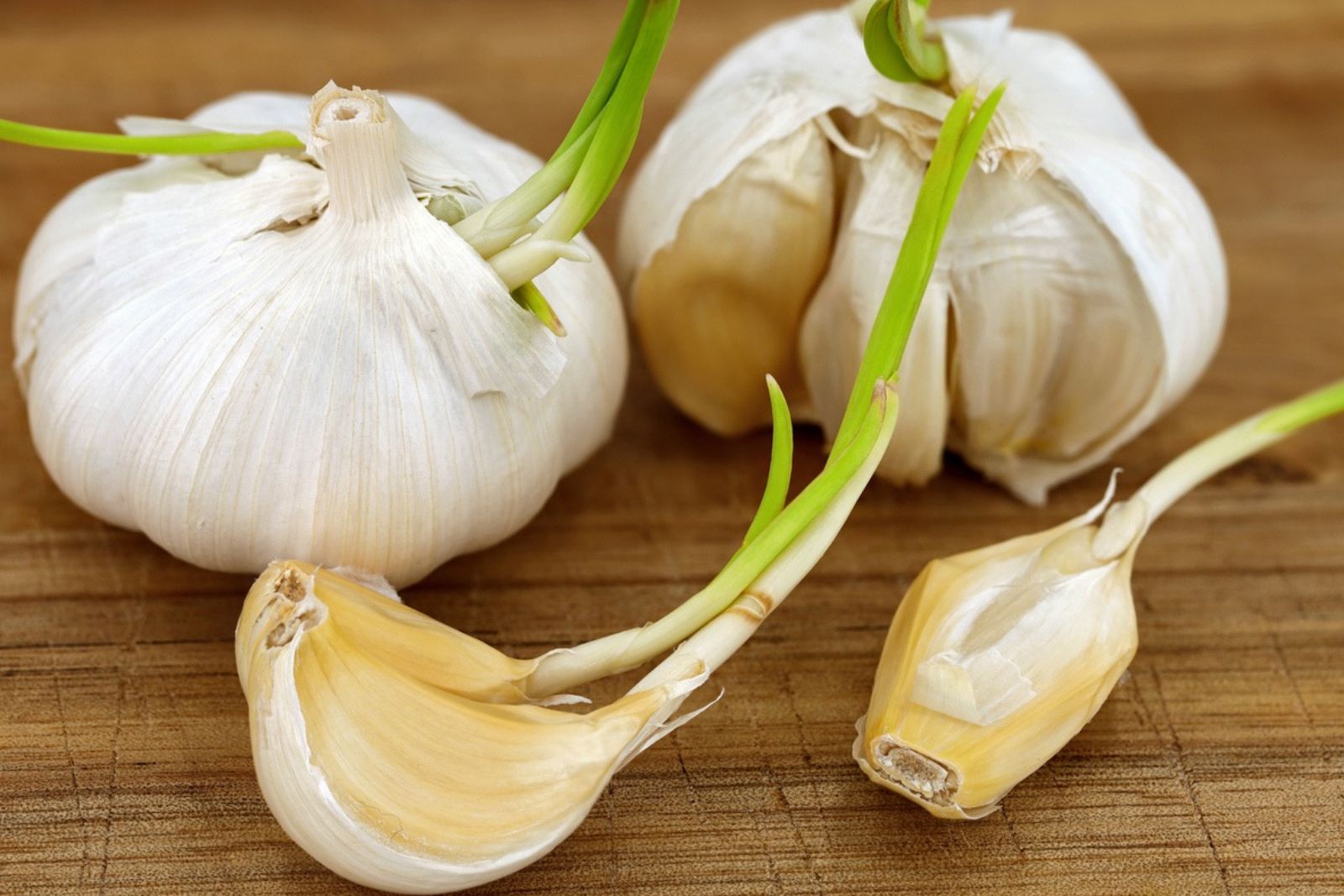
You split a garlic clove for tonight's pasta and find a bright green stem running through the middle. In the basket, the yellow onion you were saving has a pale green shoot poking out of the top. You hesitate, knife in hand, wondering if both belong in the trash.
This is not your fault. A shoot looks like something has gone wrong. But for garlic and onions, it's mostly a sign of age, not spoilage, and extension experts have a clear answer for each.
Why your garlic and onions start growing
Garlic cloves and onion bulbs are built to grow. Left in storage long enough, they start sending up shoots. University of Vermont Extension notes that it's simply the nature of stored garlic cloves to sprout, and says the sprouts are harmless.
Onions follow the same path. Purdue Extension explains that sprouting shows an onion is aging. You can still use the firm, white parts of the flesh, but the onion will spoil quickly once it sprouts.
What to keep, what to cook first
- Sprouted garlic: Use it. The clove and the green sprout are safe to eat. If you prefer, lift the green center out with the tip of a knife before chopping.
- Sprouted onion: Cook it soon. Trim away anything soft and use the firm, white flesh while it's still good.
- Storage onions: Purdue says they keep well in a cool, dry place, and can sit on the counter for up to 4 weeks.
- Extra garlic: Freeze minced garlic in an ice cube tray, or cover cloves with vinegar and refrigerate for up to 4 months, as UVM Extension suggests. Don't store garlic in oil at room temperature: UVM warns that it creates a low-acid environment where botulism can grow.
- Potatoes are different: Iowa State University Extension says small sprouts on a firm potato can be removed, but a potato with sprouts 1 inch or longer that has shriveled should be tossed, and so should one that's green beneath the skin. Cooking doesn't destroy the compounds involved.
Plan B for an onion that's sprouting faster than you can cook it: slice the firm part into a jar of easy pickled red onions, which keep up to 2 weeks in the fridge.
When a sprout means it's time to let go
A green shoot alone isn't a reason to toss garlic or an onion. Softness, mushy spots, mold or a sour smell are, and Purdue's point about quick spoilage means a sprouted onion won't wait long.
Flavor is the other trade-off. An aging bulb won't taste as fresh as a new one, so if a dish depends on garlic or onion, use the freshest you have and save the sprouted ones for long-cooked soups and sauces.
The potato rule is the one to remember: green or long-sprouted potatoes go, even if garlic and onions stay. If you're ever unsure about something in your pantry, the safe choice is the trash or the compost.
Keep the garlic, cook the onion soon, and toss the green potato. That's the trick.

Leave a Reply