


Chicken noodle soup often builds its base around onion, carrot, celery, and herbs that stay in the pot through serving. This version takes another route.
Ginger, lemongrass, and scallions simmer in the broth first, then leave the pot before the noodles and vegetables go in. The method pulls their flavor into the liquid without leaving fibrous lemongrass pieces, ginger slices, or softened scallion stalks in each bowl.
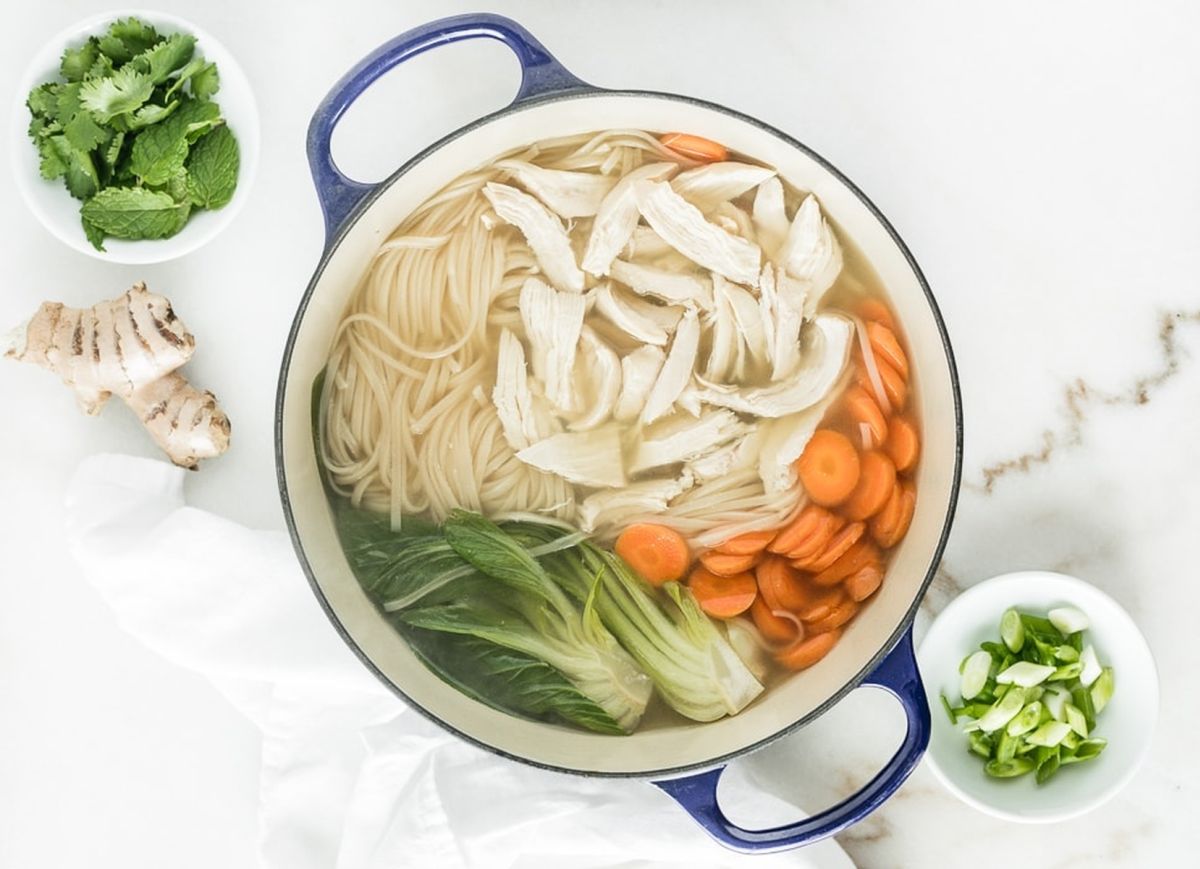
The technique comes from a ginger lemongrass chicken noodle soup recipe from Lively Table, where the broth carries most of the seasoning work.
Ginger, Lemongrass, and Scallions Start in the Broth
Sliced ginger, lemongrass, and green onions go into chicken broth at the beginning. Heat gives the liquid time to pick up their aroma before chicken, noodles, and vegetables compete for space in the pot.
Lemongrass brings citrus notes without lemon juice. Ginger adds spice and bite. Scallions add an onion note that sits under both.
None of the three needs to remain in the finished soup to do its job.
Chicken Cooks in the Infused Broth
Chicken breast goes into the broth after the aromatics begin to simmer. It cooks in the same liquid that has taken on ginger, lemongrass, and scallion flavor.
Once the chicken is done, it comes out for shredding. At this point, the broth has already taken flavor from both the aromatics and the chicken.
The soup base can then move into its second stage without keeping every ingredient from the first.
Straining Clears the Pot Before Noodles Go In
The ginger, lemongrass, and scallions are strained from the broth after the chicken cooks.
That step changes the texture of the finished bowl. Lemongrass can stay firm and fibrous even after simmering, while ginger slices can give one spoonful far more bite than the next. Removing both leaves their flavor in the broth without leaving pieces to eat around.
The strained broth also makes room for ingredients meant to stay in the bowl.
Bok Choy, Carrots, and Rice Noodles Go In After
Carrots, bok choy, and brown rice noodles enter after the broth is strained. They cook in a liquid that already carries the first round of flavor.
The vegetables stay visible and keep their place in the final soup, while the aromatics work more like a broth infusion than a garnish.
Rice noodles also shift the soup away from the egg noodles used in many chicken noodle recipes. Brown rice noodles add another option for anyone avoiding wheat.
Fresh Herbs Finish What the Broth Started
Mint, cilantro, sliced scallions, or jalapeño can go on top at serving.
That creates two forms of flavor in the same bowl. Ginger and lemongrass season the broth from the start, while fresh herbs and jalapeño stay raw and hit the soup at the end.
The main trick sits in the middle: some ingredients belong in the pot for flavor, not for serving.
Leave a Reply