


Salt, pepper, and dry rubs are common routes to a seasoned steak, but a Southern Italian sauce made for seafood offers another option before the meat reaches the grill.
Salmoriglio combines olive oil, lemon juice, oregano, and salt. The sauce has roots in Southern Italy and often accompanies grilled swordfish and other seafood.
Salmoriglio Starts With Four Ingredients
Olive oil, fresh lemon juice, oregano, and salt form the base. Garlic and parsley appear in some versions, but neither is required to make the core sauce.
The oil carries oregano and citrus across the meat's surface, while salt seasons the steak. Lemon supplies acid and cuts through the richness of beef.
Fresh oregano works, but dried oregano has a more concentrated flavor. Fresh lemon juice supplies both acid and citrus flavor without another bottled ingredient.
Fish Sauce Becomes a Steak Marinade
Salmoriglio has a long association with seafood, with grilled swordfish among its common pairings. That does not mean fish is an ingredient in the sauce.
Here, "fish sauce" refers to how salmoriglio is used, not the fermented condiment sold as fish sauce in Southeast Asian cooking. Salmoriglio contains no fish.
Its mix also fits beef. Olive oil coats the surface, oregano stands up to the flavor of grilled meat, and lemon adds acid to a cut that might otherwise receive salt, pepper, and a dry seasoning blend.
Give the Steak About an Hour
The Mashed method calls for about an hour in the marinade before cooking.
That gives the steak contact with the oil, salt, oregano, and lemon without turning the process into an overnight marinade. Acid is one reason not to assume more time is better. Lemon juice affects proteins at the surface, and long exposure can change the exterior texture.
A shallow dish or sealed container keeps the marinade in contact with the steak. Refrigerate the meat during the marinating time rather than leaving raw beef on the counter.
Thin Cuts Make Sense for Salmoriglio
Flat iron, skirt steak, and sirloin are among the cuts that fit this approach. Their shape gives the marinade plenty of surface area compared with a thick steak.
Salmoriglio does not penetrate a steak from edge to center in an hour. Most marinade effects remain near the surface. Thin cuts put more seasoned exterior into each bite, which makes them a good match for the sauce.
That distinction matters when choosing a cut. A thick steak can still use salmoriglio, but the marinade should not be expected to season its center.
Save Some Salmoriglio for After Cooking
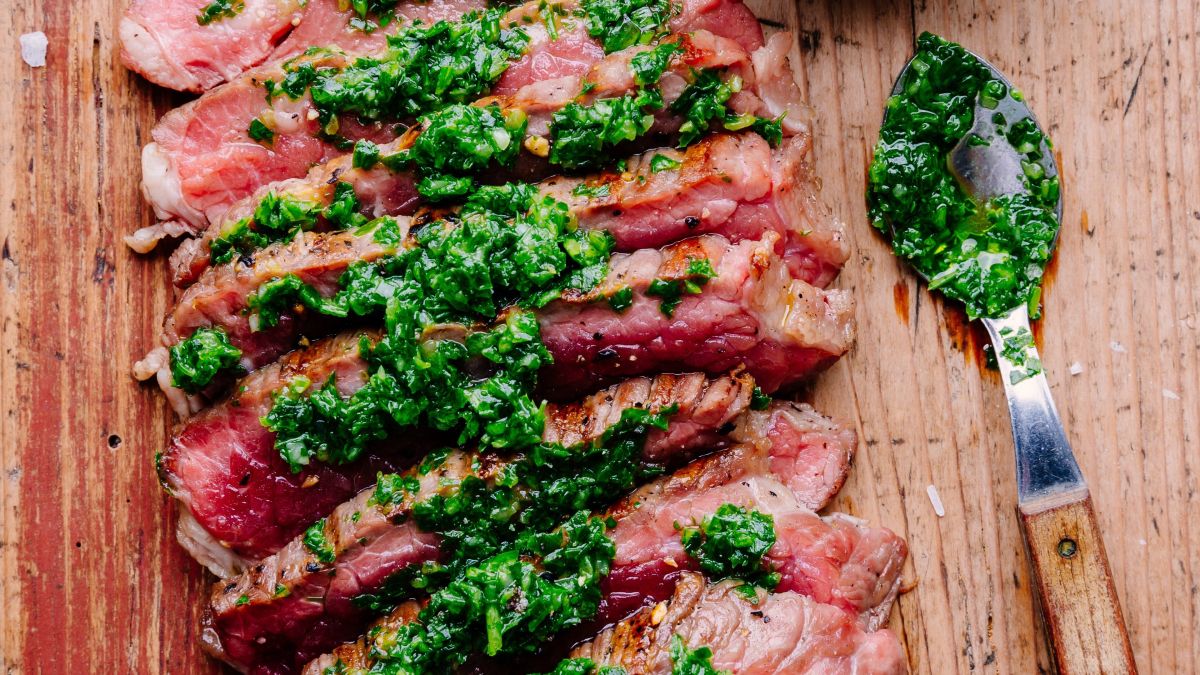
Salmoriglio does not have to end its job when the steak leaves the marinade. A separate, clean batch can become a finishing sauce for cooked meat.
Spoon it across sliced steak after grilling, or serve it beside the meat. Lemon and oregano remain more pronounced when they have not spent the entire cooking time over high heat.
Do not reuse marinade that has held raw steak as a finishing sauce unless it has been cooked to a safe temperature. Reserving part of the salmoriglio before raw meat touches it keeps the process simple.
A sauce known for grilled seafood can therefore cover two jobs at steak night: marinade before the grill and fresh sauce after it.
Leave a Reply