


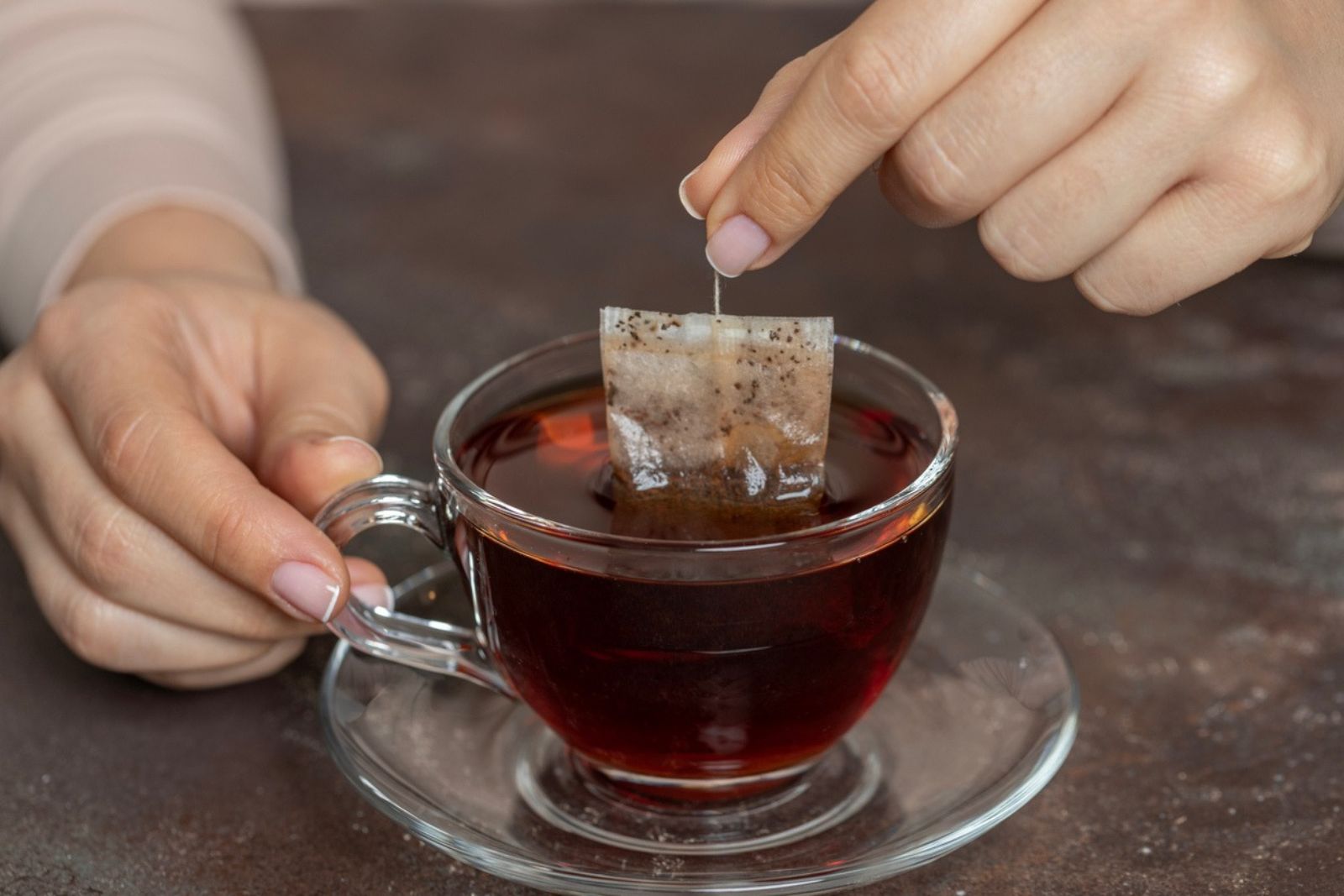
It's late afternoon, and you treat yourself to the nice tea: the box with the silky, see-through pyramid bags. You pour the water straight off the boil, let it steep for a few minutes, and squeeze the bag against the spoon before tossing it.
This is not your fault. Fancy tea bags look like an upgrade, and nothing on most boxes tells you what the bag itself is made of. But a team at McGill University tested plastic tea bags in hot water, and the count they came back with is hard to forget.
What hot water pulls out of the mesh
In their study, published in Environmental Science & Technology, the researchers found that a single plastic tea bag steeped at brewing temperature, 95°C or about 203°F, released about 11.6 billion microplastics and 3.1 billion even smaller nanoplastics into one cup. The particles matched nylon and PET, two common plastics.
A 2024 study from the Universitat Autonoma de Barcelona found the amount depends heavily on the material. Bags made of polypropylene released about 1.2 billion particles per milliliter during brewing, cellulose bags about 135 million, and nylon-6 bags about 8.18 million.
The McGill numbers come from water at brewing temperature, the way most people make a cup of tea.
How to brew without the plastic bag
- Check the material. Look on the box or the brand's website for what the bag is made of. If it says nylon, PET or polypropylene, it's plastic.
- Switch to loose-leaf. Brew it in a stainless steel infuser, a glass teapot or a French press, using the amount on the package for each 8-ounce cup.
- Let it steep, then strain. Follow the brewing time on the package, then lift out the infuser or press the plunger.
- Make it your own. Loose tea makes it easy to add flavor, like a pinch of Lively Table's homemade chai spice blend stirred into a cup of black tea.
Plan B if you love the convenience of bags: look for brands that say what their bags are made of, and skip the ones you can't confirm. Note that the Barcelona team's cellulose bags released particles too, just fewer than polypropylene.
What the particle count leaves out
Counting particles isn't the same as measuring harm. The McGill team ran an early toxicity test on small invertebrates and saw effects on their behavior and development, but that was not a test on people.
The Barcelona researchers found that mucus-producing human intestinal cells grown in the lab took up the most particles, some reaching the cell nucleus. They say the findings call for more research into what long-term exposure does to human health. In other words, nobody knows yet whether these particles harm you.
Results also vary from one brand to another, and these studies tested a limited number of products. If you have specific health concerns about plastics, your doctor is the right person to ask.
Read the box, brew loose-leaf, and save the silky bags for display. That's the trick.

Leave a Reply