


Most salads are dressed close to serving time because lettuce and other tender ingredients can lose their texture once they sit in liquid. A marinated vegetable salad works in the opposite direction, giving the dressing time to reach broccoli, cauliflower, carrots, celery, bell pepper, and baby corn before the bowl reaches the table.
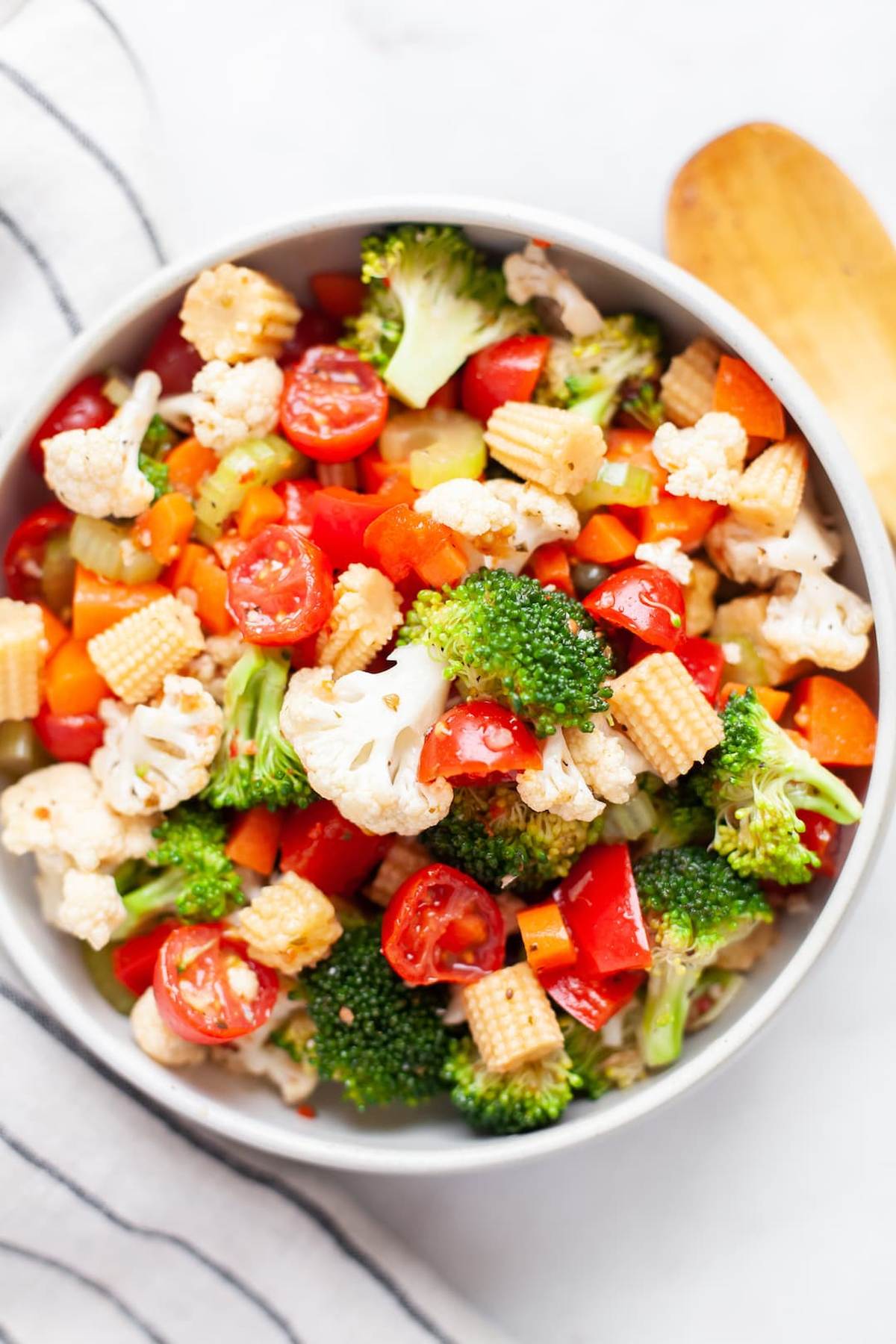
The vegetables have enough structure to spend an hour or more in a marinade made with olive oil, two vinegars, honey, lemon, garlic, herbs, and capers. Instead of treating the dressing as a finish, the salad uses time in the refrigerator as part of the preparation.
That makes it a side that can be assembled ahead of dinner, a cookout, or a picnic rather than another dish that needs attention just before serving.
Firm Vegetables Make the Difference
Broccoli and cauliflower form much of the base, joined by carrots, celery, bell pepper, baby corn, and cherry tomatoes. The mix favors vegetables with enough structure to remain intact while they sit in the marinade.
Cutting the vegetables into bite-size pieces also gives the dressing more surface to coat. Broccoli and cauliflower florets hold the marinade between their branches, while sliced celery and diced carrots bring crunch throughout the bowl.
Other vegetables can enter the mix, including snap peas, mushrooms, cucumber, zucchini, or onion, but firm vegetables provide the foundation.
Two Vinegars Build the Marinade
White wine vinegar and red wine vinegar share the acidic side of the dressing rather than leaving the job to one vinegar. Olive oil forms the base, while honey balances the acidity and lemon juice adds another tart component.
Garlic and a Greek herb mix provide the seasoning, with capers adding a briny note to the vegetables. The ingredients can be shaken together in a jar until combined before the marinade goes over the salad.
Once coated, the vegetables head to the refrigerator instead of going straight to the plate.
An Hour Gives the Dressing Time to Work
The salad needs at least an hour in the refrigerator when prepared in a bowl. During that rest, the vegetables remain surrounded by the oil and vinegar mixture instead of receiving a quick coating at serving time.
Stirring the salad again before serving redistributes marinade that has collected at the bottom of the bowl. Each piece gets another coating without requiring a new batch of dressing.
A vacuum marinator can shorten the process, but the equipment is not required. A bowl, refrigerator, and enough time accomplish the same basic job.
Making the Salad Ahead Works in Its Favor
Preparing salad a day before a gathering can be a problem when the bowl contains lettuce or other tender greens. This version was built for advance preparation, so the waiting period becomes useful rather than something to avoid.
The vegetables can sit in the refrigerator while the vinegar, lemon, garlic, herbs, and capers move through the mix. That makes the salad suited to meals where other dishes need to be cooked close to serving time.
The key is choosing vegetables that can handle the rest. Broccoli, cauliflower, carrots, celery, and bell pepper give the marinade time to do its job without relying on delicate greens that can lose their structure.
This Salad Doesn't Need to Be Served Right Away
Marinated vegetable salad changes the usual order of making a salad. The dressing goes on first, and serving comes after the vegetables have spent time with it.
A base of firm vegetables makes that possible, while the oil, vinegar, honey, lemon, garlic, herbs, and capers create a marinade designed to stay in the bowl. An hour in the refrigerator is not waiting time for this salad; it is part of how the dish comes together.
Leave a Reply