


Kale often ends up chopped into salads, stirred into soups, or sautéed as a side. Turning it into pesto changes the role it plays on the plate. Instead of adding a few leaves to pasta, this recipe blends two cups of kale into a sauce that becomes one of the main parts of the meal.
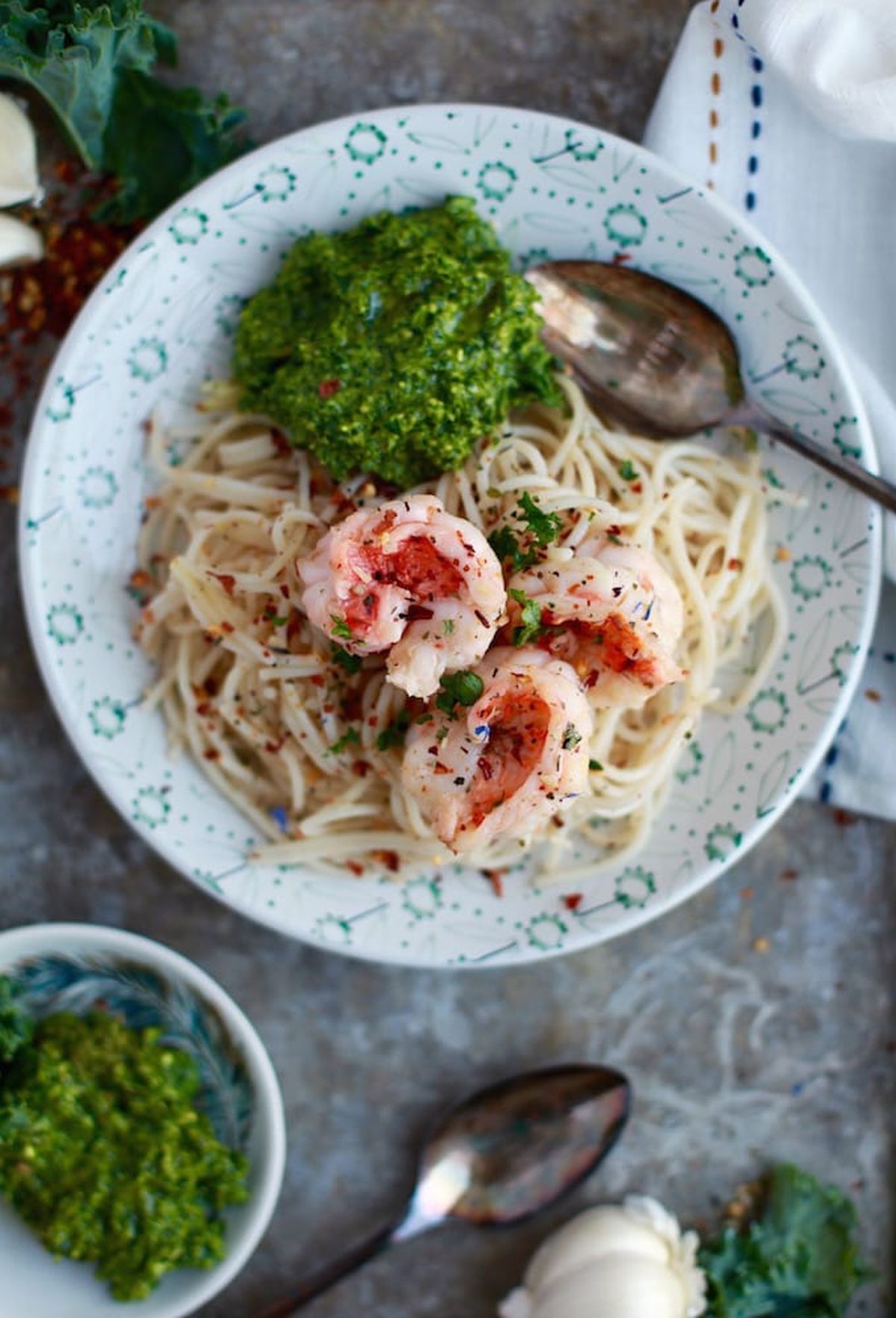
Basil, pine nuts, lemon, olive oil, and nutritional yeast soften the stronger taste of the greens without covering it. Pair that pesto with garlicky shrimp and pasta, and kale stops feeling like the vegetable added because dinner needed one.
The whole dish takes about 30 minutes, with the pesto and shrimp prepared while the pasta cooks. It also leaves extra kale pesto in the refrigerator for another meal.
Kale Can Take Over the Pesto
Traditional pesto puts basil and Parmesan at the center. Here, two cups of kale provide most of the greens, while a handful of basil keeps a familiar pesto note.
Add kale, raw pine nuts, basil, juice from one lemon, nutritional yeast, olive oil, and salt to a food processor. Process until the mixture forms a pesto, scraping down the sides as needed. More olive oil can loosen the texture if it comes out thicker than you want.
Nutritional yeast fills the spot where Parmesan would often appear, adding a savory note without dairy. Lemon is important here too, since its acidity cuts through the kale, nuts, and olive oil.
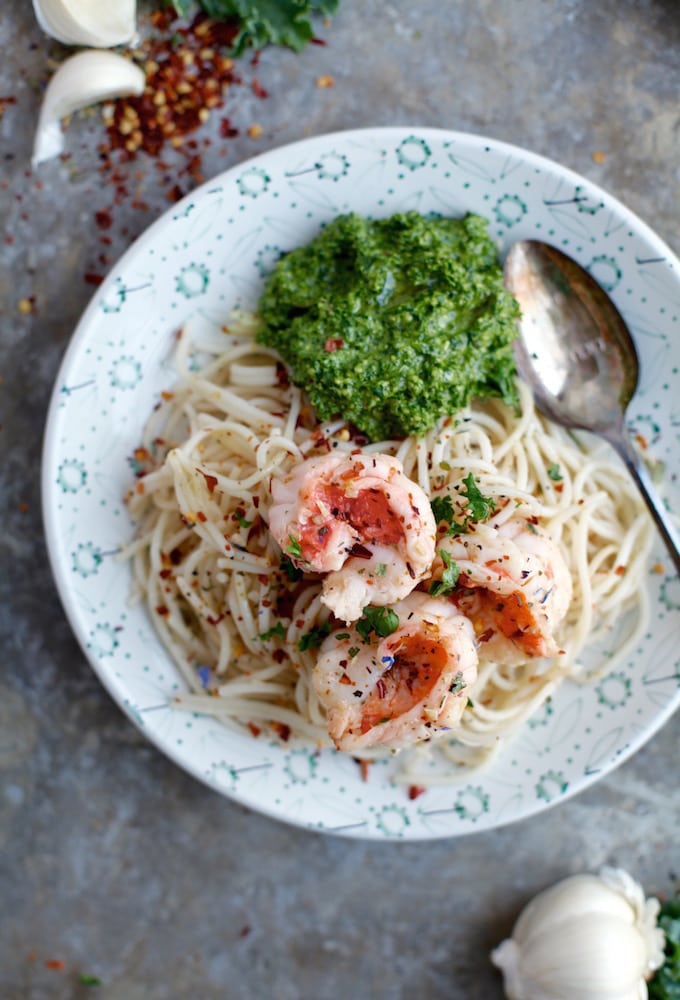
Shrimp Cooks While the Pasta Is in the Pot
Shrimp makes sense for a meal with such a short cooking window. Extra-large shrimp need about five minutes in the pan, so there is no separate long cooking step to plan around.
Heat butter or a dairy-free spread with crushed garlic, chili flakes, salt, and pepper. Add the shrimp and cook until pink and cooked through. The garlic and chili create a scampi-style base without requiring a long list of sauce ingredients.
Pasta Goes Straight Into the Shrimp Pan
Once the pasta reaches the texture you want, drain it and transfer it to the pan with the shrimp. Tossing it there picks up the garlic, butter, chili, and juices left from cooking the shrimp.
Quinoa spaghetti was used in the original recipe, but another spaghetti or pasta shape can take its place. The pesto is added after the pasta and shrimp are divided between plates rather than cooked in the pan, which keeps its fresh green flavor intact.
Don’t Use All the Pesto at Once
The pesto recipe makes more than the two servings of shrimp pasta need. Add a generous spoonful to each plate and save the rest instead of coating every strand with the full batch.
Extra kale pesto can stay in the refrigerator for up to four days and gives the same bunch of greens another job. Spoon it over another bowl of pasta, pair it with chicken or fish, or spread it into a sandwich.
Kale doesn't have to sit beside dinner as the vegetable on the plate. Blend it with basil, lemon, pine nuts, and olive oil, and it can become the part that brings the whole meal together.
Leave a Reply