


Carrot cake usually means mixing batter, baking layers, and waiting for them to cool before adding frosting. These bite-sized pieces get the carrots, walnuts, fruit, and familiar spices into a dessert that never goes in the oven.
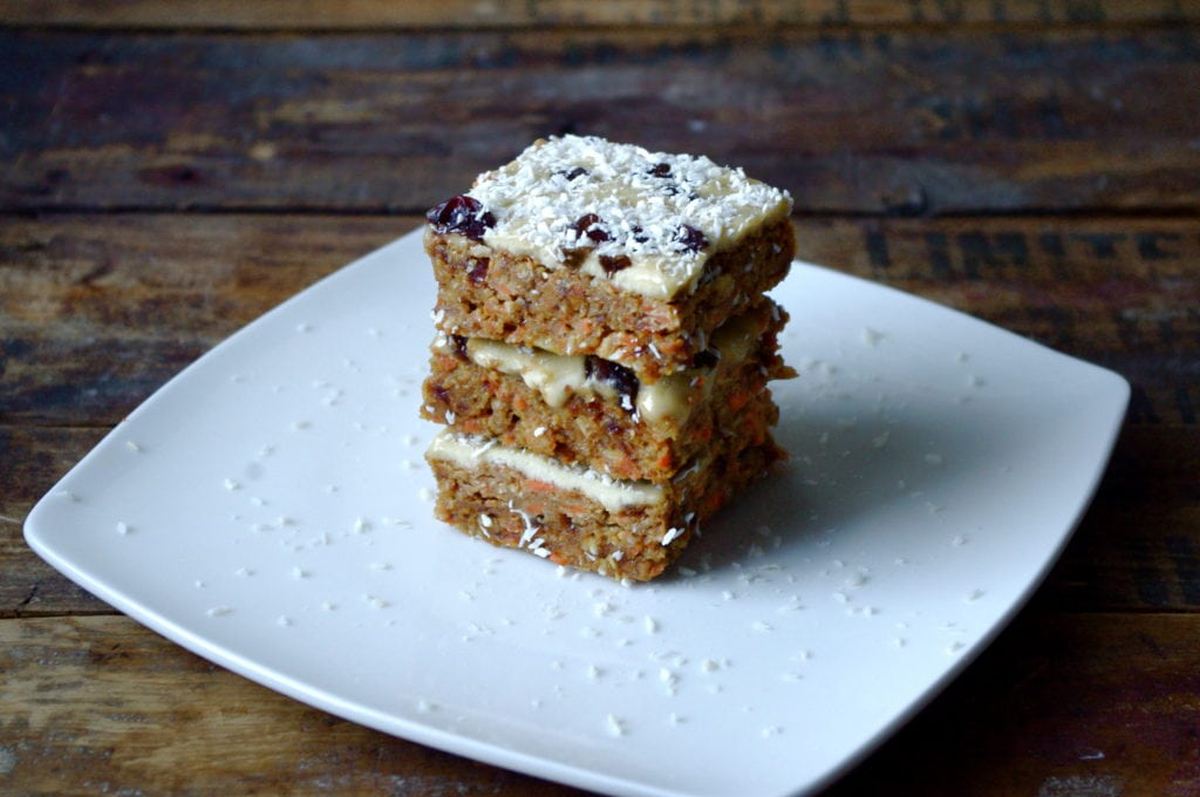
Almonds and dates form the base, while shredded carrots, walnuts, raisins, pineapple, and coconut fill out the mixture. Cinnamon, nutmeg, and cardamom bring in the spice associated with carrot cake, and vanilla protein frosting covers the top.
Almonds and Dates Replace the Usual Cake Batter
Instead of flour, eggs, and a baked batter, the recipe starts with almonds ground into a fine meal. Dates help bind the ingredients while adding sweetness to the base.
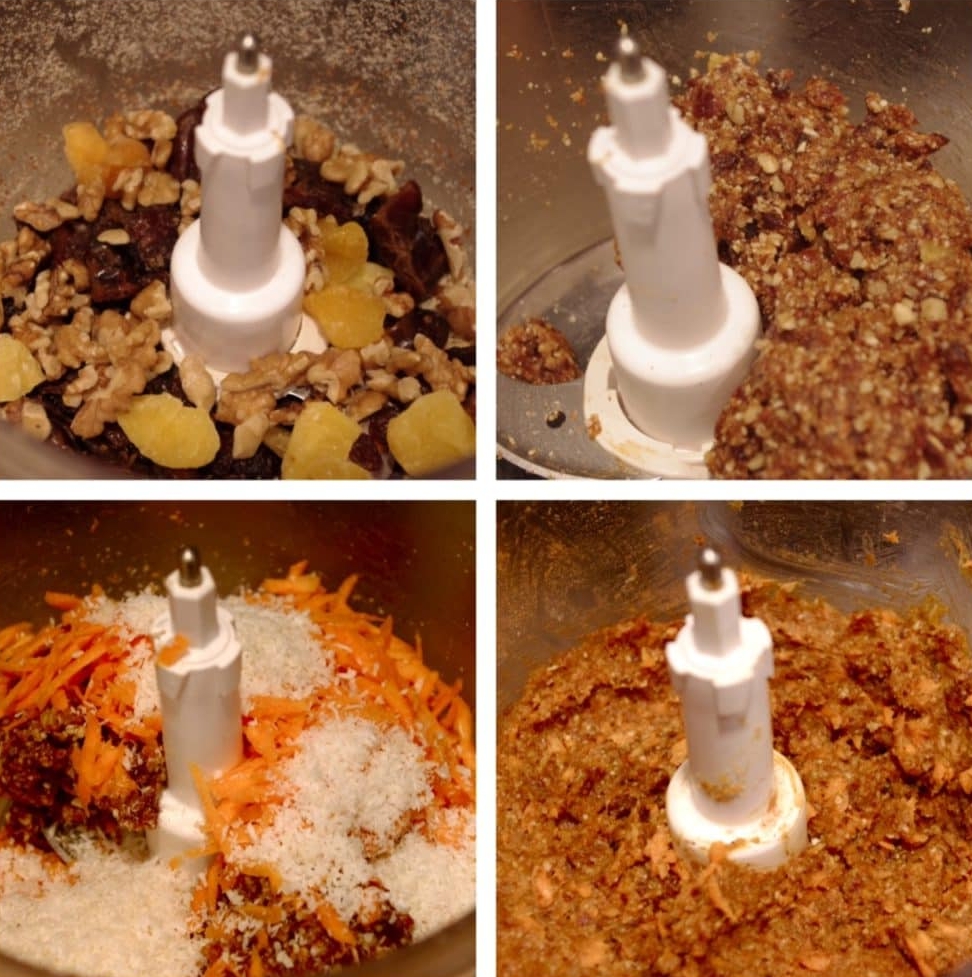
Everything comes together in a food processor, so the mixture can be shaped without baking. The result sits somewhere between carrot cake and an energy bite, with chopped nuts and fruit providing much of the structure.
Carrots Go in With Walnuts, Raisins, Pineapple, and Coconut
Shredded carrots aren't used as a small addition. They join walnuts, raisins, pineapple, and coconut, bringing several of the ingredients found in traditional carrot cake into each piece.
Dates and pineapple provide sweetness alongside the raisins, while walnuts and almonds give the bites a denser texture than baked cake.
Three Spices Push the Mixture Toward Carrot Cake
Cinnamon does most of the familiar work, but it isn't the only spice in the mixture. Nutmeg and cardamom join it, giving the unbaked ingredients the spiced flavor expected from carrot cake.
That combination is important when there is no browned crust or baked batter contributing flavor. The carrots, fruit, nuts, and spices have to carry the connection to the original dessert.
Vanilla Protein Powder Becomes the Frosting
Traditional carrot cake often comes under a thick layer of cream cheese frosting. This version takes another route, turning vanilla protein powder into a pourable topping.
The frosting is spread over the carrot mixture before the bites go into the freezer. Once chilled, it firms into a contrasting layer across the top.
Freezing Sets the Bites Without Baking Them
The freezer does the job that the oven normally would when it comes to setting the finished dessert. After the frosting is poured on, the assembled mixture chills until it is firm enough to cut into individual pieces.
There is one tradeoff. The protein frosting becomes quite hard after extended time in the freezer, so the bites need some time to thaw before eating.
Each Piece Still Has Plenty of Shredded Carrot
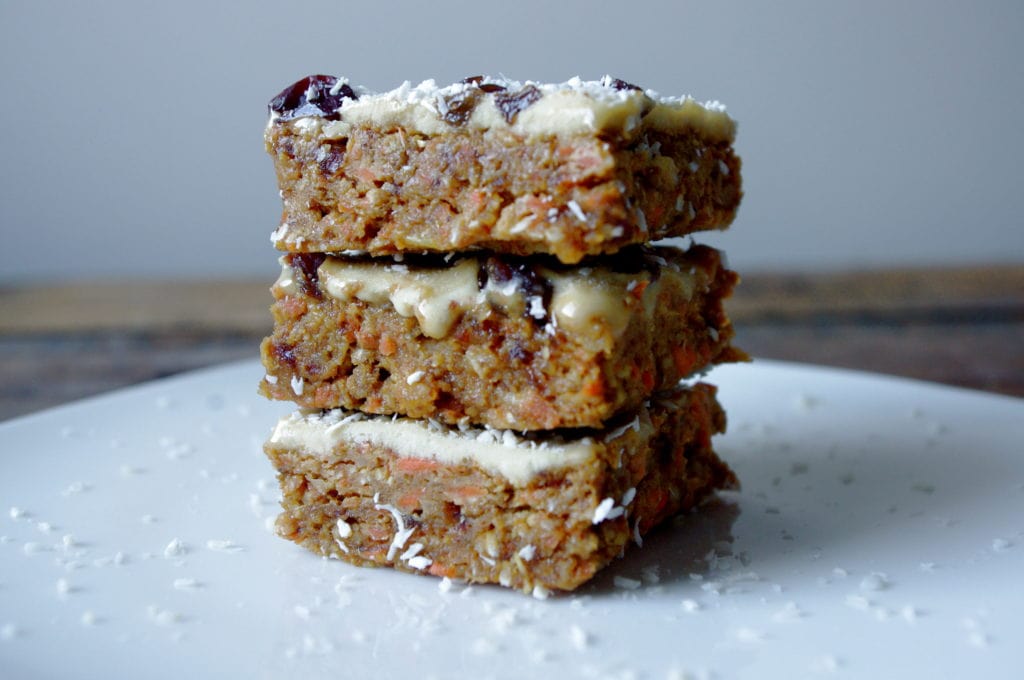
Cutting the mixture reveals how much carrot remains inside. Rather than disappearing into a baked crumb, thin strands sit among the ground almonds, walnuts, dried fruit, and coconut.
The carrot flavor doesn't stand alone. Dates, pineapple, raisins, spices, and vanilla frosting surround it with the sweeter flavors expected from the cake.
Small Portions Turn Carrot Cake Into a Grab-and-Eat Treat
Once set and sliced, the dessert can be served as individual bites rather than wedges from a cake. Keep them chilled to hold their shape, then give the frosting a little time to soften after taking them out.
No cake pans or oven are involved, but carrots, walnuts, fruit, cinnamon, nutmeg, cardamom, and frosting keep the finished bites tied to the dessert that inspired them.
Leave a Reply