


Pork chops can turn into a balancing act on the stovetop. Cook them over moderate heat for too long and the center reaches temperature after the exterior has lost much of its moisture. Pull them early and the middle may still need more time.
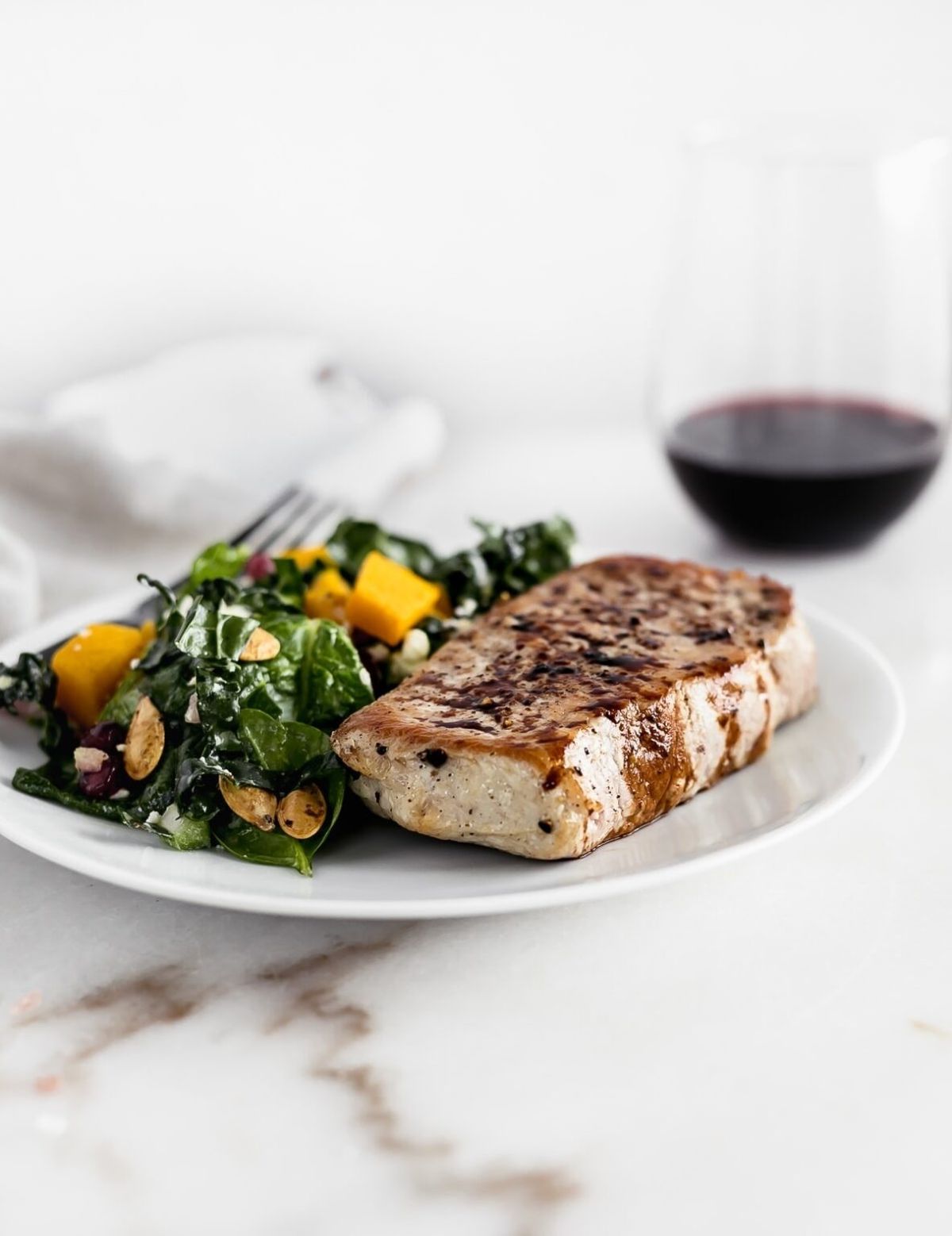
A different approach splits the job between two sources of intense heat. Based on a recipe from Lively Table, the pork chops get a brief sear in a hot cast-iron skillet before the same pan moves under the broiler. The chops can finish in minutes, while the skillet becomes the base for a balsamic, garlic, and rosemary glaze.
High Heat Builds the Crust First
Instead of leaving the pork chops in a skillet until they cook through, the recipe starts with a pan heated over high heat.
The seasoned chops sear for about 30 seconds per side. That short contact with the hot cast iron starts browning the exterior without requiring the center to finish at the same pace.
Thick, center-cut pork chops work well with the method because the outside can take on color while the interior still has room to cook.
Broiler Heat Finishes the Center
Once both sides have been seared, the entire skillet moves beneath a broiler set as hot as the oven allows, with the original recipe calling for 550°F when available.
The pork chops broil for about one to two minutes per side. Heat now reaches the meat from above rather than relying on prolonged contact with the skillet alone.
Pork should reach an internal temperature of 145°F before serving. A meat thermometer removes the guesswork, especially since chop thickness can change the amount of time required.
Same Skillet Turns Into the Sauce Pan
Removing the pork doesn't end the job for the cast-iron skillet.
Balsamic vinegar, garlic, and rosemary go into the hot pan after the chops come out. The vinegar simmers and reduces by about half, creating a thicker glaze without requiring another saucepan.
The browned residue left from searing the pork stays in the skillet, putting the sauce in contact with the same surface used to cook the meat.
Balsamic Vinegar Changes as It Reduces
Straight balsamic vinegar has a thin consistency and pronounced acidity. Heat removes some of its water as it simmers in the skillet.
Reducing it concentrates the vinegar and gives the finished sauce enough body to cling to the pork instead of running straight onto the plate. Garlic and rosemary season the reduction without turning the four-ingredient dish into a long sauce recipe.
The glaze goes over the chops after cooking rather than sitting on the meat beneath the broiler.
Resting Still Matters After the Fast Cook
A short cooking time doesn't eliminate the final pause.
Once the chops reach 145°F, moving them to a plate and resting them for a few minutes gives the meat time before slicing. The balsamic reduction can cook during the same interval, so resting doesn't add another separate stage to the meal.
Searing, broiling, and reducing the sauce in the same cast-iron skillet compress several jobs into about 15 minutes. Instead of asking one burner temperature to handle the entire pork chop, the technique uses intense heat in short stages, then puts the hot pan to work one last time for the glaze.
Leave a Reply