


Key lime cake can deliver more than one texture without adding a filling after it leaves the oven. This version goes into the baking dish as one batter, then comes out with a tender cake layer on top and a soft pudding layer underneath.
The separation happens during baking, with whipped egg whites helping form the upper layer while key lime juice, zest, egg yolks, half-and-half, and the rest of the batter settle into a custard-like base. A water bath surrounds the dish as both textures develop at the same time.
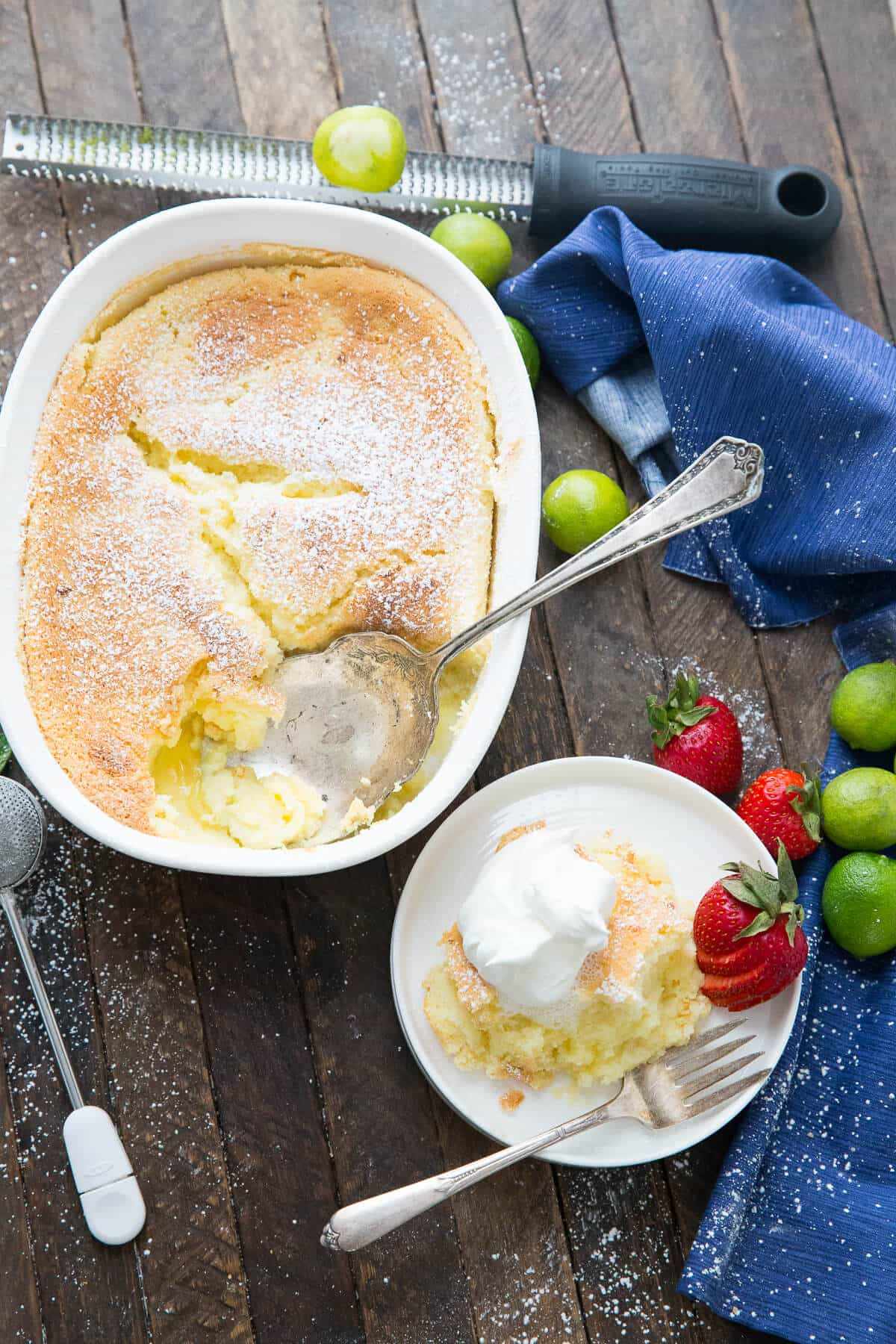
There is no pudding to prepare on the stove and no cake to slice apart for filling. Both layers come from the same key lime batter.
Whipped Egg Whites Start the Cake Layer
Eggs are divided before the batter comes together. The whites are beaten until foamy, then sugar and cream of tartar are added until stiff, glossy peaks form.
Those whipped whites hold air that the rest of the batter does not have. Folding them in rather than beating them through the mixture preserves that structure before the cake enters the oven.
The egg yolks stay with the richer portion of the batter, where they join butter, sugar, key lime juice, and zest.
Key Lime Flavor Runs Through Both Textures
Key lime does not sit in a frosting, glaze, or filling added after baking. Juice and zest go into the batter itself, putting citrus into the cake and pudding layers from the start.
Flour and salt join the lime mixture before half-and-half goes in. The dairy adds enough liquid for the lower portion to remain soft while the upper portion develops into cake.
That makes the lime part of both textures rather than a separate topping that can be removed from the slice.
One Batter Goes Into the Baking Dish
Once the whipped egg whites are folded into the lime mixture, the batter goes into a 1½-quart casserole dish. There is no second mixture to pour underneath and no pudding layer waiting at the bottom.
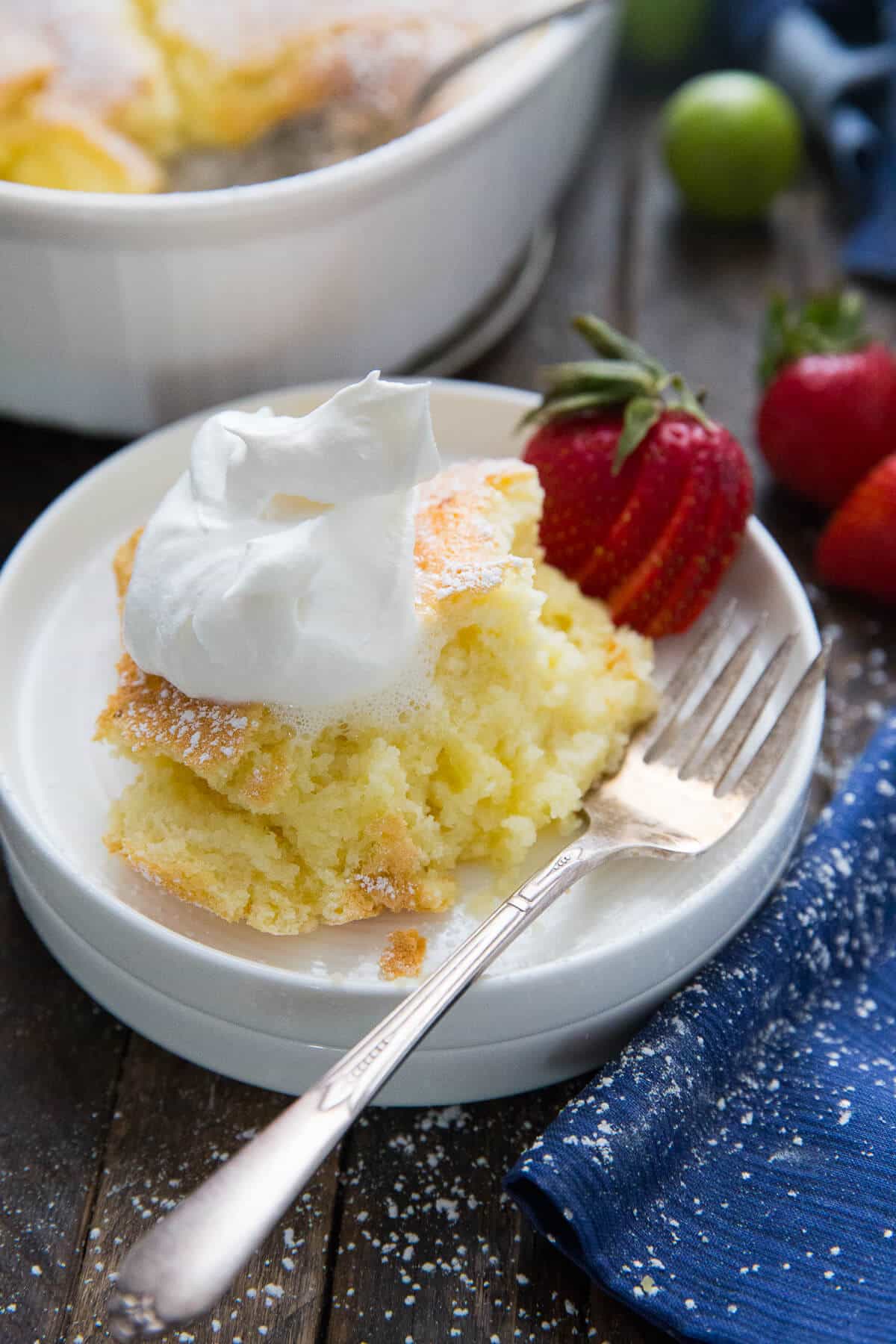
The distinction develops in the oven. The airy portion rises and sets into a soft cake, while the wetter mixture below forms the pudding-like layer.
By the time the surface turns golden, a spoon can pass through cake before reaching the softer lime layer beneath it.
A Water Bath Changes How the Cake Bakes
The casserole dish sits inside a larger 9-by-13-inch baking dish filled with about half an inch of boiling water. That water surrounds the smaller dish while the cake bakes at 350 degrees Fahrenheit for 45 to 55 minutes.
The setup gives the pudding portion a gentler environment as the top sets. Instead of treating the dessert like a standard loaf or sheet cake, the method borrows a technique used for custards and other egg-based desserts.
After baking, the smaller dish comes out of the water bath and rests for about 10 minutes.
Two Layers Come From One Key Lime Batter
The finished dessert does not need frosting to reveal what makes it different. A dusting of powdered sugar can finish the top while leaving the two textures underneath intact.
The first layer has the light structure created by whipped egg whites, while the base stays soft and pudding-like. Key lime ties the two together, turning one batter into a dessert that sits somewhere between cake and citrus custard.
The contrast is also why this cake is best served fresh. It can stay covered in the refrigerator for up to three days, but the distinction between the soft cake and pudding layers is at its best on the day it comes out of the oven.
Leave a Reply