


Parmesan and Parmigiano-Reggiano sit next to each other in many cheese cases, but the price difference can be hard to miss. Both are hard cheeses commonly grated over pasta, risotto, soups, and salads, yet Parmigiano-Reggiano often costs more because the name comes with rules governing where and how the cheese is produced.
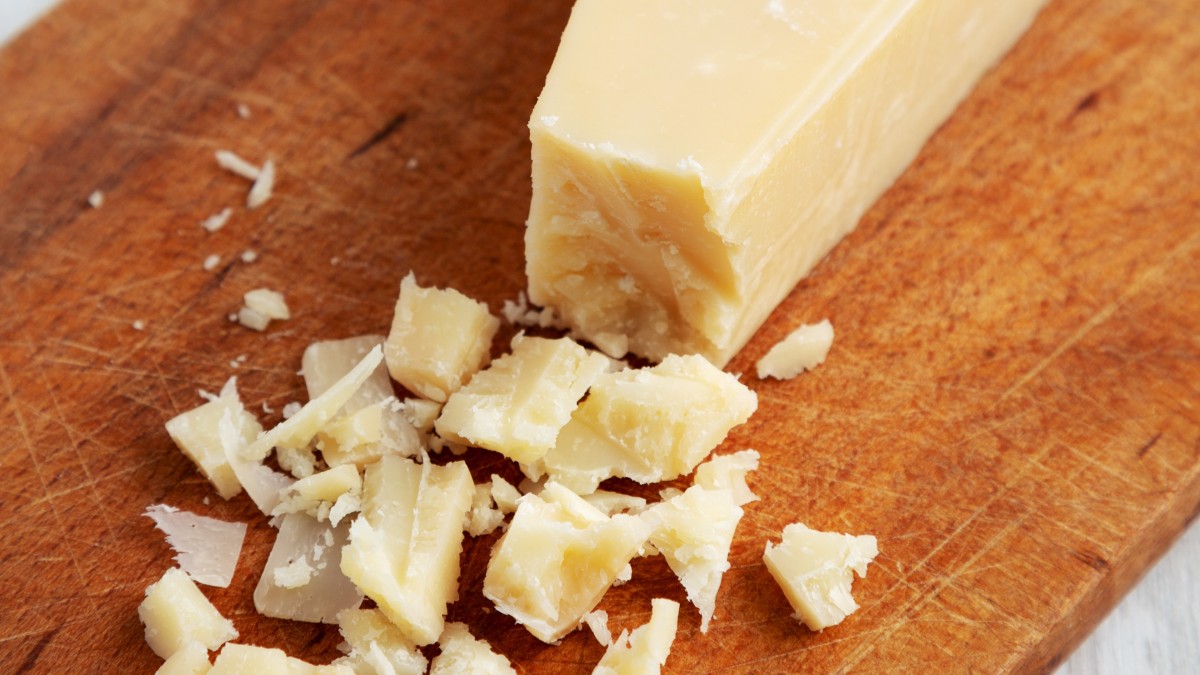
In the United States, Parmesan is a broader category. A cheese labeled Parmesan can be produced outside Italy and does not have to meet the same geographic and production requirements as authentic Parmigiano-Reggiano.
That difference affects more than the name printed on the package. Ingredients, aging, production area, and the controls applied during cheesemaking help explain why a wedge of Parmigiano-Reggiano can carry a higher price.
Parmigiano-Reggiano Can Only Come From Specific Parts of Italy
Parmigiano-Reggiano has Protected Designation of Origin status in the European Union. Production is restricted to Parma, Reggio Emilia, Modena, and designated areas of Bologna and Mantua in northern Italy.
Producers must also follow established rules throughout the process. Authentic Parmigiano-Reggiano is made from cow's milk, salt, and rennet, without additives or preservatives, and each wheel must meet the requirements attached to the protected cheese before it can carry the name.
Parmesan sold in the U.S. does not necessarily follow those rules. Domestic producers can make Parmesan-style cheese outside the Italian production area, which is why two packages that appear similar in the cheese aisle may represent products made under different standards.
Parmigiano-Reggiano Has to Age for at Least 12 Months
Time contributes to the price as well. Parmigiano-Reggiano must be aged for at least 12 months, and wheels are inspected before they qualify to carry the protected name. Producers also sell versions aged for 24, 30, 36 months, or longer.
That aging changes the cheese. Moisture decreases while the texture becomes harder and more granular, and longer-aged versions develop stronger savory and nutty notes. Small crunchy crystals can also become noticeable throughout mature pieces.
Keeping large wheels in controlled aging conditions for a year or more requires storage space and ties up inventory long before the cheese reaches a store. Parmesan made outside the protected system does not have to follow the same minimum aging process.
Check the Rind When You Want Parmigiano-Reggiano
Price alone is not the best way to identify authentic Parmigiano-Reggiano. Look for the full name on the package rather than assuming any wedge labeled Parmesan is the same product.
Pieces cut from authentic wheels often retain part of the rind stamped with repeated "Parmigiano Reggiano" markings. Whole wheels receive identifying marks during production that allow the cheese to be traced back to its origin.
Domestic Parmesan still has a place in the kitchen, especially when cheese is being mixed into a casserole, sauce, or another dish with several competing flavors. Parmigiano-Reggiano becomes easier to appreciate when grated over a simple pasta, shaved onto a finished dish, added to risotto, or eaten on its own.
The higher price is not just a matter of putting an Italian name on Parmesan. Parmigiano-Reggiano represents a cheese tied to a defined production area, controlled ingredients and methods, inspection, and at least a year of aging before it reaches the table.
Leave a Reply