


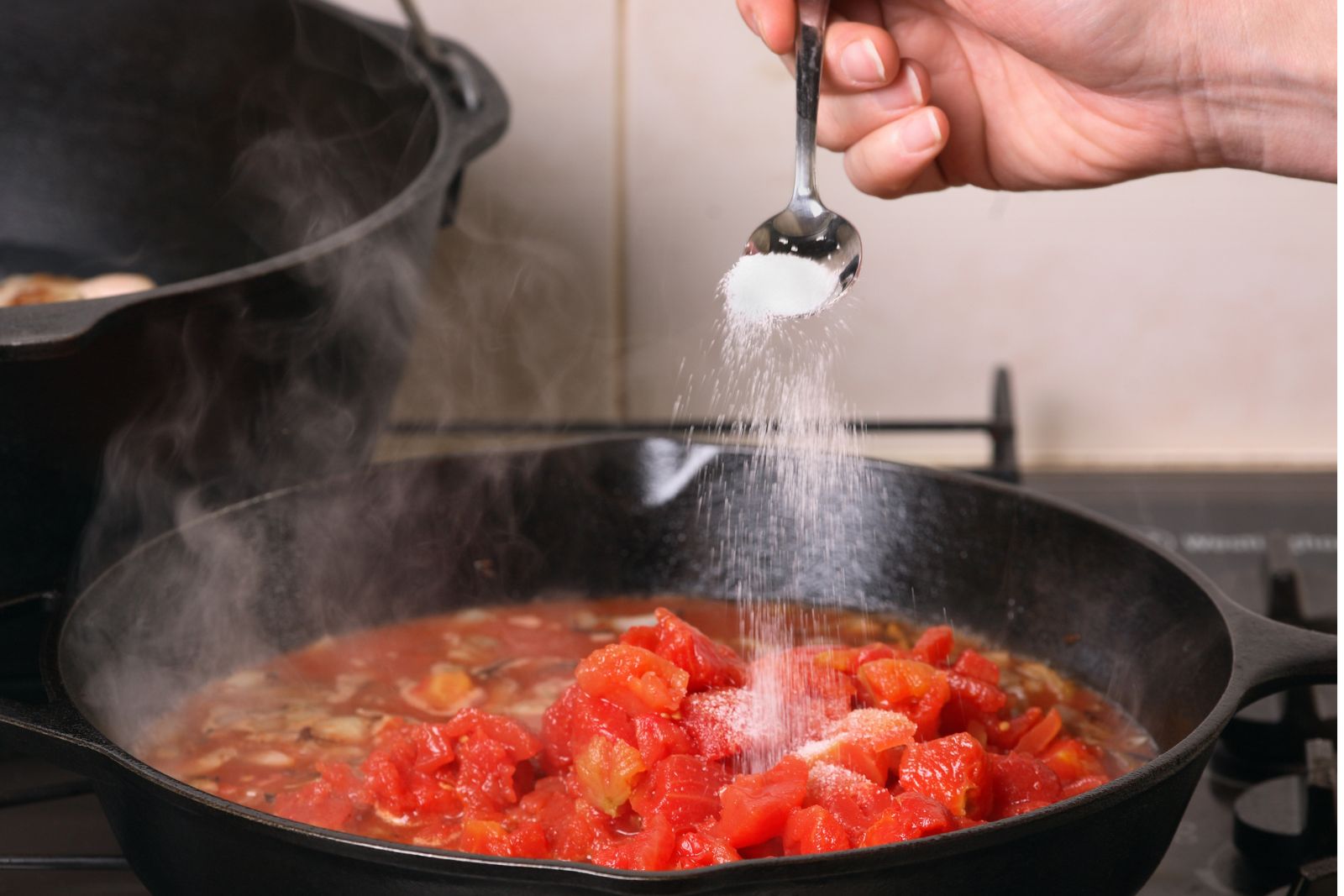
The tomato sauce has been simmering for 20 minutes, and it still tastes sharp and a little sour. You reach for the sugar bowl, add a spoonful, taste, and add another. Now it's sweet and still a little harsh underneath.
This is not your fault. A pinch of sugar is one of the most common fixes passed down for sour sauce. But chefs Ferran Adrià and Samantha Vallejo-Nágera are credited with a different approach: a slow-cooked base of garlic, onion and olive oil, with time doing the rest.
Why a sour sauce isn't just about the tomatoes
Tomatoes are naturally acidic. According to Kansas State University Extension, they're usually classified as acid foods, and USDA tests found that acidity varies very little among varieties. How tart a tomato tastes is a separate matter from how much acid it contains.
That's why balance matters more than the tomato you buy. In the chefs' view, sugar only masks the sharpness. Their method builds sweetness into the base instead, from onion and garlic cooked slowly in olive oil until very soft and lightly caramelized, then gives the sauce a long, gentle simmer that cooks off water and concentrates the flavor.
Adrià has also argued for measuring. On the Catalan TV program Col·lapse, he said a proper sofrito isn't just one onion and two tomatoes thrown together, but 100 grams of onion to 80 grams of tomato, more onion than tomato by weight.
The slow sofrito, step by step
This version, as reported from the chefs' advice, is sized for about 10½ ounces (300 grams) of tomatoes. The conversions from metric are rounded.
- Start low. In a skillet over low heat, add ⅔ cup (150 milliliters) of extra virgin olive oil, 1 chopped onion and 3 chopped garlic cloves.
- Cook slowly. Stir now and then until the onion and garlic are very tender and just starting to color. Don't rush this step.
- Add wine, if you like. Vallejo-Nágera adds about 3½ tablespoons (50 milliliters) of white wine once the onion turns translucent, then lets it cook off before the tomatoes go in.
- Simmer the tomatoes. Add the tomatoes and cook over low heat for 50 to 60 minutes, stirring occasionally.
- Salt at the end. Season once the sauce has reduced and the flavors are concentrated, as Adrià recommends.
Plan B if you don't have an hour: roast peppers and tomatoes for a sweeter base, the way Lively Table's roasted red pepper tomato basil soup builds flavor with no added sugar.
Before you pour in that much oil
The quantities are generous. Two-thirds of a cup of olive oil is about 10 tablespoons, a lot of oil for roughly 10 ounces of tomatoes. If you're watching calories, start with less oil and add more only if the base starts to stick. The slow cooking does most of the work.
The wine doesn't all disappear. According to Idaho State University, citing USDA data, about 25% of the alcohol can remain after an hour of cooking. Leave it out if you're cooking for kids, for someone who is pregnant or for anyone avoiding alcohol.
These techniques come from chefs' kitchen advice, reported secondhand, not from a lab test. If a sauce still tastes harsh after a long simmer, a little more onion or a grated carrot in the sofrito is a sugar-free fix to try next time.
Cook the garlic and onion low, give the tomatoes an hour, and salt last. That's the trick.

Leave a Reply