


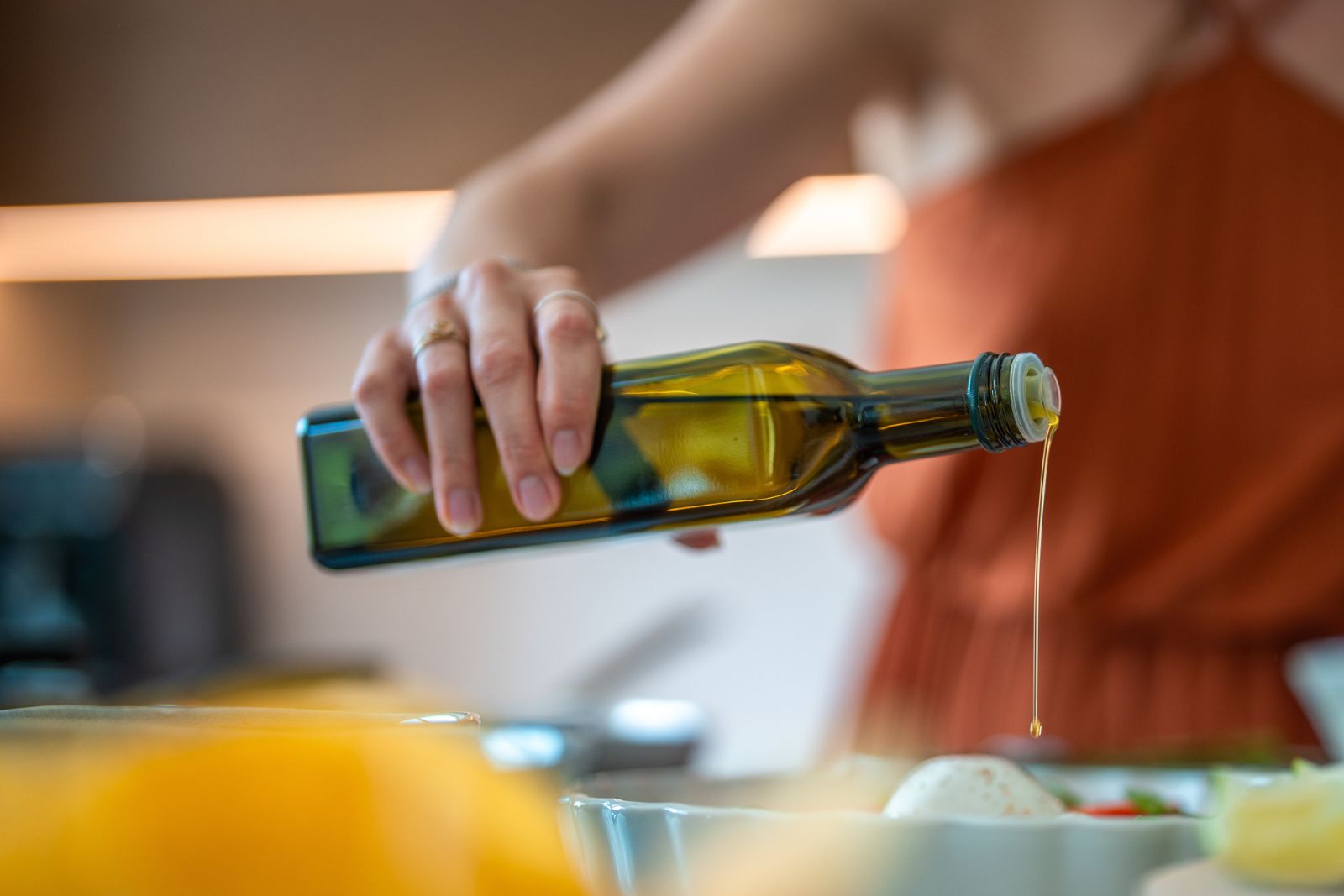
The big 3-liter bottle of Kirkland Signature olive oil goes into the cart because it's a good deal and lasts for months. At home, you drizzle it over a salad or dip bread in it, expecting that peppery, grassy taste. It tastes like very little.
This is not your fault. The bottle says olive oil, and that's accurate. But the details on the back explain the mild flavor, starting with where the oil comes from.
What the label actually says
The ingredient line reads "olive oil, 15% extra virgin olive oil," and the label lists 10 countries of origin: Argentina, Chile, Greece, Italy, Morocco, Portugal, Spain, Tunisia, Turkey and the United States, according to the product listing in the Open Food Facts database.
The "olive oil" in that line is a specific grade. Under USDA grade standards, olive oil is "the oil consisting of a blend of refined olive oil and virgin olive oils fit for consumption without further processing." Extra virgin is the top grade, with excellent flavor and odor and strict limits on free fatty acids.
Refining is what changes the taste. According to University of Florida IFAS Extension, refined olive oil is made from lower-quality oil and comes out tasteless, colorless and odorless, with its polyphenols removed. Blends labeled "pure" or "classic" are refined oil with some virgin or extra virgin oil added for flavor. In this bottle, that's 15%.
Matching the bottle to the job
- Sautéing and roasting: A mild blend works well when the oil's flavor isn't the point, such as browning vegetables or searing chicken.
- Baking: Recipes that call for a mild olive oil are a natural fit, since a strong, peppery oil can overpower a cake.
- Dressings and dipping: When the oil is the flavor, a bottle labeled extra virgin will taste noticeably different.
- Checking any bottle: Turn it around and read the ingredient line, the grade and the countries of origin before you buy.
- Storing a big bottle: Keep it tightly capped in a cool, dark cupboard away from the stove, and pour a smaller amount into a cruet for daily use.
Plan B for that 3-liter bottle: put it to work in baking. Lively Table's easy grapefruit olive oil cake calls for ¾ cup of mild-flavored olive oil, the kind of job where a blend makes sense.
What a 15% blend means for your health
A blend isn't a fake or a bad product. It's a recognized grade of olive oil, and it still gives you the monounsaturated fat that olive oil is known for. What you give up is most of the polyphenols that come with extra virgin oil.
The UF/IFAS review notes that researchers are still sorting out whether those polyphenols add benefits beyond the fat itself. One review it cites found that olive oil with high levels of phenolics, at less than 2 tablespoons a day, lowered blood pressure and oxidized LDL. That's a reason to keep a bottle of extra virgin for raw uses, not a reason to throw out the blend.
Labels can change between batches, so the list of countries on the bottle in your pantry may differ. Olive oil is also calorie-dense, so measure it rather than pouring freely. If you're managing heart disease or cholesterol, your doctor or a registered dietitian can help you decide which fats to use most.
Read the back label, cook with the blend, and save extra virgin for the salad. That's the trick.

Leave a Reply