


Red may be the color most associated with a ripe tomato, but some varieties reach the plate in shades of green, purple, brown, and striped combinations. Reddit user u/SteakAndIron showed the difference with a plate of heirloom tomatoes his wife grew, sliced and served with coarse salt.
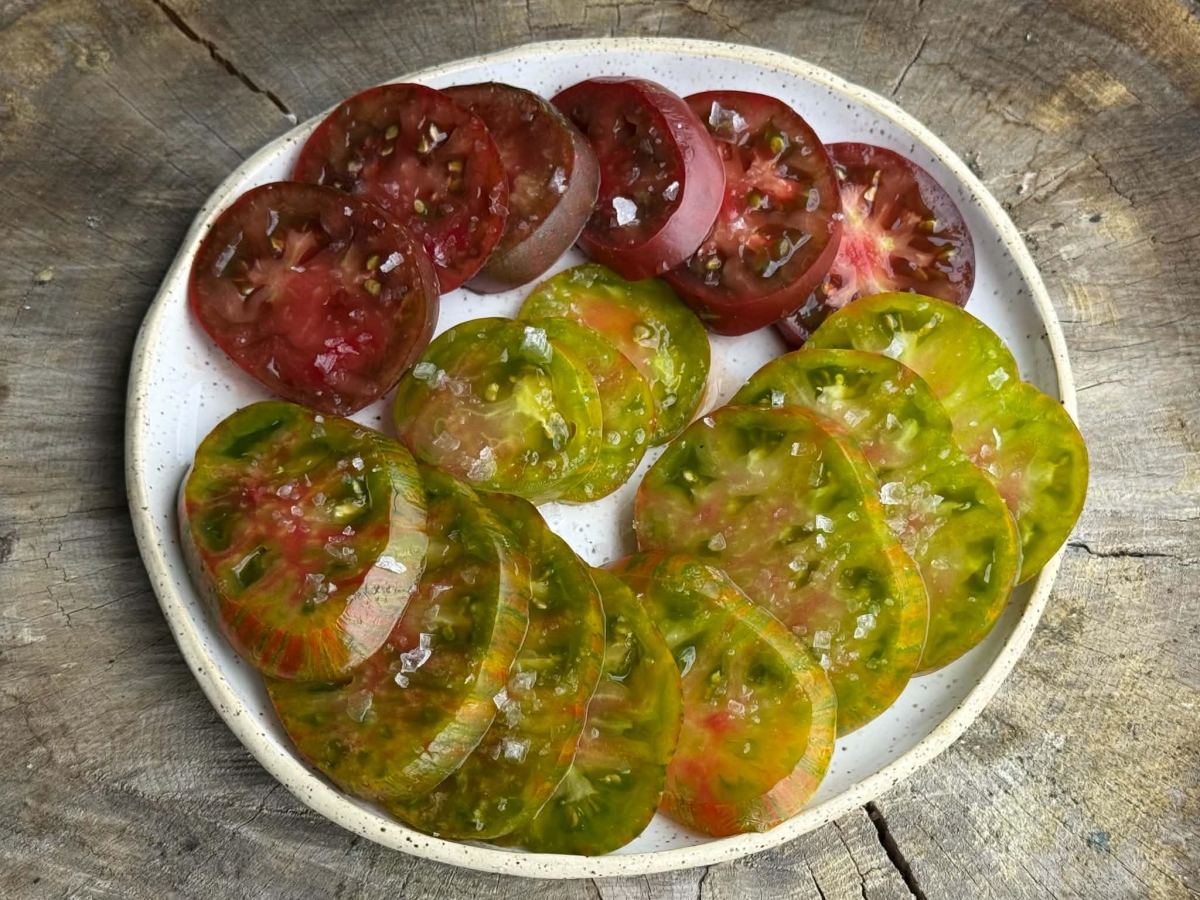
The two varieties are Purple Krim and Green Zebra. One produces dark red-purple slices, while the other remains green at maturity with yellow, amber, and red tones across the flesh. The plate makes ripeness harder to judge by color alone.
Purple Krim Develops a Darker Color
The Purple Krim tomatoes form the dark section of the plate, with flesh that ranges from deep red to brown-purple. Their color extends through much of each slice rather than appearing as a uniform bright red.
That appearance was one of the first things Reddit commenters noticed. One reader pointed to the deep red color, while others compared the tomatoes to jewels, crystals, and agates because of the colors visible across the slices.
Green Zebra Stays Green When Ripe
The Green Zebra slices make the contrast much stronger. Green remains the dominant color even though the tomatoes are mature, with yellow and orange tones and areas of red visible through some slices.
That distinction matters because a green tomato is not always an underripe red tomato. Green Zebra is grown for a mature fruit that retains green coloring, so waiting for it to become solid red would give the wrong signal about when it is ready to eat.
The unusual colors also caught attention in the discussion, where one commenter said they had known about green tomatoes but had not realized tomatoes could include so many other colors.
Coarse Salt Is Almost the Only Addition
The tomatoes were not covered with dressing or mixed into a larger dish for the photo. Thick slices fill the plate with visible flakes of coarse salt scattered across their cut surfaces.
Commenters noticed that choice, with one praising the flaky salt and another saying a sprinkle of salt was all the tomatoes needed. Other suggestions included olive oil, pepper, feta, fresh mozzarella, burrata, and basil.
Several people went straight to tomato sandwiches, while another suggested using the tomatoes for Caprese. The thick slices shown in the photo would work for either without requiring the colors to disappear into a cooked dish.
Heirloom Tomatoes Don't Aim for Uniformity
The differences between the slices extend beyond red versus green. Shapes, internal colors, seed pockets, and patterns vary across the plate, giving each tomato a different appearance after cutting.
When a commenter asked whether heirloom tomatoes were harder to grow, u/SteakAndIron said not in his experience and suggested that modern varieties have been selected more for transport and uniformity. Other gardeners in the discussion reported mixed experiences, with some finding heirlooms easy to grow and others noting problems with disease.
The plate shows the part that needs no growing experience to notice. A ripe tomato does not have to be round, bright red, and uniform from one slice to the next. Purple Krim and Green Zebra can look far removed from that familiar image while being ready for nothing more than salt and a plate.
Leave a Reply