


Orange chicken is known for crisp pieces of chicken covered in a thick citrus sauce, but getting that contrast at home does not require a pot of frying oil. A thin cornstarch coating can create the browned exterior in a skillet before the chicken meets the sauce.
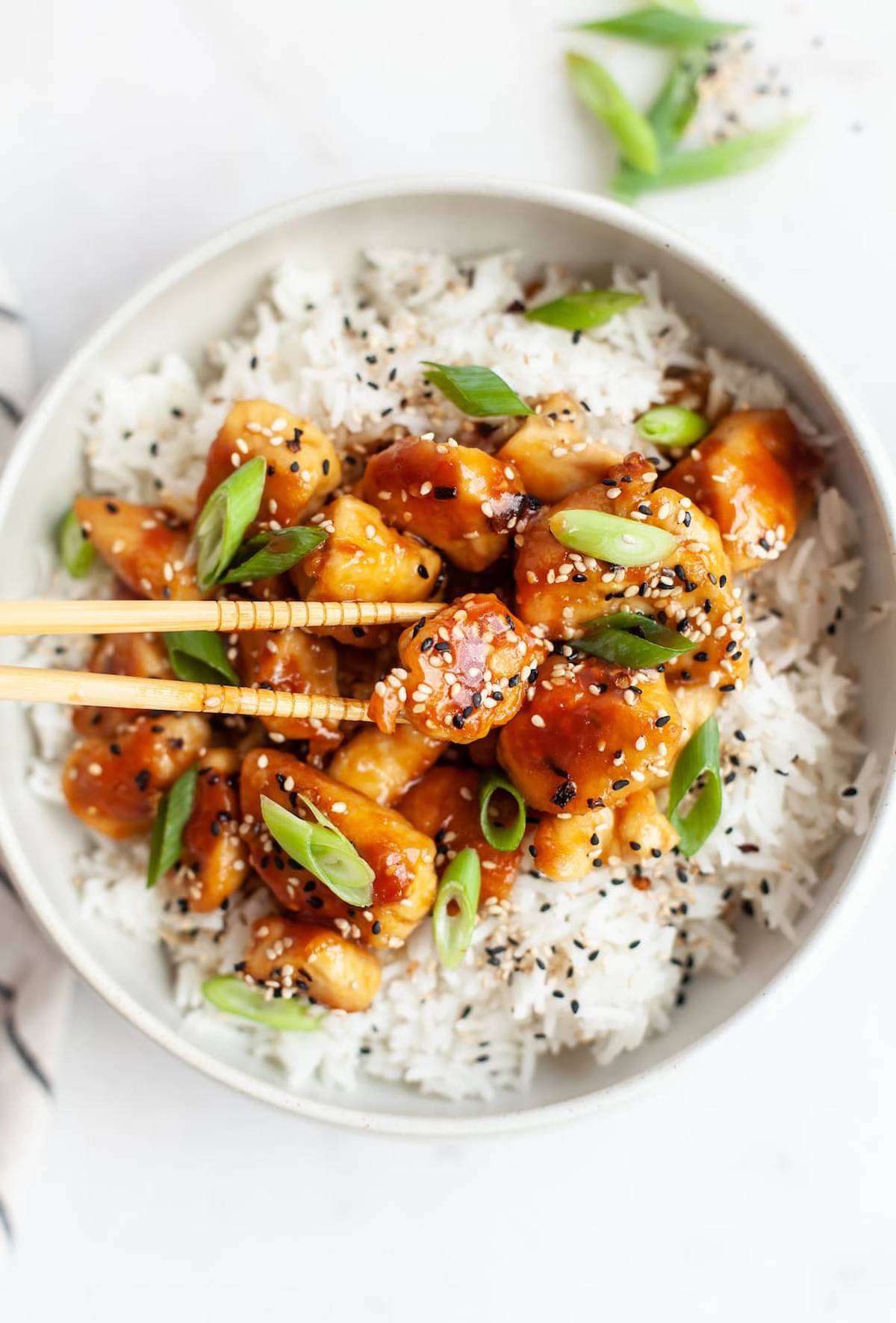
Orange juice, zest, soy sauce, ginger, garlic, and rice vinegar form the sauce, while cornstarch gives it enough body to coat each piece. Keeping the chicken and sauce apart until the final step preserves the texture that makes orange chicken work, without flour breading or deep frying.
The entire process takes about 20 minutes, turning a takeout favorite into a weeknight dinner made on the stovetop.
Cornstarch Takes the Place of a Flour Batter
Many versions of orange chicken start with battered chicken that goes into hot oil before being tossed with sauce. This method coats chopped chicken with cornstarch instead, creating a thin exterior without mixing a separate flour batter.
The cornstarch browns as the chicken cooks in the pan and creates a crisp surface for the sauce to coat later. It also removes all-purpose flour from the coating, so gluten-free soy sauce or tamari can keep the rest of the dish gluten-free.
Pan Frying Replaces the Pot of Oil
The coated chicken cooks in a skillet with avocado oil rather than being submerged in oil. Each small piece makes direct contact with the hot pan, allowing the cornstarch coating to brown while the chicken cooks through.
After about 10 minutes of cooking and stirring, the browned chicken comes out of the skillet. The pan is then ready for the sauce, keeping the cooking process on the stovetop without setting up a separate deep-frying station.
Orange Juice Builds the Sauce From Scratch
Orange juice and zest provide the citrus base, joined by soy sauce, rice vinegar, garlic, and ginger. Coconut sugar adds sweetness, while cornstarch thickens the mixture into the sticky coating associated with orange chicken.
The sauce goes into the skillet after the chicken comes out. As it simmers, the cornstarch thickens the liquid enough to cling to the chicken instead of pooling beneath it.
Chicken and Sauce Stay Apart Until the End
Cooking the chicken before adding the sauce separates browning from coating. The cornstarch exterior develops against the hot pan first, rather than sitting in liquid while the chicken cooks.
Once the sauce has thickened and begun to bubble, the chicken returns to the skillet for a final toss. This keeps its time in the sauce short and puts the sticky orange coating on after the exterior has already browned.
A Takeout Favorite Fits Into a Weeknight Skillet
Removing the deep fryer does not mean giving up the two features that define orange chicken. The chicken still gets a crisp cornstarch exterior, while orange juice, zest, ginger, garlic, and soy sauce create the thick coating that covers each piece.
Served with rice and finished with green onion or sesame seeds, the dish brings crisp chicken and sticky orange sauce together without flour batter, a deep pot of oil, or a long cooking process.
Leave a Reply