


Onions often go from the grocery bag straight into the refrigerator, tucked into a crisper drawer beside other produce. Whole onions, however, can stay fresh for far longer outside the fridge when the storage conditions are right.
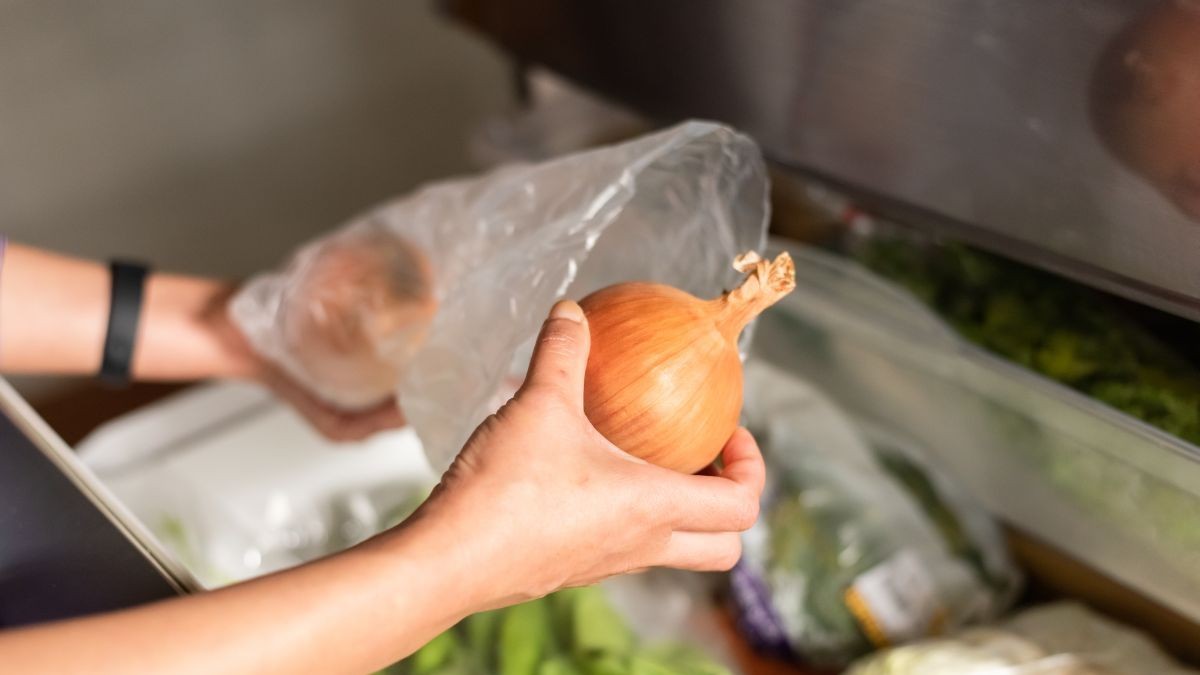
The key is not just temperature. Airflow, moisture, and light all affect how long an onion lasts, and a sealed plastic bag can create the conditions that cause it to spoil sooner.
There is one important catch. Once an onion has been peeled or cut, the storage rule changes, and the refrigerator becomes the place it needs to go.
Whole onions need a cool, dry place
A whole, cured onion has a dry papery exterior that protects the bulb beneath it. As long as that outer layer remains intact, the onion does not need refrigerator storage.
Instead, keep whole onions in a cool, dry, dark area with good airflow. A pantry or cupboard can work, provided it does not become hot or damp.
Ventilation matters because onions contain moisture. When several are packed inside a closed plastic bag, that moisture has fewer ways to escape. Damp conditions can then encourage mold and shorten storage life.
A wire basket, mesh bag, open cardboard box, or other ventilated container gives air room to circulate around the bulbs.
Darkness helps keep onions from sprouting
A sunny kitchen counter may seem like a convenient place for an onion basket, but light can encourage onions to sprout.
Choose a dark pantry or cupboard instead. Avoid spots near the oven, dishwasher, radiator, or other sources of heat and moisture.
Don't crowd the container, either. Loose storage leaves more space for air to move between individual onions and also makes it easier to spot a bulb that has begun to soften or spoil.
Cutting an onion changes the storage rule
Once the papery exterior has been removed and the onion has been cut, leaving it in the pantry is no longer the right approach.
Peeled, sliced, and diced onions should go into the refrigerator. Cutting exposes the moist interior and removes much of the natural protection that allowed the whole bulb to sit at room temperature.
Place leftover onion in a sealed container or food-storage bag before refrigerating it. Besides protecting the cut surface, a closed container helps stop the strong onion odor from spreading through the refrigerator.
Use cut onion within several days rather than treating it like a whole bulb that can remain in storage for weeks.
Garlic follows a similar storage rule
Whole garlic bulbs also favor a cool, dry, ventilated location outside the refrigerator. Refrigerator moisture can encourage intact garlic to sprout or develop mold.
Once garlic has been peeled or chopped, move it into the refrigerator in a covered container.
That makes a pantry basket useful for both whole onions and whole garlic, while prepared portions stay refrigerated.
Potatoes need airflow and darkness too
Potatoes are another kitchen staple that benefits from a cool, dark, dry storage area with ventilation.
Remove potatoes from sealed plastic packaging and use a paper bag, cardboard box, or ventilated basket instead. Light can cause potatoes to turn green, while trapped moisture can contribute to decay.
Unlike whole onions, potatoes also have another reason to avoid refrigerator temperatures: cold storage can alter their sugars and affect how they taste and cook.
Cut or peeled potatoes are different. Refrigerate them and use them soon after preparation.
Tomatoes and bananas depend on ripeness
Not every piece of produce follows the exact onion rule. Tomatoes and bananas have another variable: how ripe they are.
Tomatoes can remain at room temperature while ripening. Refrigeration can extend the usable life of ripe tomatoes, especially in a hot kitchen, though cold storage can affect their texture and flavor.
Bananas also benefit from room-temperature storage while ripening. Their skins can darken fast in the refrigerator, even when the fruit inside remains usable.
The bigger lesson is that the refrigerator isn't the default storage spot for every piece of fresh produce. For onions in particular, check their condition before deciding where they belong: whole bulbs get airflow in a cool, dark place; peeled or cut onions go into the fridge.
Leave a Reply