


Cheese needs heat to melt, so I used to add it while the pasta pan was still over the burner. That can be the reason a sauce turns clumpy instead of creamy.
Now I take the pasta off the heat before adding hard cheeses such as Pecorino Romano or Parmigiano Reggiano. The pasta still holds enough heat to melt the cheese, but the cheese isn't sitting over direct heat while I work it into the sauce.
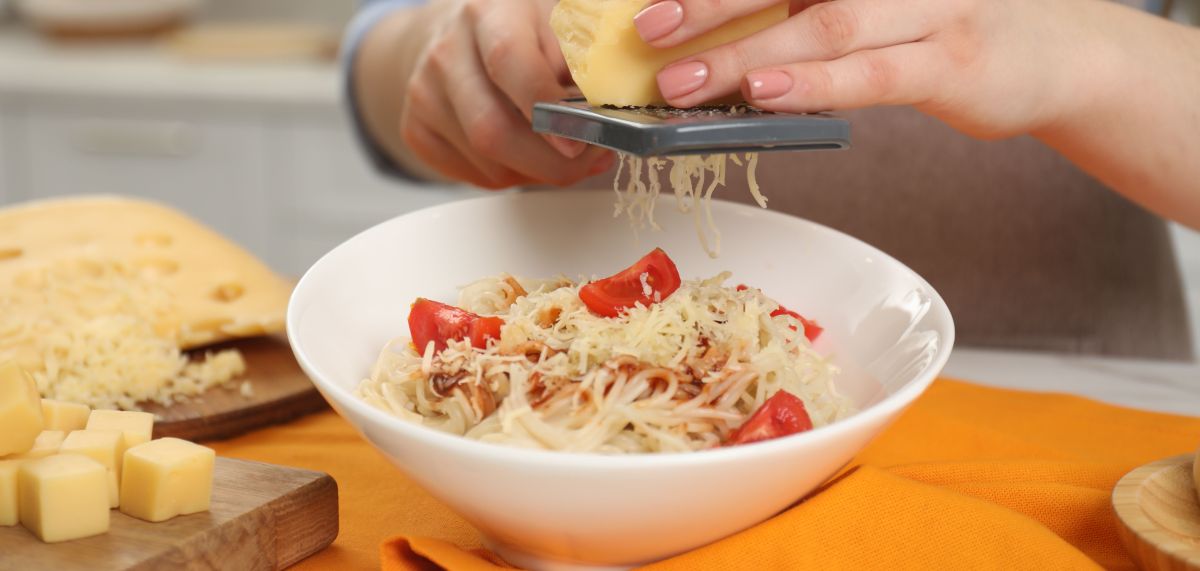
I Grate the Cheese as Fine as I Can
Hard cheese goes through a Microplane or the smallest holes on my grater before I start the sauce.
I want the Pecorino or Parmesan fine enough to look like snow. Smaller pieces have more exposed surface area and can melt into the sauce with less heat.
I also skip pre-shredded cheese here. The source notes that packaged shredded cheese can contain anti-caking agents such as cellulose that keep the pieces separated.
Hot Pasta Water Goes Into the Cheese First
For cacio e pepe, I don't dump the grated Pecorino straight onto the pasta.
Put the cheese in a bowl, then drizzle in some hot pasta water. Mix until the cheese and water form a paste.
This introduces heat to the cheese before it meets the pasta without putting it over a burner.
I Take the Pasta Off the Heat
Once the pasta is ready, remove the pan from the heat.
The source recommends waiting about a minute before combining the pasta and cheese. That short pause is intentional: hard cheese doesn't need strong direct heat to become a sauce.
Too much heat can cause the fat to separate while the cheese proteins tighten and clump together. That's when a sauce that should coat the pasta can turn into strings or lumps of cheese.
The Hot Pasta Melts the Cheese
After that short wait, combine the pasta with the cheese mixture off the heat.
Keep mixing as the residual heat from the pasta melts the Pecorino. The goal isn't to stop using heat altogether; it's to use the heat already stored in the pasta rather than keeping the pan over the burner.
This matters more with aged hard cheeses, which have less moisture and tighter protein bonds than younger cheeses.
I Add More Pasta Water a Tablespoon at a Time
If the cheese sauce looks too thick, I don't put the pan back over high heat.
Add more pasta water one tablespoon at a time while continuing to mix. Stop when the sauce loosens enough to coat the pasta.
For cacio e pepe, black pepper can go on at the end.
The part that changed my method was realizing that more heat isn't the answer when hard cheese refuses to become smooth. I grate it fine, introduce pasta water first, then let the pasta's own heat finish the job away from the burner.
Leave a Reply