


Cooking chicken in a Crock-Pot seems hands-off until I start wondering what's happening under the lid. I used to lift it to check the chicken, stir things around, or see if dinner might be done ahead of schedule.
Turns out, opening the lid works against the slow cooker. Each peek lets heat and steam escape, disrupting the cooking environment the Crock-Pot is designed to maintain.
Keep the Crock-Pot Lid Closed
Slow cookers trap heat and moisture under the lid while food cooks. Condensation collecting underneath is part of that process.
Lift the lid and some of that trapped heat and steam escapes. The Crock-Pot then has to build the temperature back up after the lid goes on.
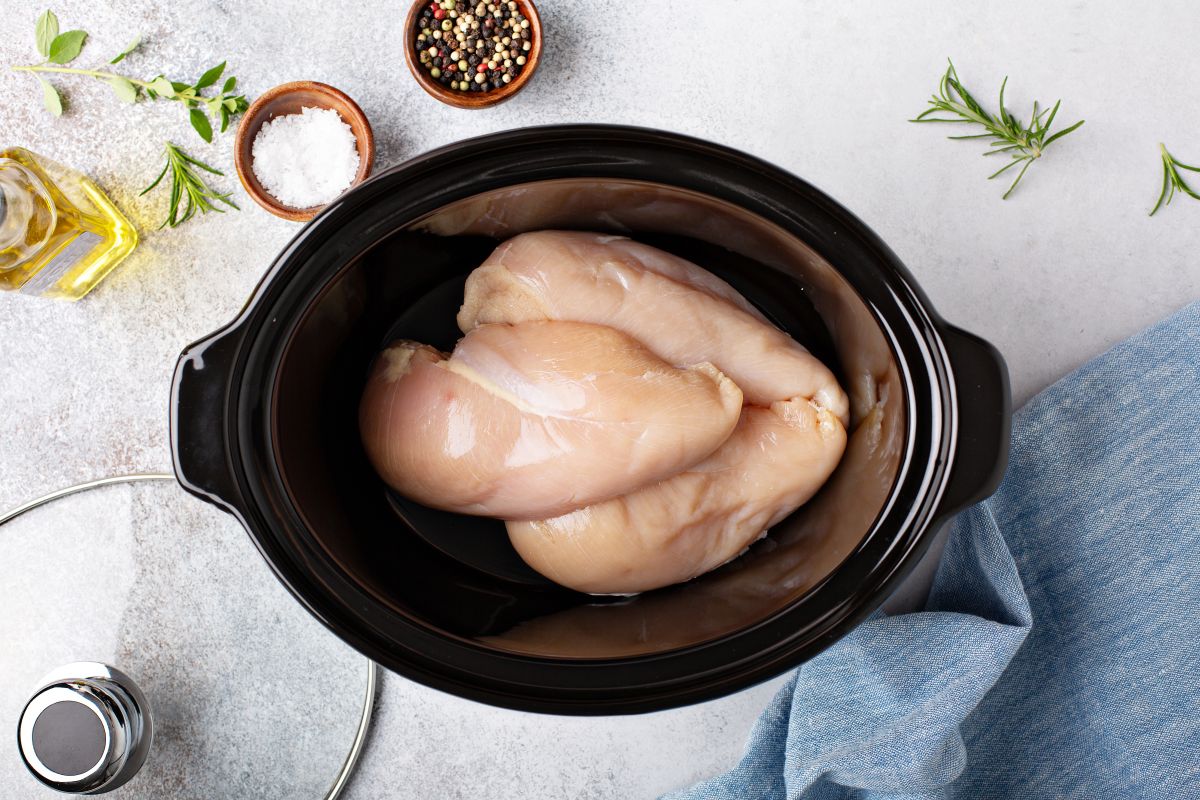
There's no need to open it just to see how the chicken looks. Leave the lid in place until you need to check doneness, add an ingredient the recipe calls for near the end, or serve the food.
Chicken Breasts Can Still Turn Out Dry
Keeping the lid closed helps maintain the slow cooker's cooking environment, but it can't prevent chicken from drying out if it cooks too long.
Chicken breast has less fat than dark meat, so it has less room for error. Cooking it past its target temperature can leave it dry even when the Crock-Pot stayed covered the whole time.
Check the chicken near the end of the recipe's cooking window rather than lifting the lid throughout the process. Chicken should reach a safe internal temperature of 165°F.
Add Liquid When the Recipe Needs It
Broth, sauce, gravy, or another cooking liquid can be useful with chicken breast, depending on the dish.
You don't need to fill the Crock-Pot with liquid. Chicken releases juices as it cooks, and the closed lid limits evaporation. Use the amount called for in the recipe rather than adding extra water every time you cook chicken.
The cooking liquid can also become part of the finished dish, giving you a sauce or gravy to serve with the meat.
Chicken Thighs Give You More Room for Error
If chicken breast keeps coming out dry, thighs are worth trying.
Dark meat contains more fat than chicken breast and can tolerate longer cooking without losing its texture as fast. That makes thighs useful for slow-cooker meals where timing isn't exact.
Keeping the lid closed won't fix chicken that's been left cooking for hours past the point of doneness, but it removes one unnecessary interruption. Now I check through the glass instead of lifting it every time I want to know what's happening inside.
Do you leave your Crock-Pot alone while it cooks, or are you tempted to keep lifting the lid too?
Leave a Reply