


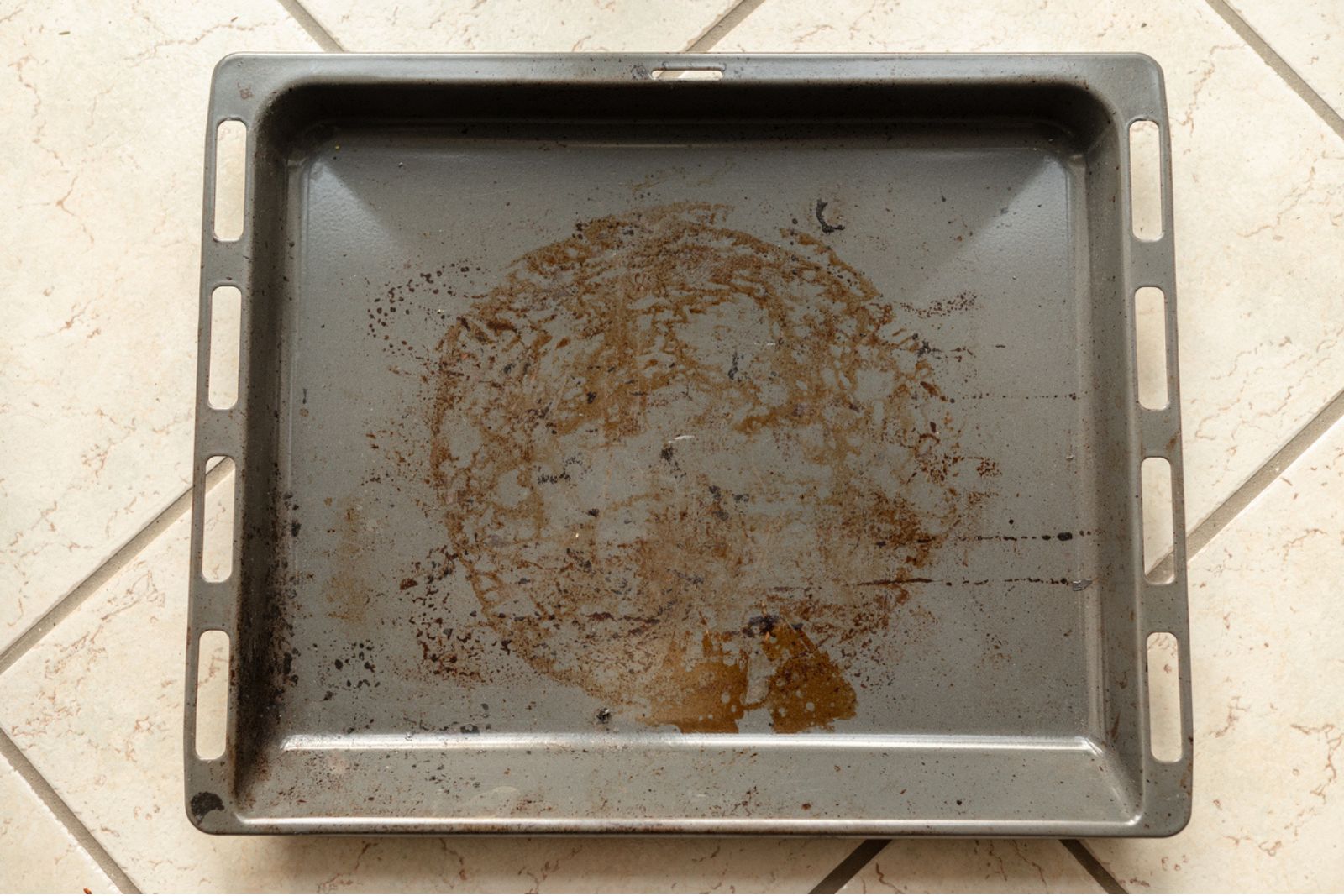
The cookies are cooling, and you notice it again: the baking sheet underneath is coated in a sticky, amber-brown film. You scrub it with hot water and dish soap until your arm aches. The suds rinse away, but the brown stays exactly where it was.
This is not your fault. That film isn't everyday grease, so dish soap was never going to lift it. A paste made from two inexpensive pantry and medicine-cabinet staples, baking soda and hydrogen peroxide, can.
Why the brown layer laughs at dish soap
Every time a sheet pan goes into the oven with a little oil or butter on it, some of that fat stays behind. According to kitchen tool maker GIR, heat makes oils polymerize, a chemical change that bonds them more tightly to the metal. Bake after bake, those layers build up into the dark, tacky coating that soap and water can't touch.
GIR recommends a baking soda and 3% hydrogen peroxide paste for exactly this kind of polymerized grease, and notes that it works best on aluminum and stainless steel pans. It also warns that steel wool and metal spatulas scratch the surface, leaving grooves where new residue settles in.
Lifting the film, one pan at a time
- Check the pan. Use this method only on uncoated aluminum or stainless steel sheets. Skip nonstick pans, since GIR warns peroxide can degrade a nonstick coating over time.
- Mix the paste. Stir ¼ to ½ cup of baking soda with 2 to 3 tablespoons of 3% hydrogen peroxide, adding the liquid a little at a time until the paste is thick enough to stay put.
- Spread and wait. Cover the brown areas with a layer of paste. Give light film about 30 minutes. For heavy buildup, leave it for a few hours or overnight.
- Scrape gently. Lift the paste and loosened residue with a plastic or silicone scraper or a non-scratch pad, not steel wool.
- Wash and dry. Wash with warm, soapy water, rinse well and dry the pan completely. GIR advises against soaking aluminum sheets for long periods, since prolonged water exposure can cause pitting.
Very old pans may need a second round. If faint marks remain after the sticky film is gone, that's usually discoloration in the metal rather than leftover residue.
Plan B for keeping the next layer from forming: line the pan before it goes in the oven. Lively Table's sheet pan maple Dijon salmon starts by lining the pan with parchment or a silicone baking mat, which keeps oil off the metal.
One ingredient never belongs in the paste
Don't add vinegar. According to the Missouri Poison Center, mixing vinegar with hydrogen peroxide forms peracetic acid, which in high concentrations is corrosive and can irritate the skin, eyes and respiratory system. The center's broader advice is to use one cleaner at a time and keep each in its original container.
The same goes for oven cleaner. It's made for oven interiors, and it can etch or discolor bare baking sheets. Bleach is another product to keep away from this job.
Work in a ventilated kitchen, and if you notice fumes, open a window and turn on the vent fan. Keep the paste-covered pan out of reach of children and pets while it sits, and consider gloves if your skin is sensitive.
Mix the paste, give it time, and scrape with plastic, not steel. That's the trick.

Leave a Reply