


Burned food stuck to the bottom of a pot often means reaching for steel wool and several minutes of scrubbing. More home cooks, however, have started trying a different approach that replaces effort with time.
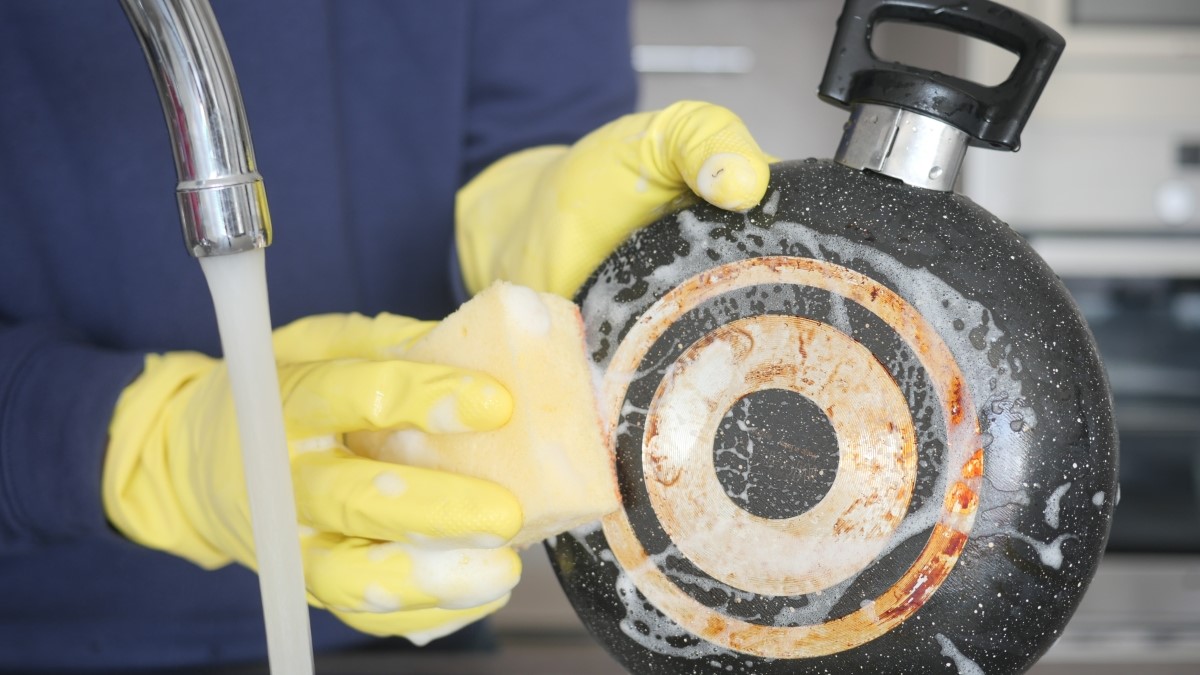
Instead of attacking the mess right away, they fill the pot with warm water, drop in a dishwasher detergent pod, and leave it to soak for several hours or overnight. By the next day, much of the baked-on residue wipes away with a soft sponge instead of heavy scrubbing.
The Soak Does the Hard Work
Dishwasher detergent pods are formulated to break down dried food, grease, and starch during a wash cycle. When dissolved in warm water inside a pot, those cleaning ingredients continue working against stuck-on residue while the cookware sits.
The method has become popular for soups, pasta sauces, rice, oatmeal, and other foods that leave stubborn residue after cooking.
Less Scrubbing Helps Protect Cookware
Aggressive scrubbing can wear down the finish on enamel, stainless steel, and nonstick cookware over time. Allowing baked-on food to soften first reduces the amount of force needed during cleaning.
Many home cooks now reserve abrasive scrubbers for the toughest messes while relying on soaking for everyday cleanup.
Dishwasher Detergent Is Designed for Food Residue
According to the American Cleaning Institute, automatic dishwasher detergents contain ingredients designed to break down food soils, grease, starches, and proteins during the cleaning process. Those same cleaning agents can help loosen cooked-on residue when used as part of a soaking method before handwashing.
Kitchen Cleanup Is Becoming More Hands-Off
Waiting a few hours may seem slower than scrubbing right away, but many home cooks find it saves both time and effort. Instead of fighting burned-on food immediately, they let the soak do much of the work before picking up a sponge.
That simple change has turned dishwasher pods into more than a product for the dishwasher, giving them a second role in everyday kitchen cleanup.
Leave a Reply