


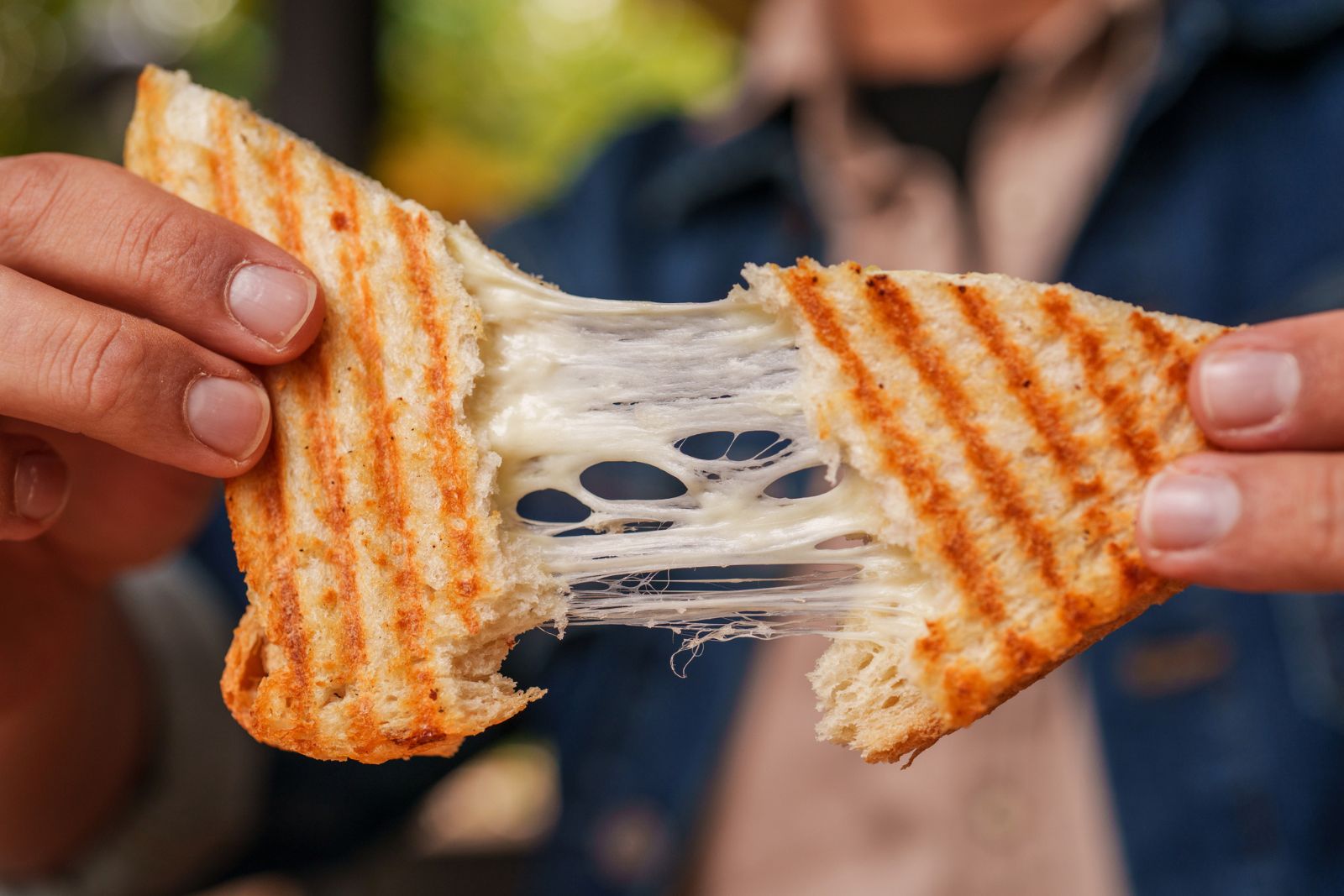
The bread is dark brown, almost burnt, and the kitchen smells like toast. You lift the top slice and find the cheddar inside still in thick, stiff slices, barely softened at the edges. One more minute and the bread will scorch, so you eat it as is.
This is not your fault. Some cheeses simply melt better than others. When EatingWell asked seven chefs for the best cheese for grilled cheese, several named the one food snobs tend to skip: American cheese, sliced at the deli counter rather than the individually wrapped kind, and paired with a second cheese for flavor.
Why deli American melts where a thick slice of cheddar stalls
American cheese is a pasteurized process cheese, and the federal standard explains its melt. Under FDA rules for process cheese, it's made by grinding and mixing one or more cheeses with heat and an emulsifying agent, such as sodium citrate or certain phosphate salts, into a smooth, uniform mass. Those emulsifying salts are capped at 3% of the cheese's weight.
That's what lets a slice of American turn creamy in a skillet without separating. Its weak spot is flavor, which is why the chefs pair it with something sharper. Cheddar was the favorite partner, Gruyère came up as a secret-weapon pick, and Havarti was suggested as a less processed melting cheese. Cheesemaker Cabot Creamery adds a warning: hard, crumbly cheeses such as Parmesan, feta and pecorino don't melt well on their own.
Building a two-cheese grilled cheese
- Use day-old bread. Bread that's 1 to 2 days old holds up better in the pan. Cut slices thick enough to hold the filling but thin enough to let the cheese melt.
- Layer two cheeses. Lay 1 slice of deli American on each piece of bread, then add about 1 ounce of grated cheddar or Gruyère in between.
- Grate from the block. Freshly grated cheese melts more evenly than the bagged kind.
- Coat the outside. Spread a thin layer of softened butter or mayonnaise on the outside of the bread. Cabot notes that mayo has a higher smoke point than butter, so it's less likely to burn.
- Keep the heat moderate. Cook over medium to medium-low heat, flipping once the bottom is golden, so the center has time to melt before the crust darkens.
The grating step matters because of what's in the bag. Pre-shredded cheese is coated to keep the shreds apart, which is why bagged shredded cheese doesn't always melt smoothly.
Plan B if there's no deli counter nearby: use Havarti as the melting base and add a little sharp cheddar for flavor.
The fine print on the melty slice
Those emulsifying salts, like sodium citrate and sodium phosphates, add to the sodium in process cheese. If you're watching your salt, check the Nutrition Facts on the deli cheese and on your bread, and go lighter on the American slice.
A grilled cheese is a rich sandwich, built on cheese and butter or mayo. A cup of vegetable soup or a side salad makes it a more balanced meal.
Anyone with a milk allergy should skip it. If dairy tends to cause you digestive trouble, a doctor or registered dietitian can help you figure out which cheeses and portions work for you.
Start with deli American for the melt, add a sharper cheese for flavor, and keep the heat moderate. That's the trick.

Leave a Reply