


Burnt food can leave a dark layer that resists a sponge even after the pan has soaked. Before reaching for a scouring pad, pull out a sheet of aluminum foil and some baking soda. Crumpled foil provides the scrubbing surface, while baking soda forms a paste that helps remove cooked-on residue.
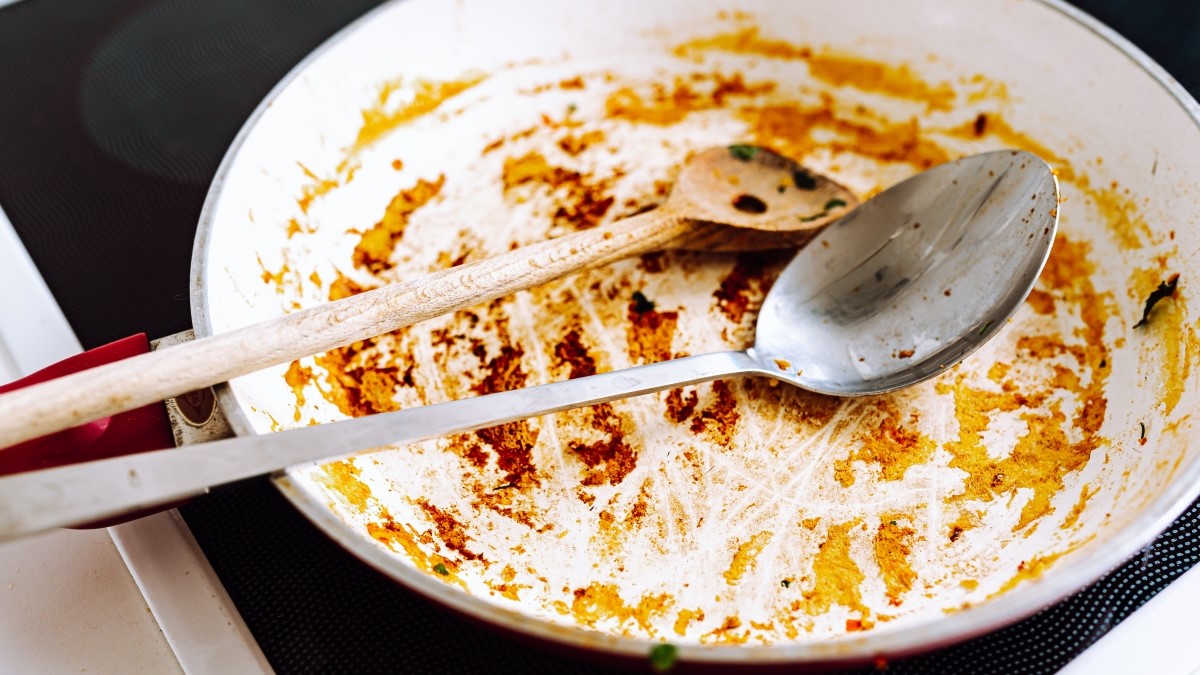
The method requires two to three tablespoons of baking soda, a small amount of water, and a piece of aluminum foil. It works best on cookware that can tolerate abrasion, so the pan material matters before you start scrubbing.
Make a Paste With Baking Soda
Cover the burnt section of the pan with two to three tablespoons of baking soda. Add a small amount of water and mix it across the surface until it forms a paste rather than a thin liquid.
Keeping the baking soda concentrated over the scorched area gives the foil something to work through as you scrub. If the paste becomes dark with loosened food, rinse the pan and add fresh baking soda before continuing.
No long soak is required for the basic method, although burnt residue that has formed a thick layer may take more than one pass.
Crumple Aluminum Foil Into a Loose Ball
Tear off a piece of aluminum foil and crumple it into a ball large enough to hold without pressing your fingers against the pan. Used foil can also work if it is free from food and grease.
Move the foil across the baking soda paste with light pressure. Its uneven surface creates more abrasion than a soft sponge and can help break apart burnt food attached to the bottom of the pan.
Focus on the scorched sections instead of scrubbing the entire cooking surface. Add more baking soda or a few drops of water if the paste dries out before the residue comes off.
Rinse Away the Burnt Residue
Once the stuck food has lifted, rinse out the dirty baking soda and loosened debris. Wash the pan with warm water and dish soap to remove what remains.
Check the surface before repeating the process. Burnt spots that remain can receive another small amount of baking soda rather than another round across the whole pan.
Don't Use Aluminum Foil on Every Pan
Crumpled foil is abrasive, which is also why this method isn't suitable for every type of cookware. Keep it away from nonstick coatings, which can become scratched or damaged during scrubbing.
Enameled cookware, polished finishes, and other surfaces that manufacturers warn against cleaning with abrasives should also be excluded. Seasoned cast iron deserves caution because aggressive scrubbing can strip sections of seasoning.
Check the cookware manufacturer's cleaning instructions when the surface isn't designed for abrasive cleaning. Burnt food is easier to deal with than a cooking surface damaged while trying to remove it.
For a compatible pan, the combination turns a piece of aluminum foil into a makeshift scrubber before it reaches the trash. The trick is knowing which pan can handle it, since the same abrasion that attacks burnt food can also attack the wrong finish.
Leave a Reply