


Two chocolate layers make these fudge squares, but neither one needs baking. Dates, almonds, walnuts, and cocoa form the bottom, while banana, almond butter, honey, and more cocoa make the soft fudge layer spread across the top.
Thirty minutes in the freezer sets the assembled pan enough to cut into 16 squares. The finished pieces stay chilled because the banana-based top softens when left at room temperature.
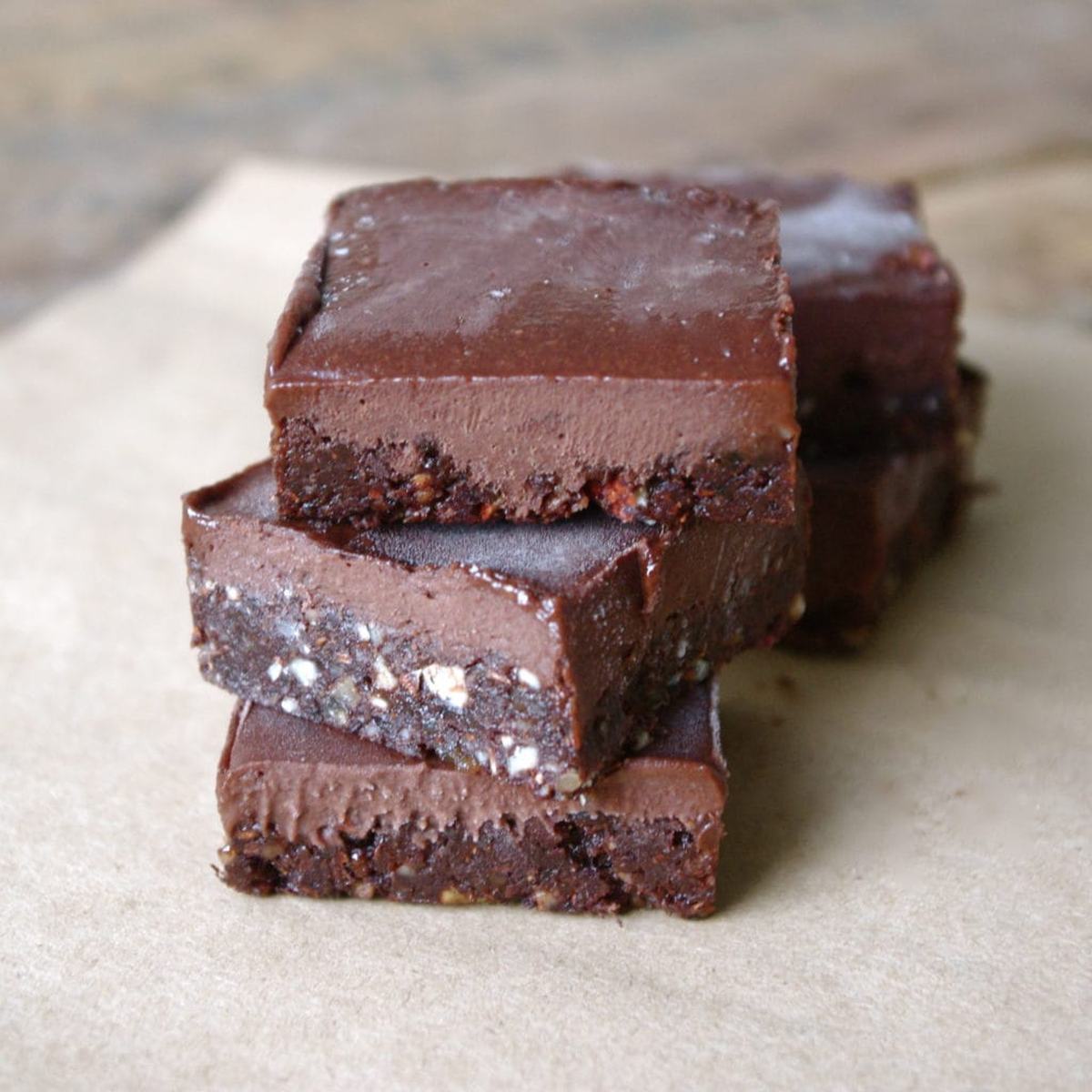
Dates and Nuts Form the Bottom Layer
Start with one cup of pitted dates. Soaking them in warm water for 30 minutes is optional, but it softens the fruit before it reaches the food processor.
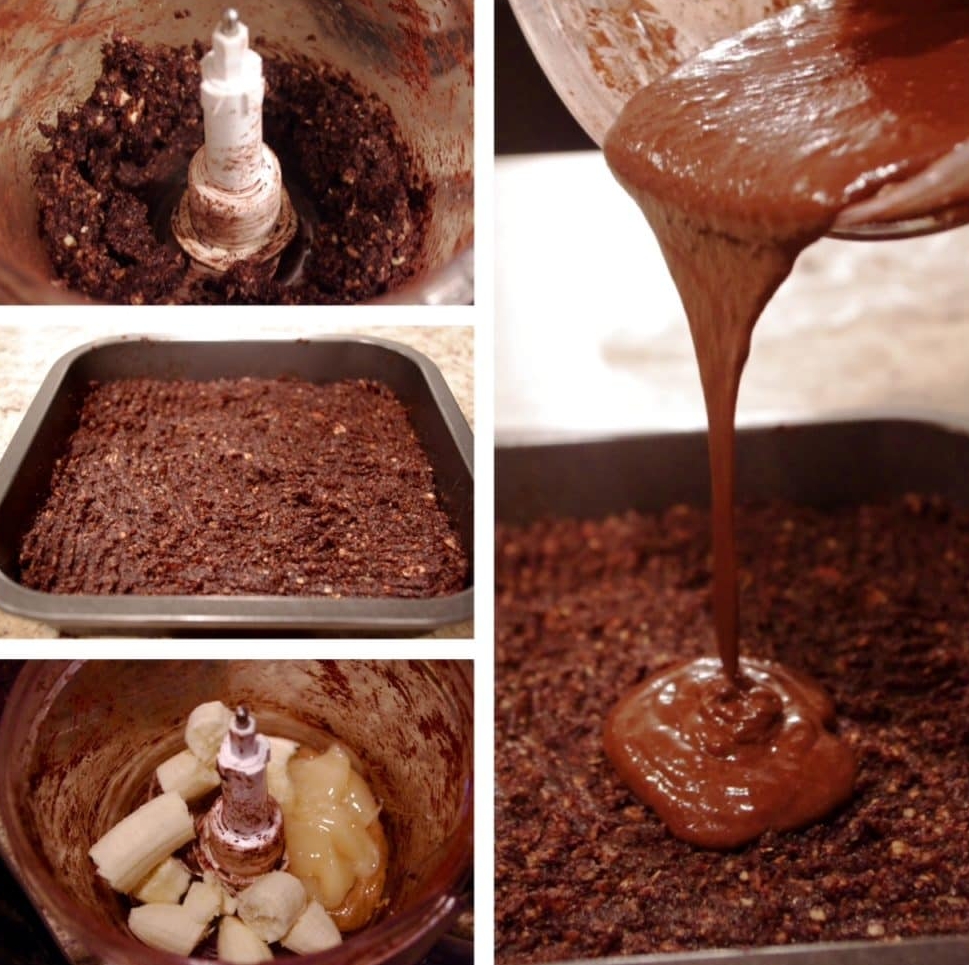
Drain the dates, then process them with half a cup of almonds, half a cup of walnuts, and a quarter cup of cocoa powder. The dates help bind the chopped nuts and cocoa into a mixture that can be pressed into the pan.
Press the Chocolate Mixture Into a Loaf Pan
Spread the date and nut mixture across the bottom of a 9-by-5-inch baking pan. Use the back of a spoon to press it into an even layer rather than leaving loose pieces around the edges.
There is no flour, egg, or batter to bake at this stage. Once compressed, the mixture becomes the base for the softer chocolate layer.
Banana and Almond Butter Make the Fudge Layer
Two ripe bananas go into the food processor with four tablespoons of almond butter, four tablespoons of honey, and another quarter cup of cocoa powder.
Process the ingredients until smooth, then spread the mixture across the date and nut base. Banana gives the top moisture and body, while almond butter adds fat and helps create the dense texture after chilling.
Thirty Minutes in the Freezer Sets Both Layers
Place the assembled pan in the freezer for about 30 minutes. Chilling firms the chocolate topping and the date-nut base enough to hold together when cut.
Remove the pan and divide the slab into 16 squares. No oven time is needed at any point in the recipe.
Keep the Fudge Squares Chilled After Cutting
These squares don't freeze into hard blocks. They stay firm enough to pick up and bite when stored in the freezer, then begin to soften after coming to room temperature.
That makes cold storage part of the recipe rather than an optional step. Keep leftover squares in the freezer and take out what you plan to eat instead of storing the full batch on the counter.
Leave a Reply