


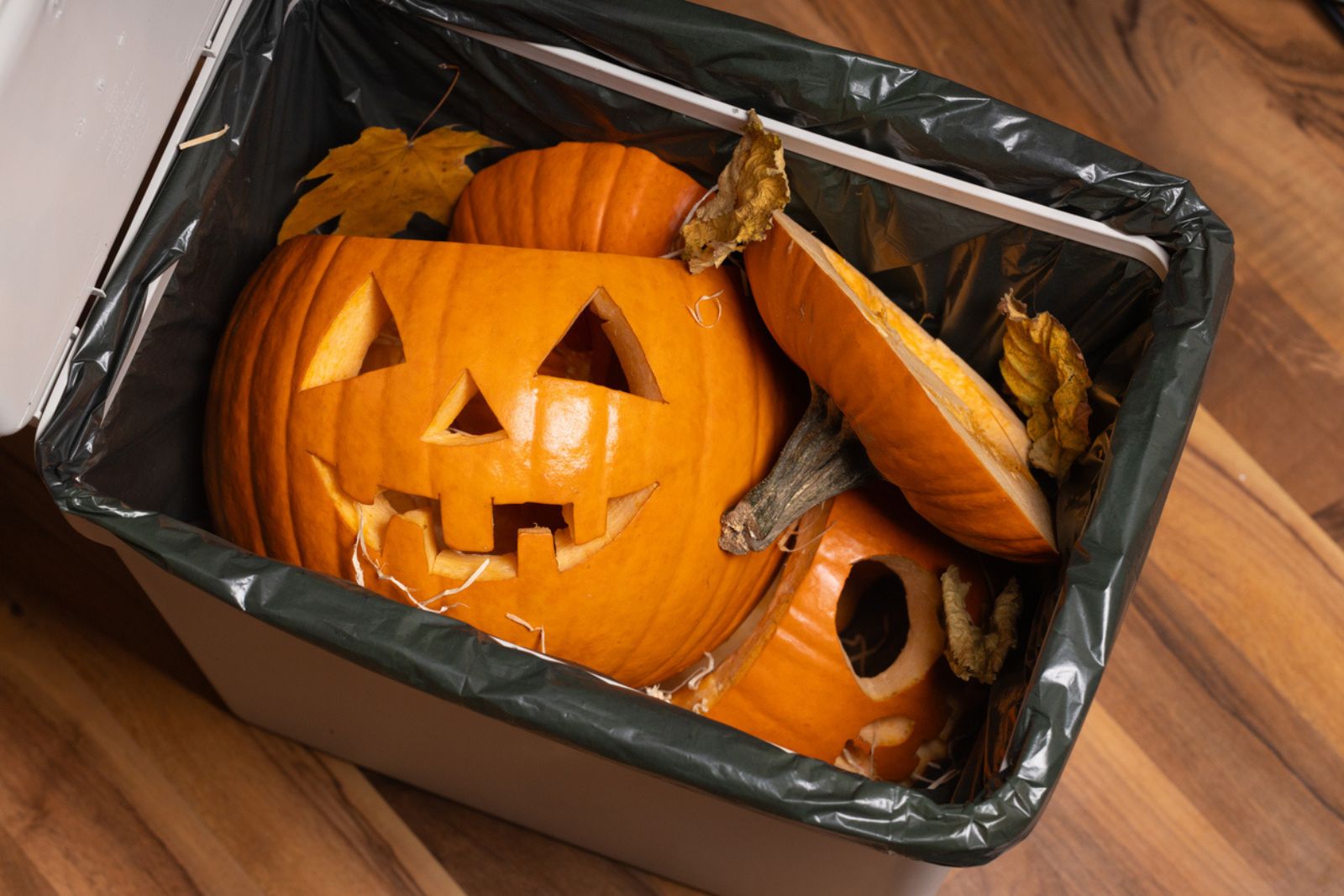
A week after Halloween, the jack-o'-lantern on the porch has started to sag. Its grin is caving in, and Monday is trash day. The bowl of seeds you scooped out on carving night went into the garbage hours later, still tangled in orange strings, because nobody had time to deal with them.
This is not your fault. Pumpkin seeds feel like scraps, not food. But the seeds inside the pumpkins still sitting whole on your porch, or the pie pumpkin waiting for Thanksgiving, are worth more than the trash can.
What an ounce of seeds really holds
According to the National Institutes of Health, 1 ounce of roasted pumpkin seeds provides 156 milligrams of magnesium, 37% of the Daily Value, and 2.2 milligrams of zinc, 20% of the Daily Value. Magnesium helps your muscles and nerves work, and zinc supports your immune system.
There's a catch the snack aisle won't tell you. Those numbers match USDA data for hulled kernels, the flat green pepitas. Seeds straight from a pumpkin keep their white shells, and the shell changes the math. Based on USDA data for whole roasted seeds, an ounce has about 74 milligrams of magnesium (around 18% of the Daily Value), about 2.9 milligrams of zinc and about 5 grams of fiber, mostly thanks to that shell.
So a daily ounce of homemade seeds gives you less magnesium than the headline figure, a little more zinc and a lot more fiber. One ounce of whole roasted seeds is about 126 calories, so weigh your portion once to see what your handful really holds.
From whole pumpkin to roasted snack
This method follows a recipe from University of Illinois Extension:
- Scoop and sort. Pull out the seeds and as much of the stringy fiber as you can. Discard any seeds that are cut.
- Boil, if you have time. Simmer 2 cups of seeds for 10 minutes in a quart of water with 2 tablespoons of salt. It helps them roast more evenly, but you can skip it.
- Dry them well. Drain and pat the seeds dry with paper towels. Surface water is what keeps seeds soft, which is why drying pumpkin seeds before roasting makes them crisp.
- Oil and roast. Toss with 1 tablespoon of olive or canola oil, spread on a large baking sheet and roast at 350°F for 15 to 25 minutes, stirring about every 5 minutes, until golden.
- Cool and store. Let them cool completely, then keep them in an airtight container.
Plan B if you skip the boiling step: sprinkle about ½ teaspoon of salt or your favorite spices directly on the oiled seeds before roasting.
When the pumpkin is past saving
The USDA's general rule is not to leave perishable food out of the refrigerator for more than 2 hours, and a carved jack-o'-lantern on display has been cut open and sitting out far longer. That's why the seeds worth saving come from a pumpkin that's still whole. Next year, rinse and roast them on carving night. If a whole pumpkin has gone soft, moldy or leaky, compost it, seeds included.
Keep an eye on salt, too: the boiled version adds sodium, so go lighter if you're watching your intake. The whole seeds are high in fiber, so if you're not used to that much, start with a small portion. If you take magnesium or zinc supplements, or have kidney disease, ask your doctor or a registered dietitian how much you need from food.
Save the seeds from a whole pumpkin, dry them well, and weigh out your ounce. That's the trick.

Leave a Reply