


A pot of chicken noodle soup can make enough for dinner plus several meals for the freezer. Put the whole finished soup into a container, though, and the noodles can become the part that does not survive storage well.
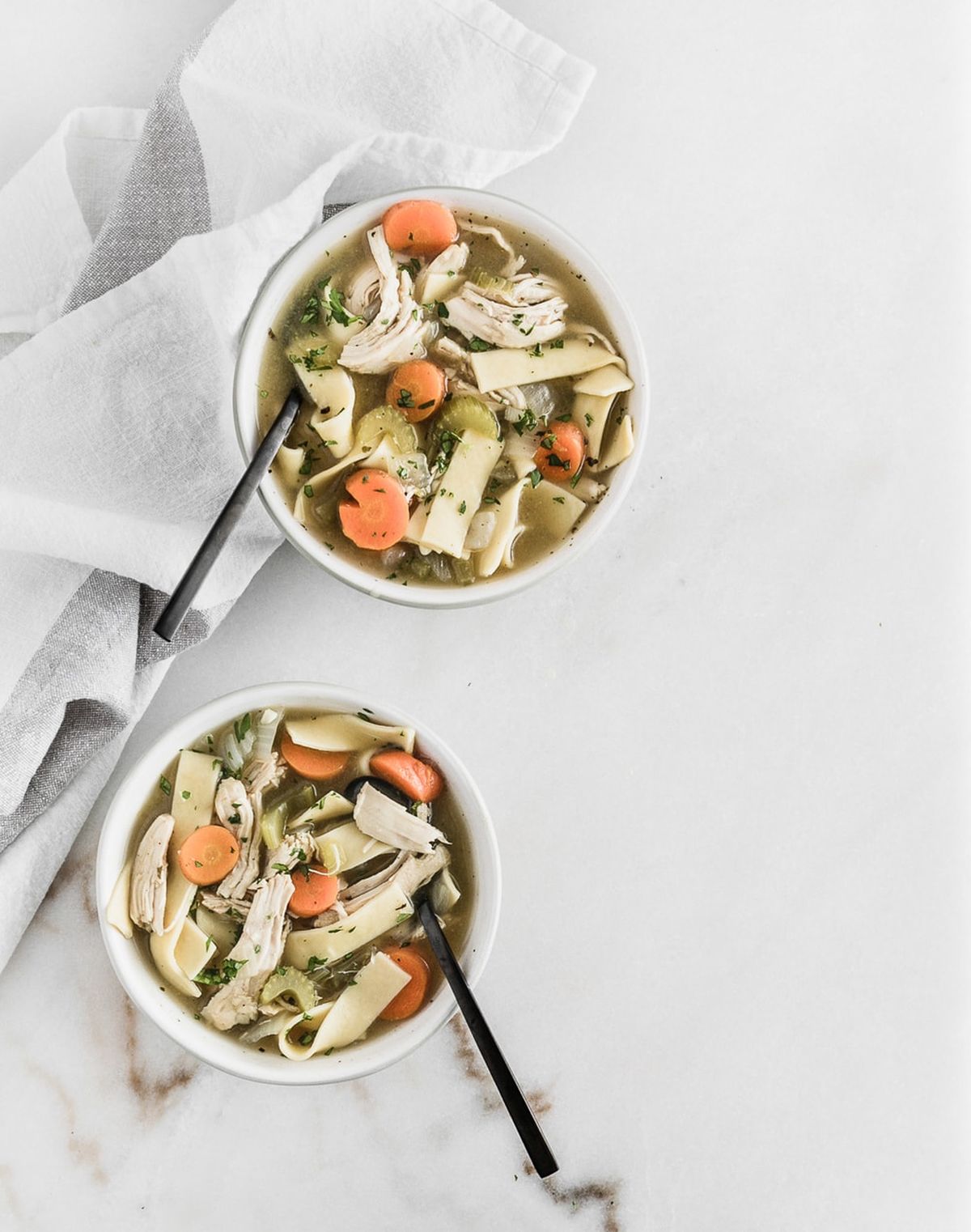
Chicken, broth, carrots, celery, onion, garlic, and herbs can go into the freezer without the pasta. The noodles are better added when the soup comes back to the stove. That small change keeps a freezer batch from returning with soft noodles that have absorbed too much broth.
The technique appears in a classic homemade chicken noodle soup recipe from Lively Table, which recommends removing any portion intended for the freezer before the noodles enter the pot.
Freeze the Soup Before the Noodles Go In
Chicken noodle soup does not need to reach its finished state before part of the batch goes into freezer containers. Once the chicken has cooked in the broth with the vegetables and seasonings, set aside the amount you want to freeze.
That portion contains the chicken, vegetables, and broth, but no noodles. The rest of the pot can stay on the stove while the noodles cook for the meal being served that day.
The separation matters because cooked noodles continue to take up liquid during storage. After freezing, thawing, and reheating, their texture can shift from firm to soft while the soup loses some of its broth to the pasta.
Cook Fresh Noodles When the Soup Comes Back Out
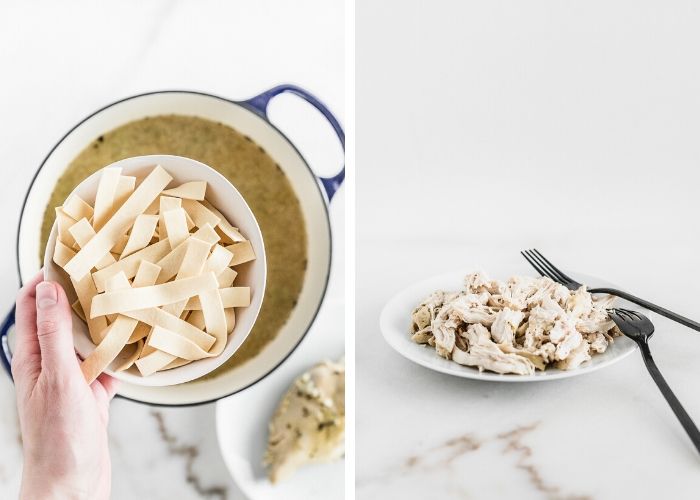
Leaving pasta out of the freezer does not mean making another batch of soup later. Thaw the broth, chicken, and vegetables, bring the soup back to a simmer, then add noodles and cook them until they reach the texture you want.
The noodles cook in the same seasoned broth rather than in a separate pot of water. Once they are done, the freezer portion has the same components as the original soup without asking cooked pasta to withstand a freeze-and-thaw cycle.
This also lets you control how much pasta goes into each reheated batch. Add enough for the servings you plan to eat instead of putting noodles into soup that may return to the refrigerator again.
Egg Noodles Need Less Time Than the Rest of the Soup
Chicken and vegetables need enough time in the broth to cook through and soften. Egg noodles do not. In the stovetop method, the chicken comes out for shredding before the noodles enter the simmering broth.
That order keeps the pasta near the end of the cooking process. The shredded chicken goes back into the pot after the noodles cook, so it does not need to stay over heat while the pasta reaches al dente.
The same distinction applies in a slow cooker. Chicken, vegetables, broth, and seasonings can cook for six to eight hours on low, while noodles are held back until the final 15 to 30 minutes.
Broth May Need an Adjustment After the Noodles Cook
Pasta changes more than the texture of chicken soup. It also takes up some of the liquid around it. A pot with plenty of broth before the noodles go in can become thicker once the pasta cooks.
The recipe suggests keeping extra broth or water available if the noodles absorb more liquid than expected. This becomes useful when reheating leftovers as well, since pasta left in the soup can continue taking up broth in the refrigerator.
Holding noodles out of freezer portions avoids that problem before it starts. Instead of freezing a finished bowl of chicken noodle soup, freeze the part that handles storage better, then finish it with fresh noodles when it is time to eat.
Leave a Reply