


Pasta primavera has long relied on butter, cream, and Parmesan to coat spring vegetables. More home cooks have started taking a lighter approach by replacing heavy sauces with pesto, allowing herbs, vegetables, and pasta to remain the focus instead of disappearing beneath dairy.
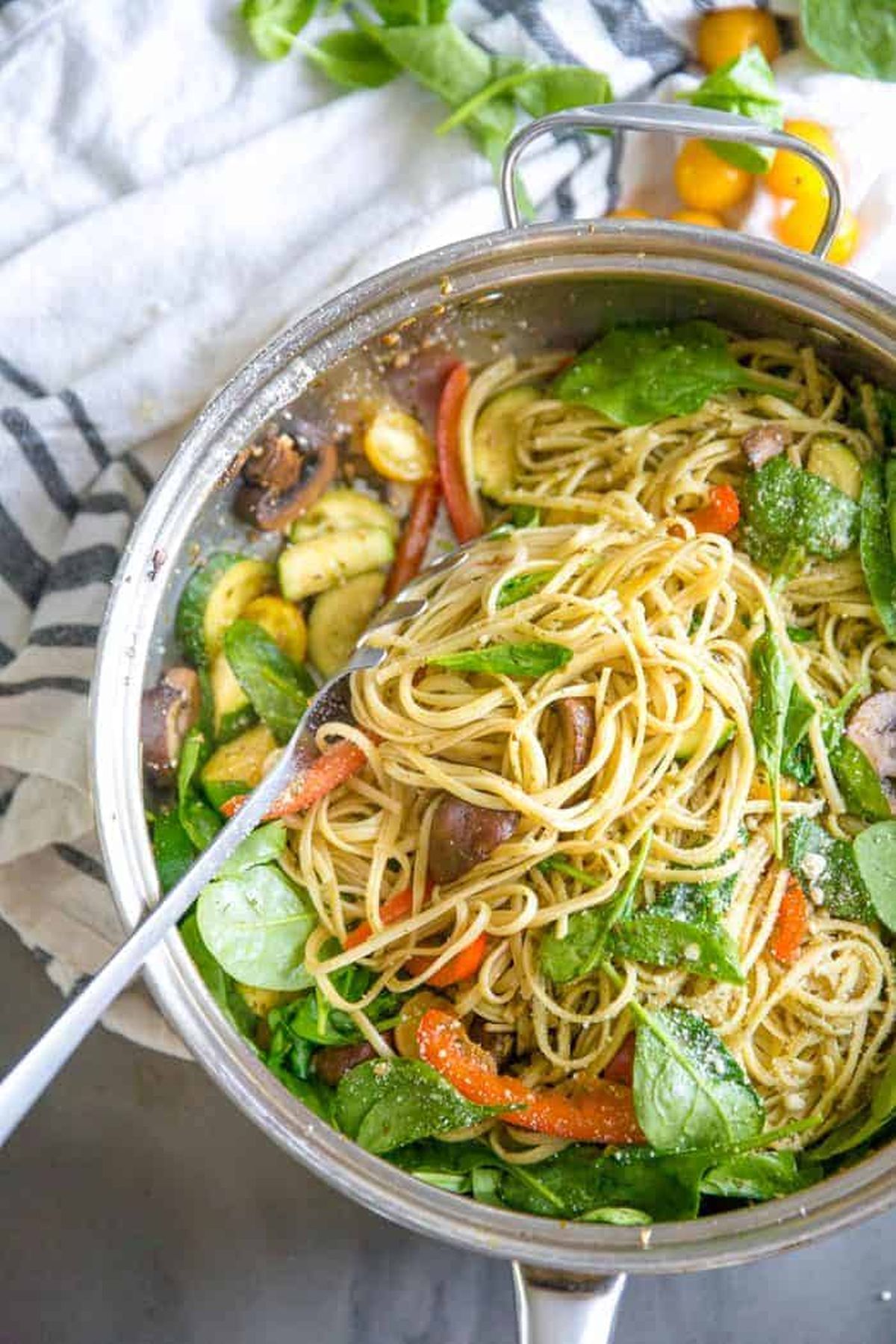
Fresh basil, garlic, olive oil, and Parmesan already exist inside pesto, so one spoonful seasons an entire skillet without requiring a separate sauce. Combined with zucchini, mushrooms, peppers, spinach, and tomatoes, pesto turns pasta primavera into a meal that comes together in about 30 minutes while keeping every vegetable recognizable.
Pesto Coats Every Strand Without Heavy Cream
Cream sauces surround pasta with richness but often hide delicate vegetables.
Pesto works differently. Olive oil helps the sauce cling to every strand while basil, garlic, pine nuts, and Parmesan distribute across the dish instead of pooling at the bottom of the pan. Each forkful carries herbs without becoming heavy.
That lighter coating allows the vegetables to remain crisp instead of softening beneath a thick sauce.
Pasta Water Creates The Sauce
Reserved pasta water changes the consistency without adding more ingredients.
As cooked pasta releases starch into the water, each spoonful helps pesto loosen into a glossy sauce that wraps around linguine. Instead of thinning the mixture, the starch creates a silky texture that binds oil, cheese, and herbs together.
Many cooks discard pasta water, but primavera benefits from saving a small amount until the final step.
Vegetables Stay The Main Ingredient
Primavera translates to spring, making vegetables the centerpiece rather than the garnish.
Zucchini, mushrooms, bell peppers, spinach, and cherry tomatoes each contribute different textures. Mushrooms absorb garlic and olive oil, zucchini softens without falling apart, peppers add sweetness, spinach wilts into the sauce, and tomatoes provide bursts of acidity after the skillet leaves the heat.
Adding the spinach and tomatoes at the end preserves color and texture.
Lemon Brightens The Entire Skillet
Pesto already delivers rich herb flavor.
Lemon zest and fresh lemon juice introduce acidity that cuts through the olive oil and cheese while lifting the flavor of every vegetable. The citrus also keeps the basil tasting fresh instead of muted after heating.
One small addition changes the balance of the entire dish without requiring another sauce.
Easy To Adapt With Seasonal Ingredients
Few pasta dishes accept substitutions as easily as primavera.
Asparagus, broccoli, peas, carrots, green beans, squash, or roasted cauliflower all work in place of other vegetables. Rotisserie chicken, grilled salmon, shrimp, or white beans add protein without changing the preparation, while almost any pasta shape performs well when cooked al dente.
That flexibility explains why pesto pasta primavera continues to appear throughout spring and summer, when gardens, farmers markets, and refrigerators rarely hold the same vegetables twice.
Leave a Reply