


Scrambled eggs can turn tough even when they spend just a few minutes in the pan. Heat gets much of the blame, but something added before cooking can also affect the result.
Milk has been mixed into scrambled eggs in home kitchens for generations. The usual method does not involve a measuring spoon. Eggs go into a bowl, followed by a splash of milk and a quick whisk.
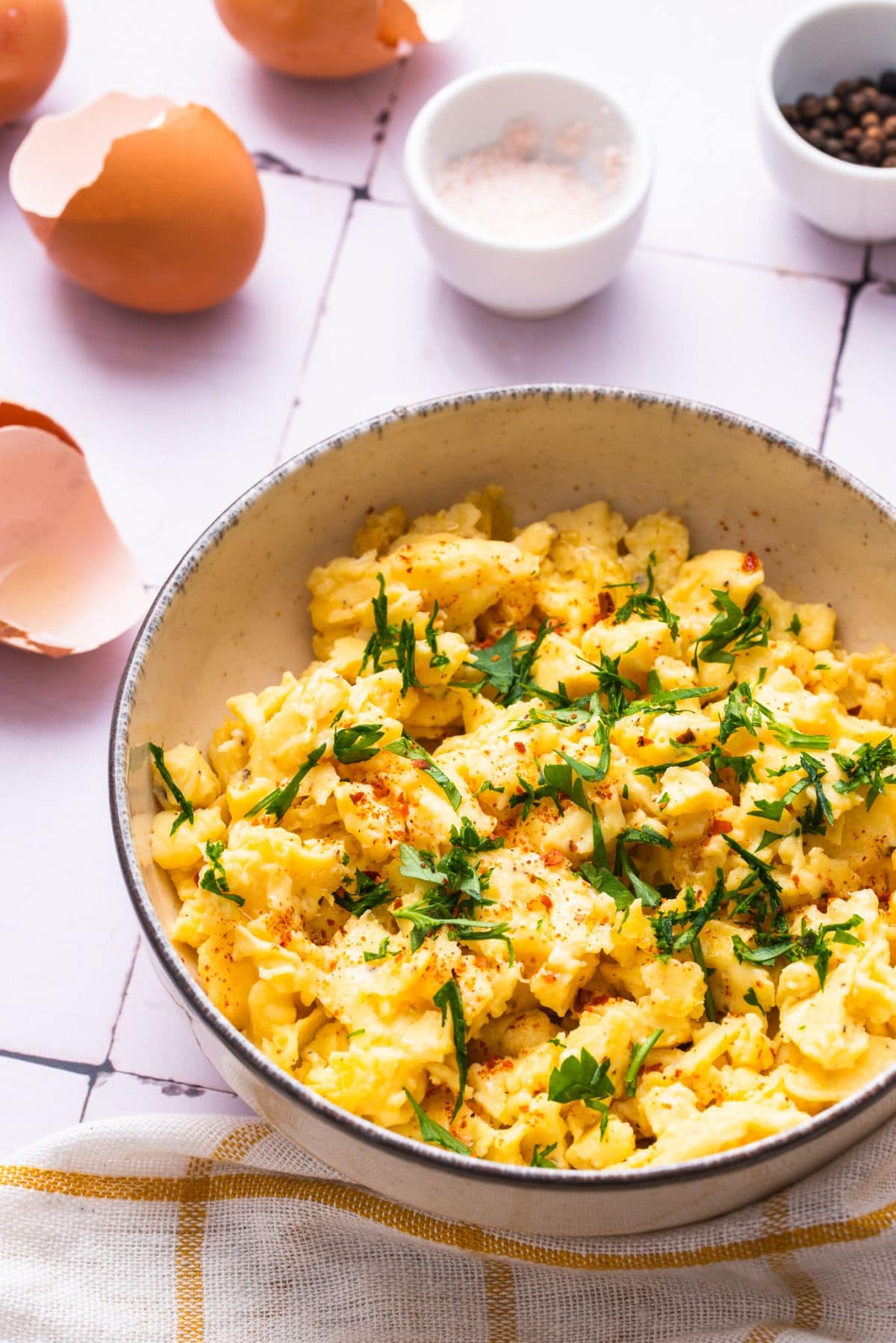
Milk itself is not the problem. The amount is. Tests from Cook’s Illustrated found that a small dose of liquid can help produce tender eggs, but pouring in too much can work against that goal. The difference comes down to teaspoons, not a free pour.
Butter Can Go In Without a Splash of Milk
Anthony Bourdain left milk out of his scrambled eggs. His method relied on butter during cooking, with sour cream added at the end in his bacon and sour cream version. He argued that extra liquid diluted the egg flavor.
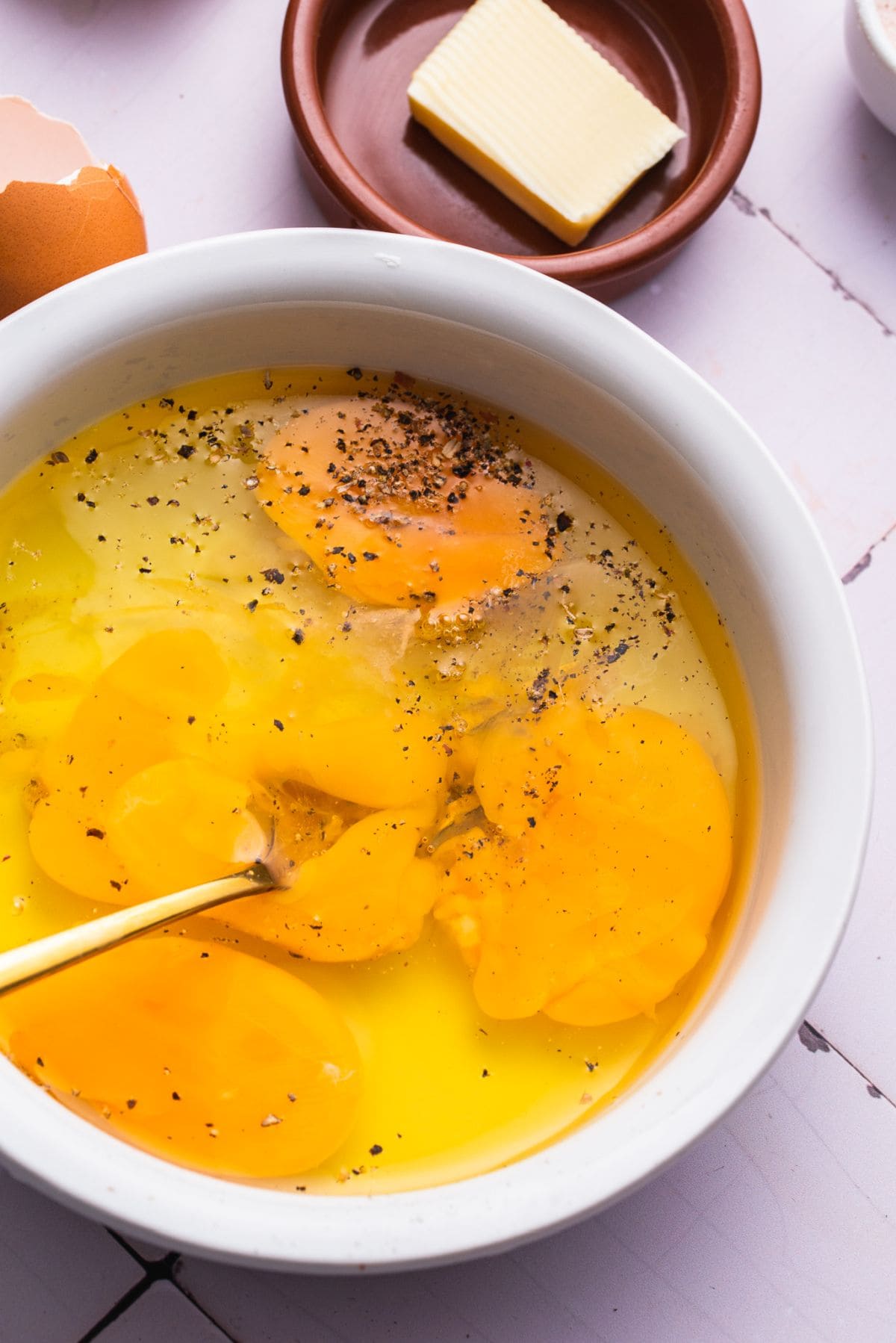
The bowl shown here keeps the starting ingredients close to that idea: eggs, seasoning, and butter. Milk does not need to be part of the mixture before the eggs reach the pan.
Jacques Pépin also skips the standard splash of milk. He seasons and whisks the eggs, then uses butter or cream near the end of cooking. That timing gives the added fat a different job than milk poured into raw eggs.
Cook’s Illustrated Put a Number on the Liquid
Leaving milk out is one option, but testing from Cook’s Illustrated gives another answer. Their recommendation is 1 to 2 teaspoons of liquid per egg.
That measurement matters. Four eggs would call for 4 to 8 teaspoons, rather than an unchecked pour from the carton. Added liquid can help keep scrambled eggs tender at the right ratio, while too much can produce tougher curds and weaken the egg flavor.
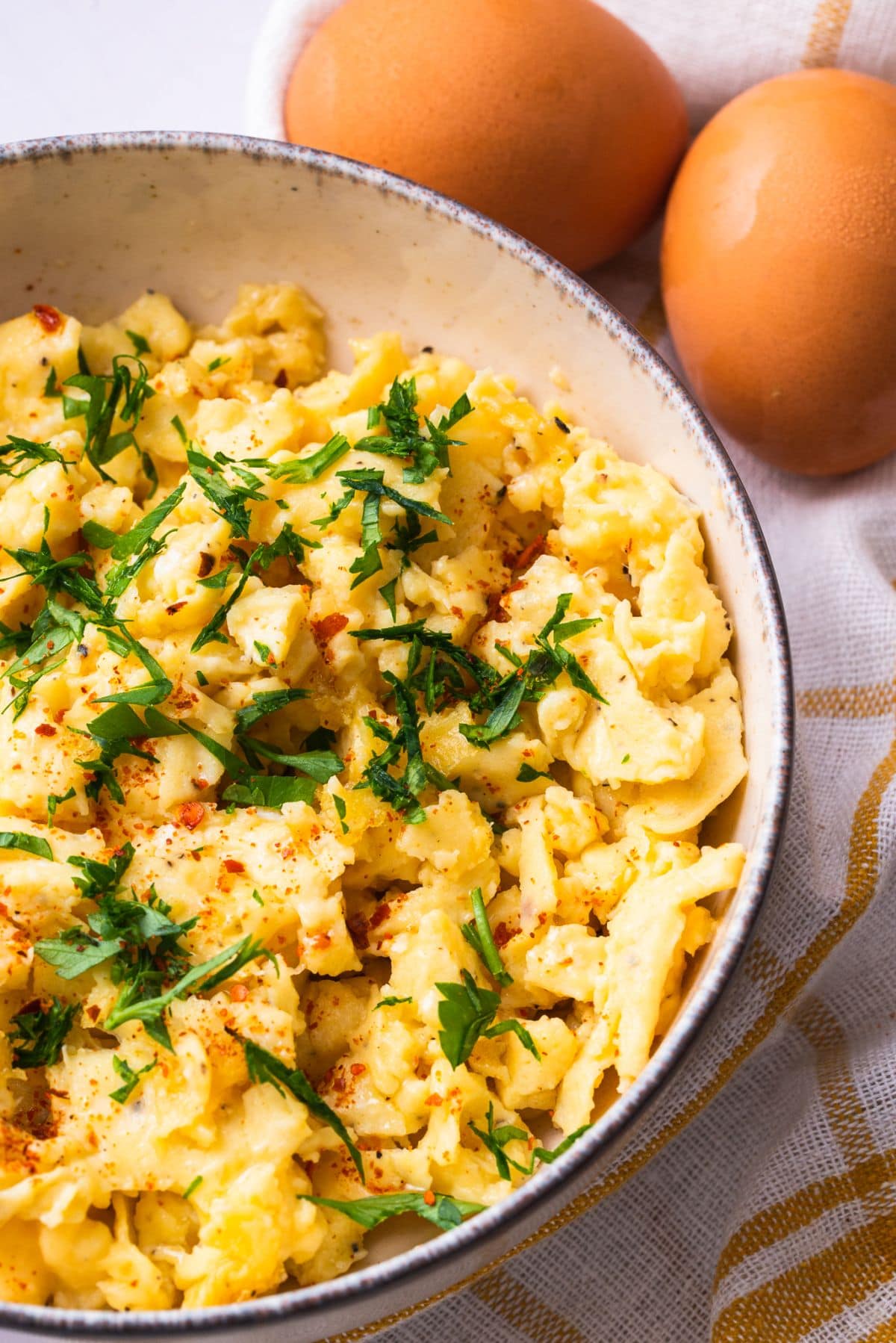
The finished eggs show the texture worth aiming for: distinct curds that hold together without turning into a dense mass.
Measuring Changes the Old Milk Habit
There is no need to abandon milk if you prefer scrambled eggs made with it. Measure the amount instead of judging the pour by sight. Start with 1 teaspoon per egg and keep the pan heat under control.
Skipping milk also works. Butter can provide richness, while salt, pepper, herbs, cheese, or other additions can handle the rest without thinning the raw egg mixture.
That old splash of milk was not a bad idea. The part worth changing is the splash.
Did anyone in your family teach you to add milk to scrambled eggs?
Leave a Reply