


Key lime cake already brings a sharp citrus note to dessert, but another fruit can take over once the loaf leaves the oven. Fresh raspberries mixed into a butter and powdered sugar glaze add sweetness and berry flavor without covering the lime baked into the cake.
The contrast starts inside the loaf, where key lime juice and zest join a sour cream pound cake batter. Raspberry stays out of the cake itself and enters after baking, creating two distinct fruit layers instead of mixing both flavors into one batter.
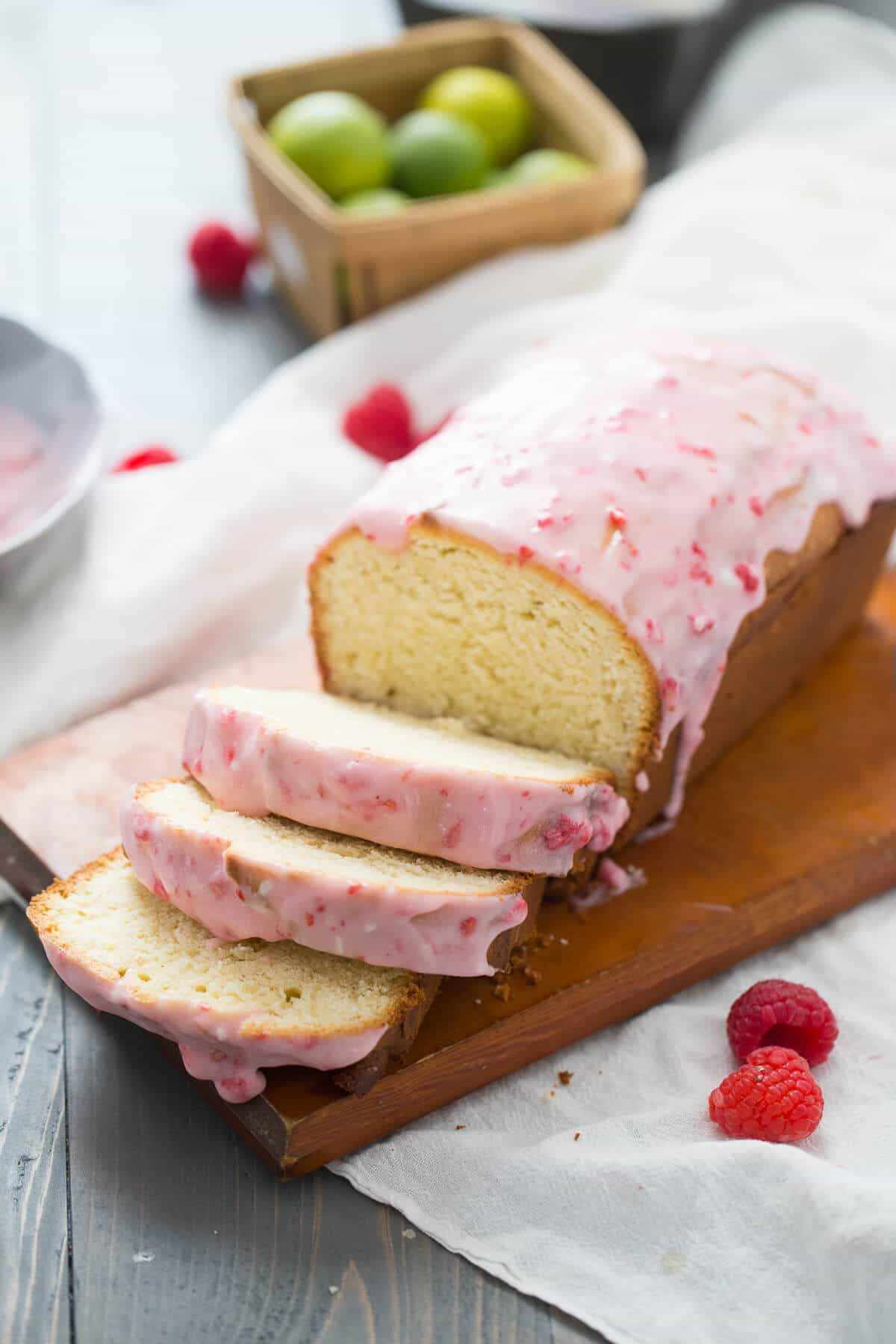
Each component has its own role: lime provides the tart base, sour cream shapes the dense, tender crumb, and raspberry turns a standard glaze into a fruit topping.
Key Lime Goes Into the Cake Before Baking
Key lime flavor comes from both juice and zest, so the citrus reaches the batter in two forms. The juice contributes tartness, while zest carries concentrated lime flavor from the peel.
Both are beaten into the butter, sugar, eggs, and vanilla before the dry ingredients join the mixture. Sour cream goes in after the flour, salt, and baking soda, completing a batter designed for a loaf pan rather than a layered cake.
Fresh key limes are not required for every part of the recipe. Bottled key lime juice can provide the juice component when fresh fruit is unavailable, while regular lime zest can supply the citrus oils from the peel.
Sour Cream Gives the Loaf Its Pound Cake Texture
This key lime cake uses a sour cream pound cake as its base, giving it more density than a standard layer cake while keeping the crumb tender.
Butter and sugar create the foundation, eggs add structure, and sour cream brings moisture into a batter that contains three cups of flour. The loaf bakes at 350 degrees Fahrenheit for about 50 minutes, with a toothpick inserted into the center used to check when the interior has set.
That dense base also gives the raspberry glaze a firm surface once the cake has cooled.
Raspberry Moves From the Batter to the Glaze
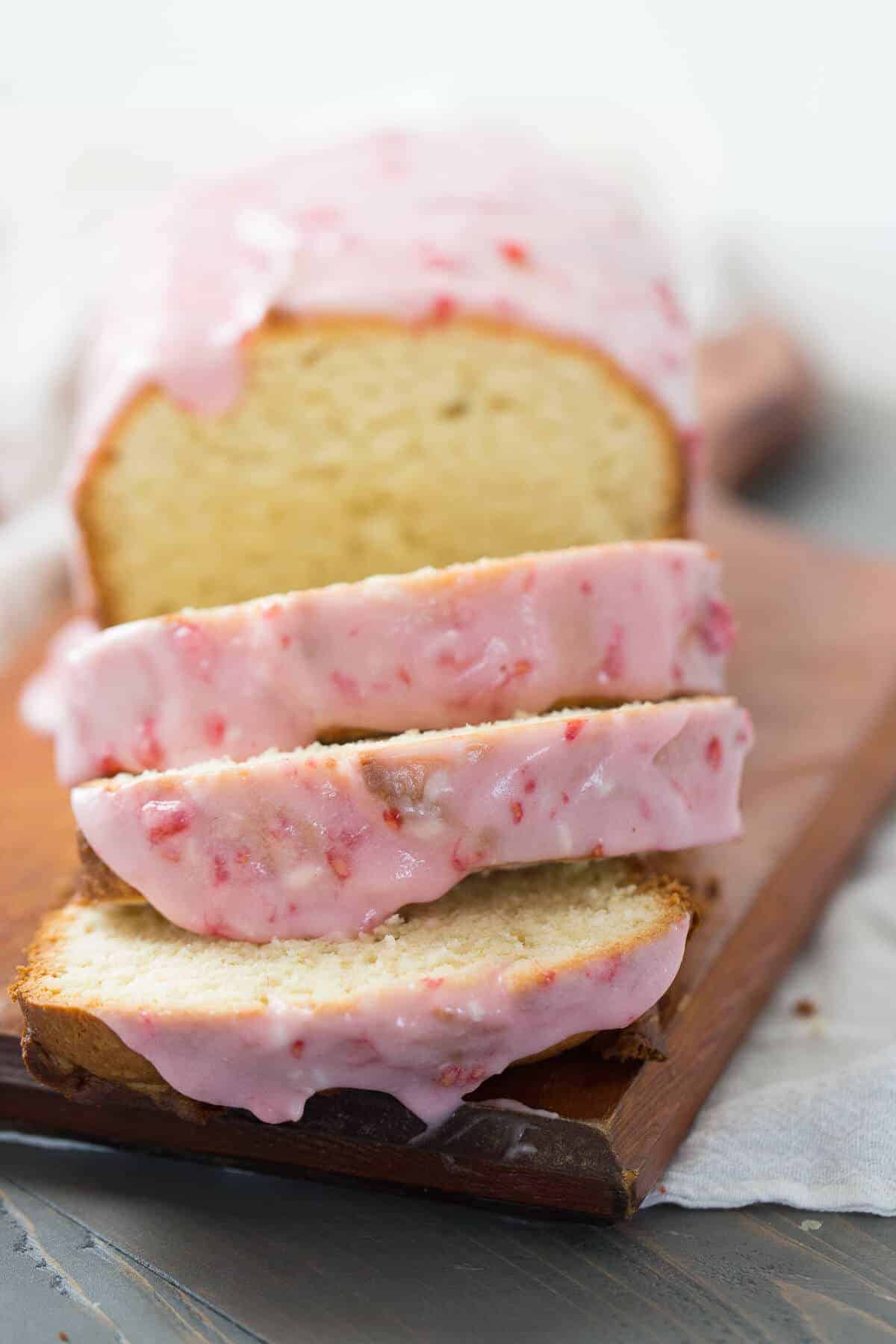
Fresh raspberries never need to bake into the loaf to become a major part of the dessert. Instead, they are stirred into a glaze made with butter, powdered sugar, and heavy cream.
The berries add fruit flavor and color across the top while leaving the key lime cake underneath intact. Frozen raspberries can fill the same role after thawing, while raspberry extract offers another option when fresh fruit is unavailable.
Heavy cream controls the consistency of the glaze, so adding it in small amounts matters. Too much can take the mixture from spreadable to thin enough to run down the loaf.
Cooling the Cake Keeps the Glaze on Top
The raspberry finish goes on after the loaf has cooled, not when it comes straight from the oven. A hot surface can soften the butter in the glaze and cause the topping to melt before it has a chance to sit across the cake.
Cooling also makes the loaf easier to cover from edge to edge without pulling crumbs into the glaze. Once the cake reaches room temperature, the raspberry mixture can be spread across the surface as a separate layer rather than soaking into a hot loaf.
The same rule helps when freezing the cake. The loaf can be baked, cooled, wrapped, and frozen without the glaze, then thawed before the raspberry topping goes on.
Raspberry Takes the Sweet Side While Lime Stays Tart
Pairing raspberry with key lime works because the two fruits enter the cake at different stages. Lime juice and zest bake into the loaf, while raspberry remains concentrated in the sweet glaze added at the end.
That separation keeps the citrus from disappearing beneath another sweet ingredient. Each slice carries tart key lime through the pound cake and raspberry across the top, turning a familiar citrus loaf into a dessert built around two fruit flavors instead of another lime-on-lime finish.
Leave a Reply