


Salmon kept coming out dry for Reddit user u/ZestycloseRip7236, no matter whether it went into the oven, frying pan, or onto the grill. Butter, garlic, salt, and lemon were already part of the routine, so seasoning did not seem to explain why the thicker part of each fillet lacked the texture they wanted.
The clue came from how they decided when the fish was done. They had been taught that any pink inside salmon meant it was unsafe, so they kept cooking until the center looked opaque. After cooks in the thread pointed toward overcooking, the poster reconsidered that rule: “I’m used to cooking my salmon until it’s very opaque since I was taught a bit of pink = bad.”
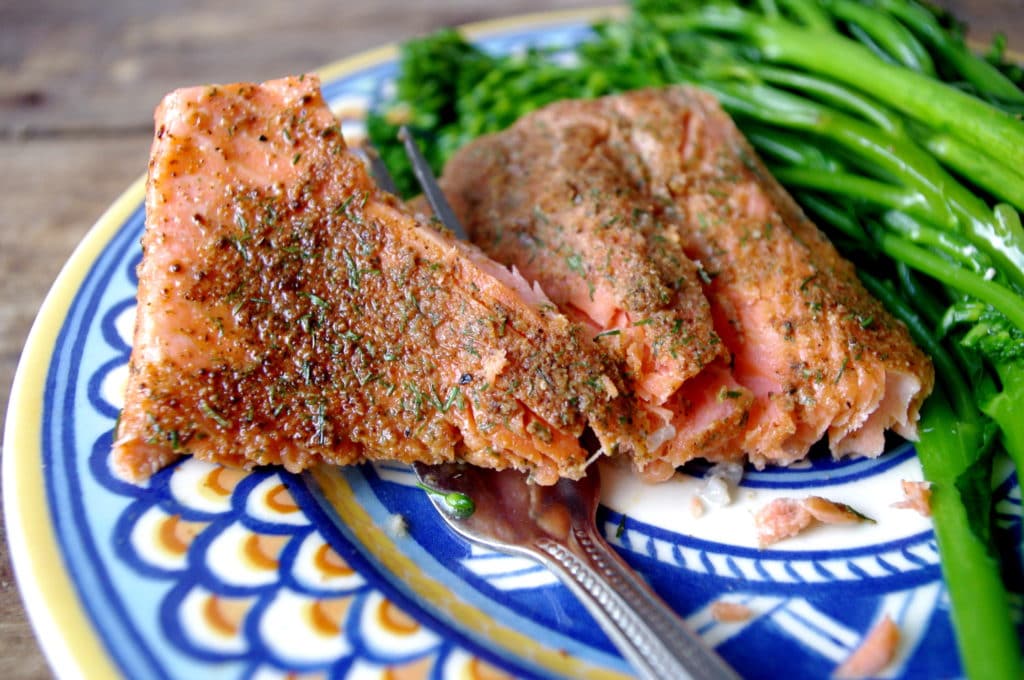
Color Is Not the Best Way to Decide When Salmon Is Done
Salmon does not need to lose its pink color to indicate doneness. Using color as the main test can keep a fillet over heat past the point where its flesh has begun to lose moisture.
Several cooks in the discussion recommended an instant-read thermometer instead of waiting for a visual change. u/Bon_Vivant put the advice in one line: “Use a thermometer.” The commenter suggested pulling the fish at 130°F (55°C), a temperature some cooks use for a softer center.
For food safety, USDA guidance sets 145°F (63°C) as the minimum internal temperature for fish. Anyone who needs to follow that guidance should use 145°F rather than judging the fish from its color.
White Albumin Can Show Up as Salmon Cooks
Another sign caught the poster's attention. They had seen the white substance that can appear on salmon during cooking but kept the fish over heat whenever the center still looked pink.
That white material is albumin, a protein in the fish. Heat causes it to contract and move toward the surface, where it forms the familiar white deposits. Seeing albumin does not give an exact internal temperature, but a large amount can accompany a fillet that has spent more time under heat.
For this cook, the combination mattered: white albumin was already appearing, yet the pink center prompted more cooking.
Thickness Makes Cooking by Time Hard to Judge
The original method called for baking salmon at 160°C (320°F) for 10 to 15 minutes. Yet a fixed time cannot account for every fillet. A thick center and thin end do not reach the same temperature at the same moment.
That also explains another detail from the post. The thinner, fattier section was the part the cook preferred, while the rest kept coming out dry. Cut, thickness, fat content, oven temperature, and starting temperature can all change how fast a fillet cooks.
Checking the thickest section with a thermometer removes much of that guesswork. It also means the fish does not have to stay in the oven while you wait for its center to match a color rule.
The Seasoning Wasn't the Main Problem
Butter, garlic, salt, and lemon can change how salmon tastes, but none can put moisture back into fish after excess heat has driven it out. Adding more oil, butter, herbs, or sauce would not address the habit uncovered in the discussion.
The poster had been treating pink as a warning sign. Once that assumption changed, so did the diagnosis: “lots of people are saying I’m overcooking and I think that’s probably it.”
For salmon that keeps reaching the plate dry, the next thing to change may not be the recipe. Check the internal temperature before waiting for the last bit of pink to disappear.
Leave a Reply