


Salmon can go from moist to dry during a few extra minutes in the oven. Adding more oil is one option, but a condiment already sitting in the refrigerator can serve as the coating instead.
Mayonnaise spread across the salmon before baking adds oil and egg to the surface of the fish. In a method tested by Katherine McPhillips for the Mirror, about two teaspoons cover one fillet. The mayo joins lemon juice, Dijon mustard, smoked paprika, and honey before the salmon goes into a 180°C oven.
Mayonnaise Goes Straight on Raw Salmon
Mayonnaise may seem out of place beside a raw salmon fillet, yet its ingredients make sense under oven heat. Most mayonnaise contains oil and egg, giving the fish a fat-rich coating rather than leaving its surface exposed.
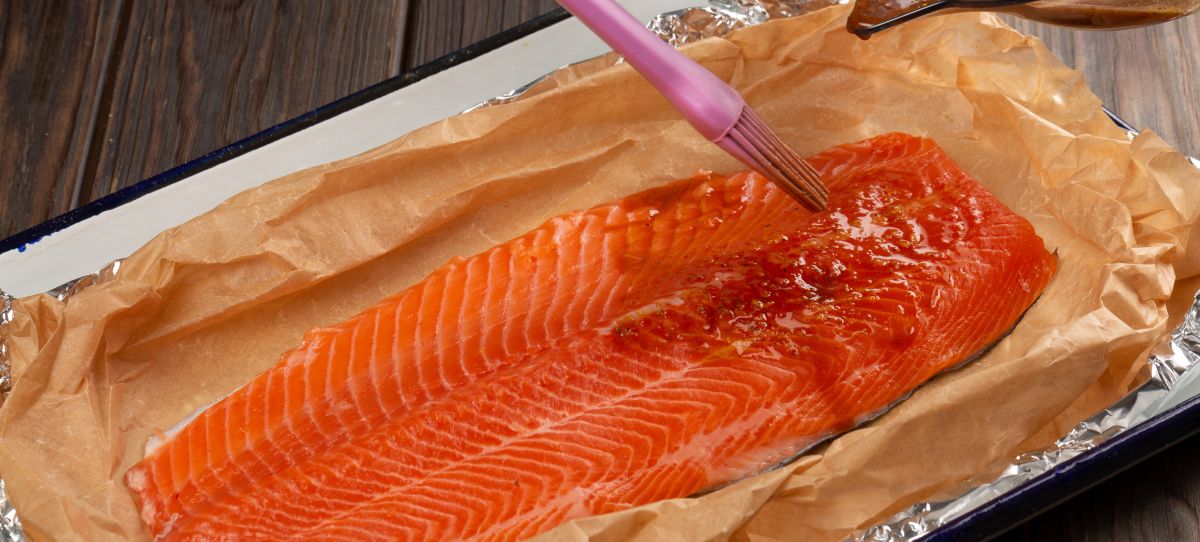
You do not need a thick white layer. The recipe uses two teaspoons per fillet, mixed with lemon juice and spread across the top before baking.
As the salmon cooks, the coating loses the look and texture of cold mayonnaise. What remains is part of the browned surface rather than a spoonful of condiment sitting on top.
Dijon, Honey, and Paprika Go Under the Mayo
The coating does more than add mayonnaise. Smoked paprika, Dijon mustard, and honey are mixed and spread over the salmon first.
Lemon juice goes into the mayonnaise in a separate bowl. A few spoonfuls of that mixture then cover the seasoned fish in a thin layer.
The result puts fat, acidity, sweetness, mustard, and smoked paprika across the same surface without requiring a long marinade.
Twenty Minutes Can Be Too Long for a Thin Fillet
The recipe sets the oven to 180°C and gives the salmon about 20 minutes, with a check at the 15-minute mark.
Thickness matters more than treating 20 minutes as a fixed rule. A thin portion can finish before a thick center-cut fillet, so checking sooner reduces the chance of leaving cooked salmon under heat after it is done.
The USDA recommends cooking fish to a minimum internal temperature of 145°F, or about 63°C.
Olive Oil Becomes Optional
Many baked salmon recipes begin with olive oil. With mayonnaise providing an oil-based coating, another layer of oil is not required here.
The recipe reserves a drizzle of olive oil for a large fillet and treats it as optional. For a standard portion, the mayonnaise handles the surface coating.
That makes the technique useful beyond this mix of seasonings. Mayonnaise can act as the base while herbs, spices, citrus, mustard, or other seasonings change around it.
Mayo-Coated Salmon Is Not Just an Internet Trick
Using mayonnaise on fish has precedent beyond one home-cooking experiment. Mayo works as a cooking coating because much of it is oil held in an emulsion with egg and acid.
The useful part is not making salmon taste like a mayonnaise sandwich. It is putting a thin, fat-rich coating between the fish and dry oven heat.
For salmon that keeps coming out dry, the jar in the refrigerator may be worth reaching for before another bottle of olive oil.
Leave a Reply