


Fried rice usually starts with cooked rice, but cauliflower can take over the base of the dish without changing the ingredients that make the meal recognizable. Chopped into pieces about the size of rice grains, cauliflower goes into the skillet with sesame oil, carrots, onions, peas, eggs, soy sauce, and green onion.
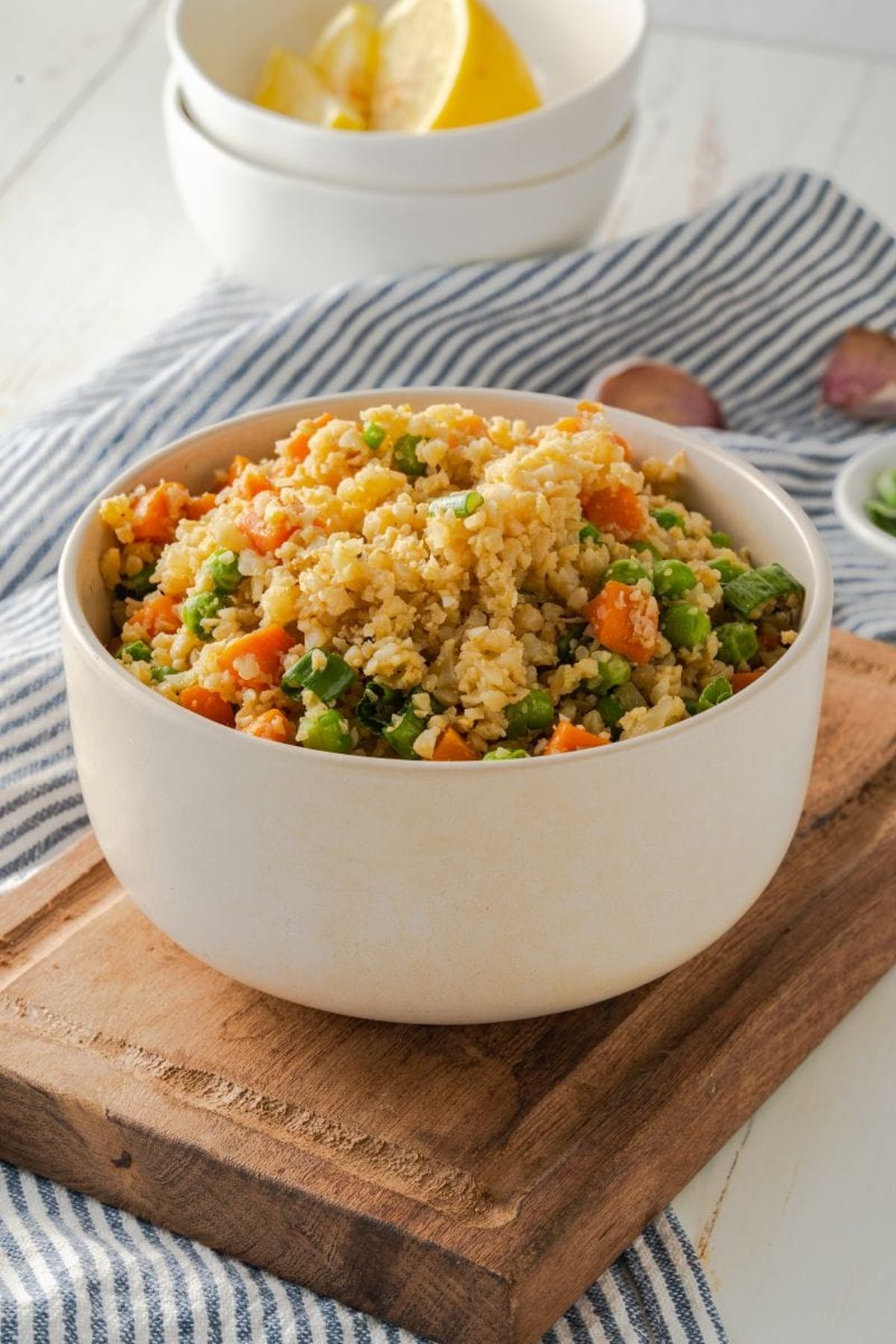
The change starts before the pan reaches the stove. Cauliflower florets are pulsed in a food processor until they resemble grains, creating small pieces that can cook among the vegetables instead of behaving like full florets.
Once browned in the skillet, the cauliflower becomes the foundation for a fried-rice-style meal that can go from a whole head of cauliflower to the table in about 30 minutes.
A Food Processor Changes the Role of Cauliflower
Large florets make cauliflower an obvious vegetable on the plate. Breaking them into rice-size pieces changes how the vegetable fits into the dish.
After the stalk and leaves come off, the head is divided into florets and pulsed in a food processor. The goal is small pieces rather than a smooth puree, giving the cauliflower enough structure to move through the skillet with the other ingredients.
Frozen riced cauliflower can skip this step, though thawing it before cooking keeps excess frozen moisture out of the pan.
Sesame Oil Starts With the Vegetables
Carrot, yellow onion, and the white part of the green onion cook in sesame oil before the cauliflower goes into the skillet. This gives the firmer vegetables time to soften before the smaller cauliflower pieces begin cooking.
The riced cauliflower goes in next and cooks until it becomes tender and takes on some golden color. Frozen peas join after that, adding another familiar fried rice ingredient without requiring a separate pan.
Eggs Still Work Without the Rice
Rice may disappear, but eggs remain part of the dish. Beating them before they enter the skillet makes them easier to distribute among the cauliflower and vegetables.
The eggs cook for about two minutes while being stirred through the mixture. Soy sauce and sliced green onion finish the pan, keeping the seasonings close to those used in fried rice even though the base has changed.
Cauliflower Needs Less Time Than Rice
Cooked rice can handle time in a hot skillet as moisture leaves the grains and the surface browns. Cauliflower behaves differently because it releases water as it cooks.
Leaving it over the heat for too long can soften the small pieces and produce a wet texture. Cooking until the cauliflower is tender and golden, then moving through the remaining steps, helps the pieces retain more structure.
Fried Rice Doesn't Have to Start With a Pot of Rice
Turning cauliflower into rice-size pieces changes more than its appearance. It allows one vegetable to become the base that carries carrots, peas, eggs, sesame oil, soy sauce, and green onion across the dish.
The result keeps the skillet format and familiar components of fried rice while replacing the cooked grain with cauliflower prepared for a different job.
Leave a Reply