


Pan grilling gives asparagus direct contact with heat while keeping the cooking time short. Instead of roasting a full tray or setting up an outdoor grill, the spears cook in a grill pan with olive oil, salt, and black pepper.
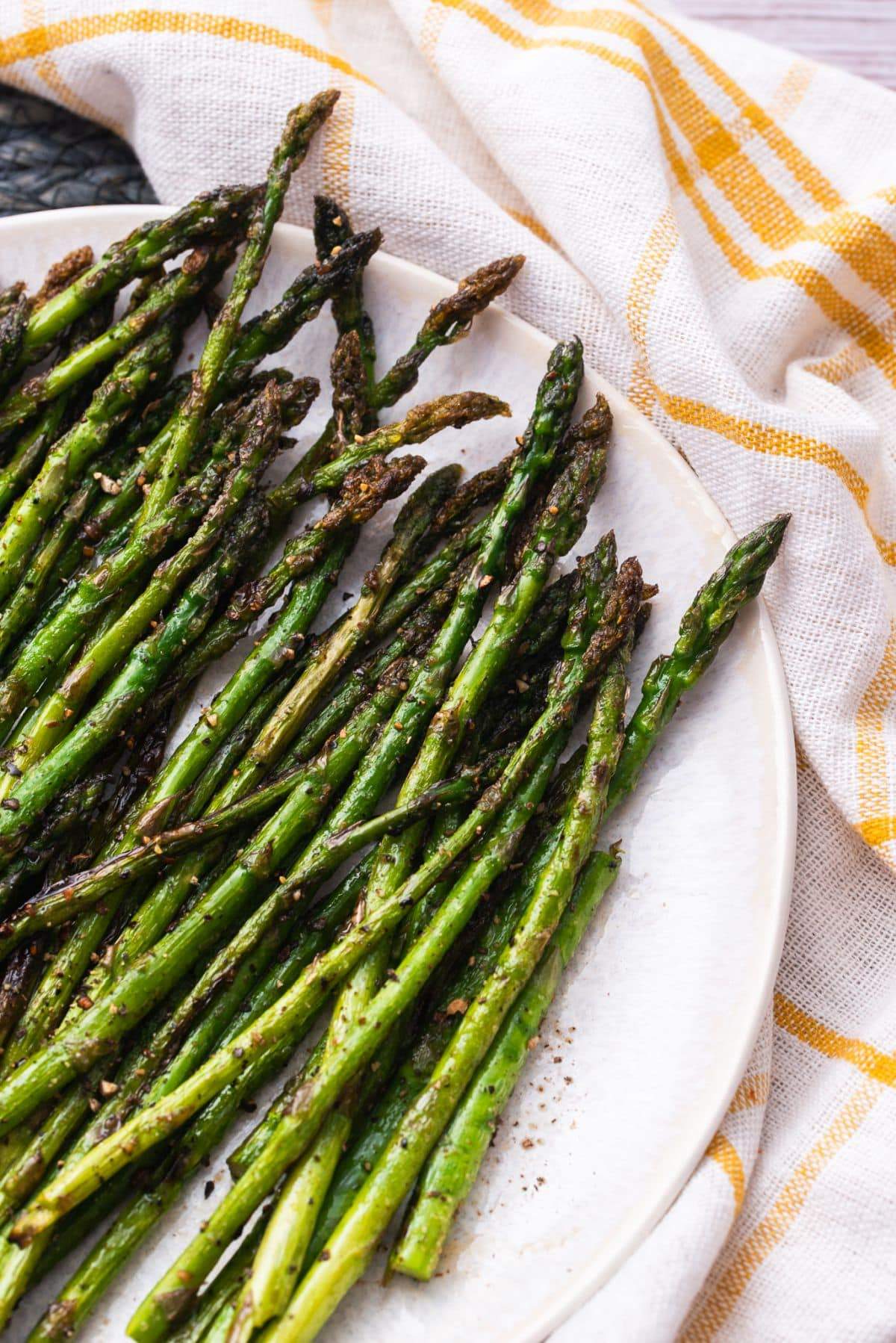
The method takes about two to three minutes on the first side before the asparagus gets flipped to finish. That short cooking window gives the stalks time to soften without turning the tips into mush, while contact with the hot pan adds the browned surface associated with grilling.
Preparation matters as much as the pan. Removing the tough stem ends before cooking leaves the tender section of each spear on the plate.
Tough Stem Ends Come Off Before Cooking
The bottom section of an asparagus spear can be fibrous compared with the stalk above it. One common preparation method bends the spear until the lower section snaps away before the asparagus reaches the pan.
The remaining stalk can then cook from end to end without leaving a tough piece at the base. Spears with thicker stems may need more cooking than thin ones, so keeping similar sizes together helps when preparing a bunch.
A Grill Pan Brings Direct Heat to the Stalks
A grill pan changes how asparagus meets the heat. Rather than sitting on a baking sheet surrounded by hot oven air, each spear rests against a heated cooking surface.
Olive oil goes into the pan before the asparagus, followed by salt and black pepper. The spears cook for two to three minutes on one side before being turned, keeping the process short enough for a weeknight side.
Salt and Pepper Leave Room for Other Flavors
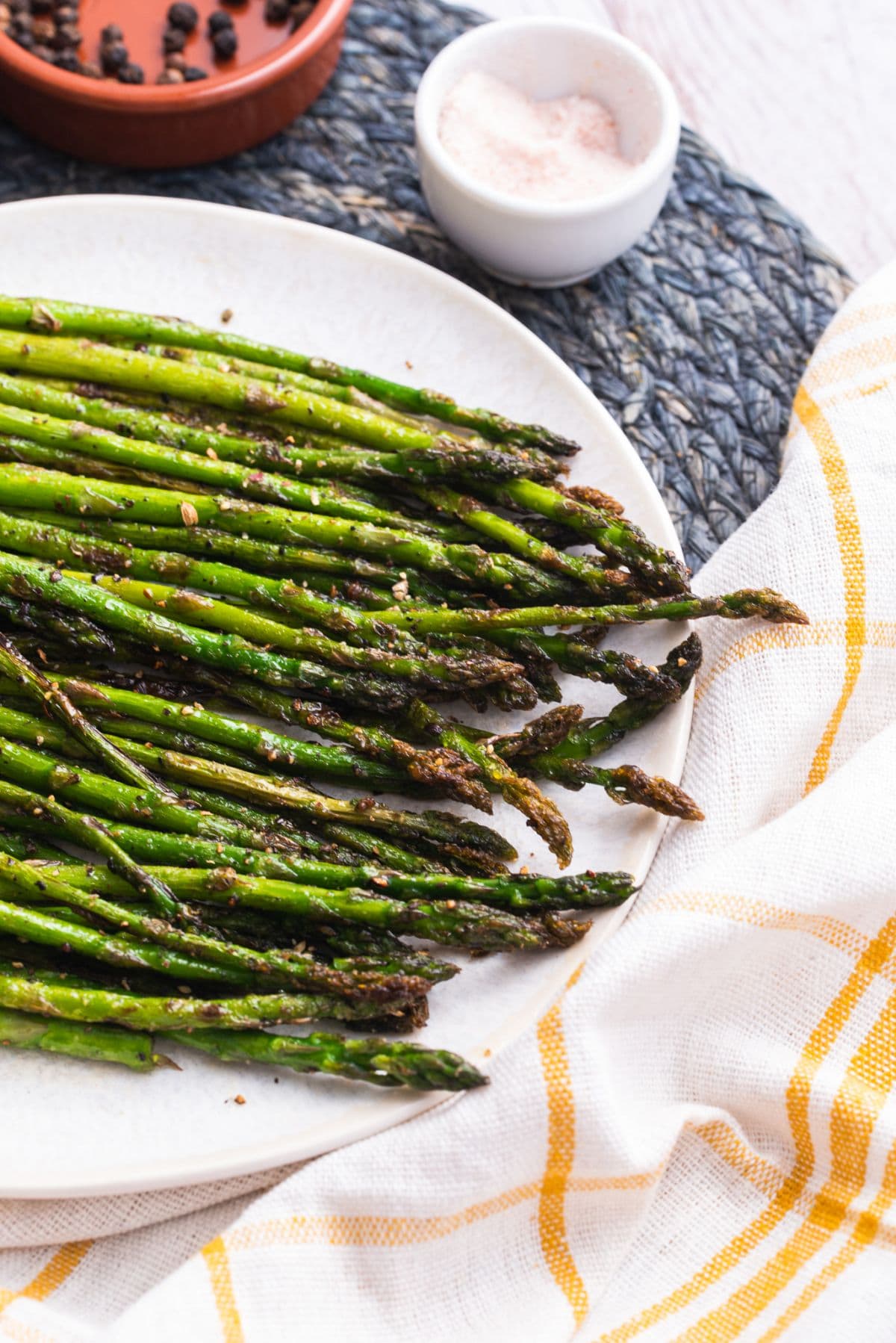
Asparagus doesn't require a long seasoning list before it reaches the pan. Olive oil, salt, and black pepper provide a base that can stay simple or take on other ingredients after cooking.
Lemon juice and garlic can add a sharper finish, while Parmesan introduces a savory coating. Balsamic vinegar paired with olive oil, garlic, oregano, or thyme takes the same pan-cooked asparagus in another direction without changing the core method.
A Cast-Iron Skillet Can Do the Same Job
A grill pan is not required. A cast-iron skillet can provide the same direct stovetop heat, making the technique available without dedicated grilling cookware.
The difference will show on the surface. A grill pan can leave distinct contact marks where the raised ridges meet the stalks, while a flat skillet gives more of each spear contact with the pan.
Asparagus Can Skip the Baking Sheet
Roasting remains an option when the oven is already running or a larger batch needs to cook at once. Pan grilling makes more sense when asparagus is one side of dinner and only a bunch needs to reach the table.
With the tough ends removed and the seasoning kept simple, the vegetable can move from the refrigerator to a hot pan without a long prep process. A few minutes of direct heat cooks the stalks while adding a grilled finish without taking dinner outside.
Leave a Reply