


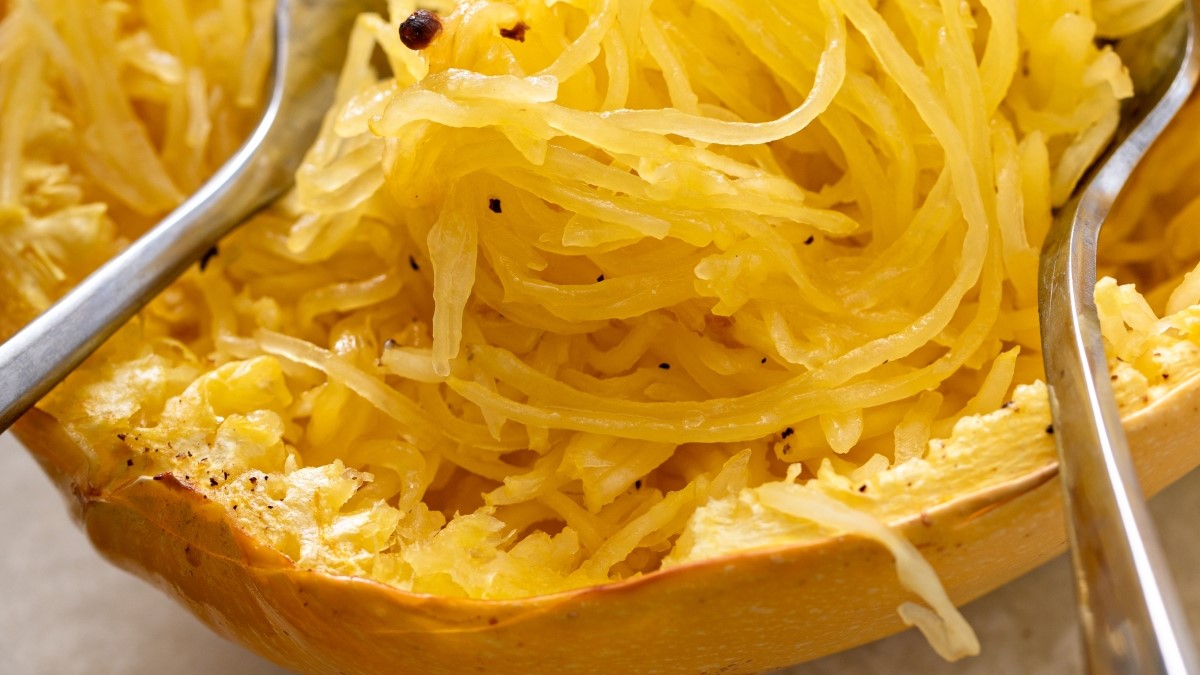
A spaghetti squash comes out of the oven looking nothing like pasta until a fork pulls its flesh apart into thin golden strands. But if those strands always seem short and broken, the problem may have happened before the squash ever reached the oven. Most people cut the oblong vegetable from end to end. Turn the knife the other direction, and you can get much longer strands from the same squash.
The reason is hidden inside the fruit. Spaghetti squash fibers don't run from stem to end like you might expect. They wrap around the inside of the squash.
How you cut through those fibers determines how much of each strand survives.
Cut across the middle, not from end to end
An oblong squash looks as though it should be sliced lengthwise.
For spaghetti squash, cut crosswise through the middle instead. You'll end up with two round halves rather than two long oval halves.
A lengthwise cut slices through more of the fibers that eventually become the spaghetti-like strands.
Cutting crosswise follows their structure better and leaves more of their length intact.
It also has another advantage: cutting through the shorter width can be easier than forcing a knife through the entire length of a hard winter squash.
Scoop out the center
Once the squash is open, remove the seeds and loose pulp from each half.
The round shape created by a crosswise cut can make reaching the center a little less convenient, but leave the firm flesh intact.
Brush the exposed surface with olive oil or melted butter and add salt and pepper.
Now it's ready for heat.
Roast instead of steam for less water
Spaghetti squash already contains plenty of moisture.
Steaming adds more, which can leave the finished strands watery. Roasting helps drive some of that moisture away as the flesh cooks.
Place the squash cut-side down on a baking sheet or in a baking dish.
Depending on its size and the texture you want, roasting can take around 30 to 45 minutes.
Start checking before you think it's finished.
Don't cook it until it's completely soft
More cooking doesn't necessarily make better spaghetti squash.
Take it too far and the strands lose their structure. Instead of separating when you drag a fork through the flesh, the squash begins turning into soft mash.
For a heavy tomato sauce, slightly firmer strands can work well because they have enough structure to hold the sauce.
For butter, olive oil, or Parmesan, you may prefer them softer.
Either way, stop before the fibers collapse.
Use a fork to release the strands
After cooking, let the squash cool enough to handle.
Run a fork through the flesh and pull. The cooked fibers should separate into noodle-like strands around the shell.
This is where the crosswise cut pays off. Because fewer of those circular fibers were severed when the raw squash was opened, the strands can come away longer.
It doesn't actually taste like spaghetti
The name describes the shape rather than the flavor.
Spaghetti squash has a mild taste that makes it useful with stronger sauces. Tomato sauce, cream sauces, butter, olive oil, herbs, and Parmesan can all work with it.
The texture also depends on how long you cook it, ranging from firmer with some bite to soft if left in the oven longer.
The easiest mistake happens before any of that. Don't follow the length of the squash with your knife. Cut across it, roast until the flesh separates without turning mushy, and let the natural fibers make the "spaghetti" for you.
Leave a Reply